Trying to figure out whether dropshipping is actually a good fit for you?
You're in the right place! Dropshipping has some real advantages, especially when it comes to inventory and fulfillment, but those benefits come with tradeoffs.
Key takeaways
- Main pros: You can test products without buying bulk inventory, avoid running your own warehouse, and leave physical fulfillment to a supplier.
- Main cons: You give up some control over fulfillment and stock, while product quality and return handling can depend partly on your supplier.
- Costs: Dropshipping can reduce the money tied up in inventory, but margins may be thinner than buying in bulk, and you still have the usual costs of running an online store.
- Best way to think about it: Dropshipping is a fulfillment method, not a shortcut around the work of running an ecommerce business.
- Next step: Compare the tradeoffs below with what matters most to you before spending money on a store or committing to a supplier.
Below, we'll compare the biggest pros and cons of dropshipping so you can decide which ones matter most for the kind of store you want to build.

Pros and cons of dropshipping: An overview
Here's the short version if you want to compare both sides at a glance:
| Pros | Cons |
| Test products without buying in bulk | Less control over fulfillment |
| Lower upfront inventory costs | Orders can arrive in multiple packages |
| No need to store, pack, or ship every order yourself | Quality control is harder |
| Learn useful ecommerce skills | Supplier stock can change unexpectedly |
| Relatively quick technical setup | Profit margins can be thinner |
| Easier to expand products and test markets | Returns and refunds can get complicated |
| Customer service depends partly on your supplier | |
| Competition can be intense |
What is dropshipping?
Dropshipping is a fulfillment method in which you sell products without keeping them in your inventory.
In simple terms, the process works like this:
- You list a product in your online store.
- A customer places an order with you.
- You send the order details to your supplier.
- The supplier packs and ships the product directly to your customer.
You don't handle the product yourself, but the customer still bought from your store. That means the customer experience is still your responsibility.

If you're completely new to the model, our dropshipping beginner guide explains the bigger picture.
What are the pros of dropshipping?
Let's start with the good side.
Most of the advantages come from not having to buy and physically manage inventory before you make a sale.
1. Test products without buying in bulk
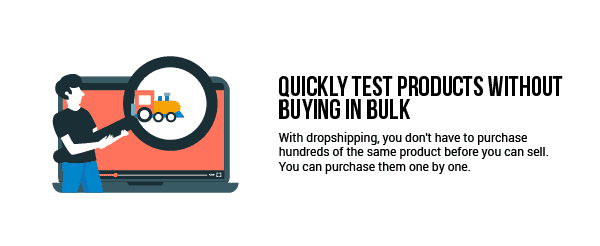
With a traditional inventory model, you may need to buy a larger quantity before you know how well a product will sell.
Dropshipping lets you test a product without making that same inventory commitment first.
In many setups, you buy the item from your supplier only after a customer has placed an order with you.
If the product doesn't work out, you can move on without being left with boxes of unsold stock.
2. Lower upfront inventory costs

Because you don't normally buy bulk inventory before making sales, less of your starting budget is tied up in stock.
You also don't need your own warehouse just to store those products.
That doesn't make the business free to run. You'll still have costs for the store itself and may spend on a domain or samples, while apps and marketing can add more depending on your setup.
3. You don't have to store, pack, or ship every order

Your supplier handles the physical fulfillment side of the order, including storing the product before it is packed and shipped.
That means you don't need to build your own packing and shipping operation from day one.
You can spend more of your time on the ecommerce side of the business, such as product research and customer support, while also improving the store and its marketing.
4. You can learn useful ecommerce skills
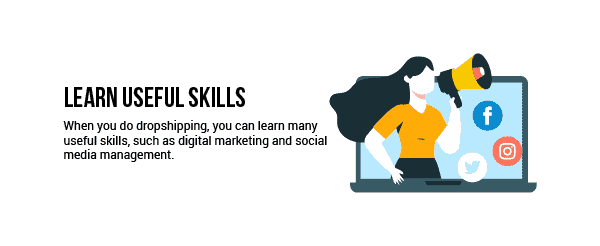
Dropshipping changes the fulfillment side of ecommerce, but the rest of running an online store remains.
You'll gain experience in areas such as product research, copywriting, marketing, and customer service.
Those skills can still be useful if you eventually move to another fulfillment model or decide that dropshipping isn't for you.
5. The technical setup can be relatively quick

You don't need to build the ecommerce technology from scratch.
Hosted platforms and dropshipping apps can make the technical setup relatively straightforward.
But here's the catch: a technically finished store isn't automatically ready for customers.
You still need to research products and check suppliers before reviewing your copy, policies, and shipping information.
6. It's easier to expand your product range and test new markets

Adding a new product usually doesn't require finding additional physical storage space because you aren't filling your own warehouse.
You may also be able to test other countries if your supplier can serve them and the numbers still work.
Just check each market first. Shipping and supplier coverage can differ, and payment options or local business requirements may change as well.
Want the deeper version? Our guide to the advantages of dropshipping goes through all six in more detail.
What are the cons of dropshipping?
Now for the other side.
Most of the disadvantages stem from the same thing that creates many of the benefits: someone else handles inventory and fulfillment for you.
1. Less control over fulfillment

Your supplier controls important parts of what happens after a customer orders, including how the product is packed and when it is shipped.
You can choose better suppliers and set realistic customer expectations, but you still won't have the same direct control you would have if you fulfilled each order yourself.
2. Orders can arrive in multiple packages
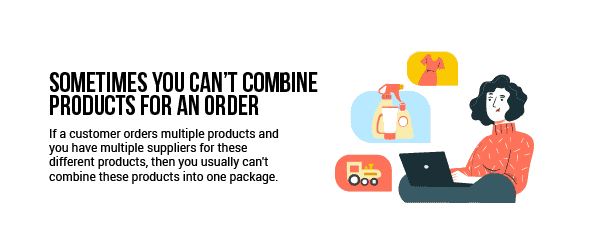
If products come from different suppliers or warehouses, one customer order may be split across multiple packages.
That can create extra shipping costs and confusion when one package arrives before the rest.
Clear shipping information helps, and sourcing related products from the same supplier can reduce the chance of split shipments.
3. Quality control is harder
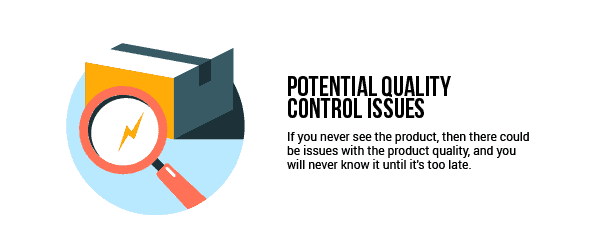
You don't inspect every unit before it reaches the customer, which makes product quality harder to control.
Ordering a product sample is a practical way to check the product and packaging before you start selling it.
A good sample doesn't guarantee every future unit will be identical, so customer feedback still matters after launch.
4. Supplier stock can change unexpectedly

You don't own the supplier's inventory, so a product can become unavailable while you're still advertising it.
That is why communication and inventory syncing can be useful, especially when a product starts selling more quickly.
Having a vetted backup supplier can help too, but don't assume two suppliers offering the same-looking product will provide the same quality or shipping experience.
5. Profit margins can be thinner

Not buying in bulk can mean paying more per unit than a retailer that purchases a larger quantity at wholesale pricing.
Your real margin also depends on shipping and payment fees, as well as refunds and marketing costs.
Before testing a product, work out how much room is left after those costs, rather than looking only at the difference between the supplier price and the selling price.
6. Returns and refunds can get complicated

Your customer deals with your store, but the product may need to be returned to a supplier elsewhere.
That can make return shipping expensive or create uncertainty about what happens when an item is damaged or incorrect.
Agree on the process with your supplier before selling, then make sure your customer-facing policy aligns with what you can actually support and with the consumer rules that apply where you sell.
7. Customer service depends partly on your supplier

You are the person the customer contacts, even when the answer depends on information from your supplier.
If a supplier is slow to respond, your own response time can suffer too.
Working with communicative suppliers helps, and a clear FAQ page can answer common questions before they become support tickets.
8. Competition can be intense

Other sellers may have access to the same products and suppliers that you do.
That can leave several stores using similar images and descriptions for the same product.
You don't need to invent something nobody has ever seen before, but you do need to give customers a reason to choose your store.
Better product information and stronger branding can help, and so can clearer policies or a better customer experience.
For a more in-depth version, read our full guide to the disadvantages of dropshipping.
So, is dropshipping a good fit for you?
This comes down to what you want from the business.
Dropshipping may be worth exploring if:
- You want to test ecommerce ideas without buying a large amount of inventory first.
- You would rather outsource physical fulfillment than run your own warehouse operation.
- You're comfortable checking suppliers carefully and relying on them for parts of the customer experience.
- You understand that the store still needs real work in areas such as products, marketing, and customer service.
Dropshipping may be a poor fit if:
- You want tight control over inventory and fulfillment from day one.
- Custom packaging or a highly controlled unboxing experience is central to the business you want to build.
- You don't want customer support to depend partly on a third-party supplier.
- You would rather invest in inventory upfront to gain more control over the product and fulfillment process.
Good to know: Neither answer is wrong. The point is to understand which trade-offs you're accepting before you spend money building the store.
You've seen the pros and cons; now use our tool below to check whether dropshipping makes sense for you:
Conclusion
So, there you have it!
Dropshipping can remove some of the inventory and fulfillment barriers that come with traditional ecommerce, but you give up some control in return.
Whether that's a good trade depends on what matters most to you.
If the advantages outweigh the downsides for what you want to build, our how to start dropshipping guide covers the practical next steps.
If they don't, that's useful to know too. You can always explore other ecommerce business models instead.
Have a pro or con you'd add to the list? Let me know in the comments below!
Want to learn more about dropshipping?
Here are a few guides we'd read next:
- 6 Advantages of Dropshipping in 2026 and Tradeoffs to Know
- 8 Disadvantages of Dropshipping in 2026: What to Know
- Is Dropshipping Still Worth It in 2026? Honest Pros & Cons
New to dropshipping? Our beginner's guide explains how the model works and what to consider before you start.