Dropshipping has some real advantages, especially if you want to sell online without buying a large amount of inventory upfront.
You can test products with a lower stock commitment and leave storage and shipping to a supplier, giving you more time to focus on the ecommerce side of the business.
That doesn't make dropshipping easy money, but it can make certain parts of starting and running an online store more flexible.
In this article, we'll go through six of the biggest advantages, along with the tradeoffs worth keeping in mind.
Key takeaways
- Main advantage: You can sell products without buying bulk inventory first, which lowers the amount of money tied up in stock.
- Fulfillment: Your supplier handles storage and packing before shipping the order, so you don't need to run your own warehouse or fulfillment operation.
- Testing: It's easier to try new products because you can usually add or remove them without being left with boxes of unsold inventory.
- Tradeoff: You give up some control over product quality and stock, as well as how orders are packed and shipped. Margins can also be lower than buying in bulk.
- Next step: Compare these advantages with the disadvantages of dropshipping, then decide whether the model fits what you want to build.
Before we get into the advantages, let's quickly make sure we're on the same page about how dropshipping works.

What is dropshipping?
Dropshipping is a fulfillment method in which you sell products without keeping them in your inventory.
In simple terms, the process looks like this:
- You list products in your online store. You don't keep those products in your own warehouse or home.
- A customer places an order with you. You send the order details to your supplier. Apps such as DSers can automate parts of this process, and you can also compare these DSers alternatives.
- Your supplier prepares and ships the order. The package goes directly to your customer.
- You remain responsible for the customer experience. The supplier handles fulfillment, but the customer bought from your store.
For the visual learners, here's what that looks like:

But won't customers know the package came from somebody else?
That depends on the supplier and how the order is packed.
Some suppliers support blind dropshipping, which generally means they won't include their own promotional material or branding inside the package.
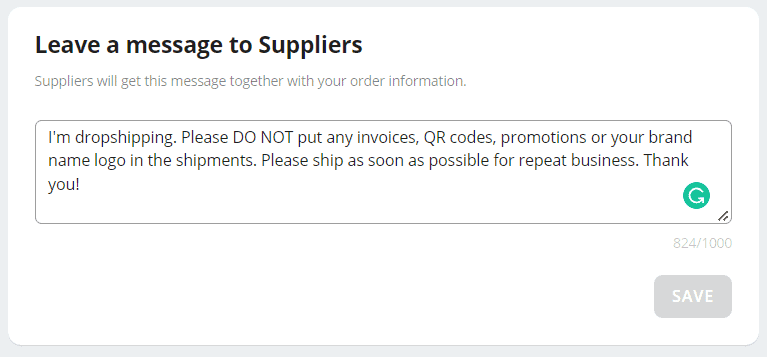
Ask your supplier what they include before you start sending customer orders, because packaging can vary.
If you're completely new to the model, our dropshipping beginner guide explains the bigger picture.
What are the advantages of dropshipping?
Now for the good part!
Dropshipping removes some of the biggest inventory and fulfillment commitments associated with traditional retail, making it a flexible way to test ecommerce ideas.
Here are six advantages worth knowing about.
Quick note: These advantages are real, but they don't make dropshipping passive or risk-free. You're still running an ecommerce business, so you need to research products and check suppliers while also supporting customers and watching the numbers behind each sale.
1. Test products without buying in bulk
One of the biggest advantages of dropshipping is that you can test a product without first ordering hundreds of units.
With a traditional inventory model, buying in bulk can lower the cost per unit, but it also means committing money to stock before you know how well it will sell.
Dropshipping changes that. In many setups, you buy the product from your supplier only after a customer has placed an order with you.
That makes it easier to test whether a product fits your target audience without being left with a room full of unsold stock if the idea doesn't work.
Testing still takes time and can involve costs for the store itself, samples, or marketing. The advantage is that you aren't also committing to a large inventory order at the same time.
If you want to dig deeper into this approach, read our guide to testing products with dropshipping.
And if a product eventually proves itself, you can always compare dropshipping with buying inventory in bulk later.
2. Lower upfront inventory costs

This advantage follows directly from the first one.
Because you don't normally buy bulk inventory before making sales, you can avoid one of the largest upfront costs faced by many traditional retailers.
You also don't need to rent or operate your own warehouse just to store those products.
That doesn't mean a dropshipping store is free to run.
Depending on your setup, you'll still pay for the store itself and may spend on a domain or samples. Your budget can also include apps and marketing, as well as business registration or professional help.
The difference is that less of your starting budget has to be tied up in inventory and storage.
If you want to see the broader cost picture, our guide on whether you can start dropshipping without money breaks down the expenses to think about.
3. You don't have to store, pack, or ship every order

The great thing about dropshipping is that your supplier handles the physical fulfillment side of the order.
They store and pack the product before shipping it to your customer, so you don't need to run that operation yourself.
That gives you more time to focus on marketing and product pages while also handling customer support and improving the store.
Pretty useful, right?
The tradeoff is that you also give up some control over fulfillment. That's why ordering samples and checking how a supplier communicates before you rely on them is so important.
Another practical benefit is that adding a new product doesn't automatically mean finding more physical storage space for it.
4. You can learn useful ecommerce skills

As I mentioned earlier, dropshipping is just the fulfillment method.
The rest of ecommerce is still there, which means you'll get experience with skills such as:
- Digital marketing
- Copywriting
- Conversion optimization
- Product research
- Customer service
Those skills can still be useful even if you eventually decide that dropshipping itself isn't for you.
I think that's an underrated advantage. You're not only learning how one fulfillment model works; you're learning how an online store fits together.
5. The technical setup can be relatively quick

Another advantage is that you don't have to build all the ecommerce technology yourself.
Hosted ecommerce platforms can handle much of the technical foundation, while themes and dropshipping apps can speed up the rest of the setup.
But here's the important distinction: setting up the technology quickly is not the same as quickly having a customer-ready store.
You'll still want time to research products and check suppliers before writing your own copy and reviewing the store experience. You'll also need to confirm that your policies and shipping information are accurate.
So yes, the technical barrier can be relatively low. I'd just use that advantage to give yourself more time for the parts customers actually notice, not as a reason to rush.
If you want ideas for making the store feel more like your own, take a look at our guide on creating a more unique dropshipping store.
6. It's easier to expand your product range and test new markets
Because you aren't filling your own warehouse, adding products doesn't usually require the same physical expansion that an inventory-heavy business might need.
You may also be able to serve customers in multiple countries if your suppliers can ship there and the numbers still work.
That's where the flexibility can be really useful.
Just check each market before you advertise there. Supplier coverage and shipping times can vary by market, while payment options and local tax or business requirements may differ as well.
If faster shipping matters, you can also look for local dropshipping suppliers closer to the customers you're targeting.
And if the store starts gaining traction, you aren't locked into dropshipping forever. Some sellers later move toward bulk inventory, private labeling, or other fulfillment arrangements when that gives them more control.
You can also work on building a stronger brand from the beginning. These guides can help:
- Branded Dropshipping: What Is It & How to Start (6 Tips)
- 10 Great Ecommerce Brand Store Examples
- 12 Branded Dropshipping Store Examples
Advantages of dropshipping: An overview
If that was a lot to take in, don't worry!
Here's the infographic version you can save for later:

What are the disadvantages of dropshipping?
We've focused on the advantages so far, but the other side matters just as much when you're deciding whether dropshipping is right for you.
The main tradeoffs include:
- Less control over fulfillment. Your supplier controls how orders are packed and shipped, and stock availability is outside your direct control as well.
- Potential quality-control problems. You don't inspect every unit before it reaches the customer.
- Lower margins than bulk purchasing can offer. Buying one product at a time usually gives you less purchasing power.
- Stock can change outside your control. A supplier can run out of an item you're still advertising.
- Returns and customer service can get more complicated. This is especially true when the supplier is far from the customer.
- Competition can be intense. Other stores may have access to the same products and suppliers.
Our full guide to the disadvantages of dropshipping explains these tradeoffs in more detail.
If some of those drawbacks matter more to you than the advantages above, that's useful information too. The goal isn't to make dropshipping fit everyone.
Conclusion
So, there you have it!
The biggest advantages of dropshipping come from not having to commit upfront.
You can test products without buying bulk inventory and leave physical fulfillment to a supplier, which also means you don't need to run your own warehouse.
That flexibility can make it easier to experiment with ecommerce, but the business around fulfillment is still yours to run.
If these advantages sound useful, compare them with the downsides and think about which tradeoffs matter most to you.
If dropshipping still makes sense after that, our guide on how to start dropshipping walks through the practical next steps.
And if it doesn't sound like the right fit, that's completely fine. There are plenty of other ecommerce business models to explore.
Did I miss an advantage that you think belongs on the list? Let me know in the comments below!
Want to learn more about dropshipping?
Here are a few guides we'd read next:
- 8 Disadvantages of Dropshipping in 2026 & How to Fix Them
- Pros and Cons of Dropshipping in 2026: What to Know
- Is Dropshipping Still Worth It in 2026? Honest Pros & Cons
New to dropshipping? Our beginner's guide explains how the model works and what to consider before you start.