

AI in dropshipping used to mean one thing: ChatGPT for product descriptions.
That's no longer the case in 2026.
AI now shows up in almost every part of running a store: product research, store building, product pages, ad creative, video ads, support, SEO, email, and even chargeback recovery.
That's useful, but it also makes the category messy.
Some tools genuinely save hours. Others are normal ecommerce tools with an "AI-powered" label added to the homepage.
Best AI Dropshipping Tools Shortlist
Here's our shortlist of the top AI dropshipping tools in 2026:
- Best for Product Research and Validation: Sell The Trend - Combines NEXUS product discovery, competitor Store Intelligence, product descriptions, ad copy, and SellShop store creation in one workflow.
- Best for Free AI Shopify Store Drafts: Storebuild.ai - Builds free, ready-to-edit Shopify store drafts from a niche, products, and brand colors, with products pulled from the Zendrop catalog.
- Best for Print on Demand Product Creation: Printify - Turns text prompts into print-ready designs and connects stores to a broad print supplier network with native ecommerce integrations.
- Best for Automated Product Sourcing: AutoDS - Imports products into your store, then monitors supplier price and stock and updates your listings automatically.
- Best for Competitor and Product Monitoring: Browse AI - Tracks competitor prices, product launches, supplier catalogs, and reviews with scheduled monitoring and no-code integrations.
- Best for Beginner-Friendly Email Marketing: Mailchimp - Builds email automations for welcome, abandoned cart, post-purchase, and win-back flows with AI-assisted copy, personalization, and testing.
- Best for Structured Marketing Copy: Jasper - Organizes product copy, ads, emails, scripts, and blog drafts around brand voice, templates, workflows, and SurferSEO integration.
- Best for AI Product Page Drafts: PagePilot - Turns AliExpress or Shopify links into editable product page drafts with layouts, copy, sections, reviews, ad hooks, and product ideas.
- Best for AI Ad Creative Testing: Pencil - Generates text, image, video, and ad creative variations, then compares options with real-time AI insights and scores before launch.
- Best for Product URL-to-Video Ads: Creatify - Converts Shopify, Amazon, or product URLs into short-form video ad variations with AI actors, voiceovers, templates, product footage, and language support.
Below, we'll go through 20 AI tools for dropshipping and match each one to the job it actually helps with.
Let's get into the list!
How we tested
We tested 25 AI dropshipping tools and asked one simple question: Would this actually save you time on a real dropshipping task, not just add another 'AI-powered' subscription?
To answer that, we checked:
- Whether it solves one specific dropshipping task
- A real mechanism, not just an 'AI-powered' label
- Current pricing and value
- Real integrations with Shopify, WooCommerce, and ad or email platforms
- Ease of use and how fast it proves useful
- Honest trade-offs and limits
The twenty tools in this guide made the cut because each does a real job in your dropshipping workflow, from product research to support. We left others out when they were 'AI-powered' in name only, their pricing was unclear, or a stronger tool already did the job.

Start your store on Shopify
Free 3-day trial + $1/month for 3 months
- Grows with you from first test product to full brand
- Thousands of apps and hundreds of themes to customize your store
- Beginner-friendly editor with pro features when you're ready
No card to start. Cancel anytime.

The best dropshipping AI tools at a glance
Here's the full lineup, with the dropshipping task each tool is best for:
| Rank | Tool | Best for | Free tier | Pricing | AI layer / disclosure | Links |
|---|---|---|---|---|---|---|
| 1 |
 Sell The Trend
Product research
Sell The Trend
Product research
|
Product validation NEXUS product discovery, competitor Store Intelligence, product descriptions, ad copy, and SellShop connect research to store setup in one workflow | No Paid monthly tiers | $29.97 / $49.97 / $99.97 | Proprietary NEXUS engine | |
| 2 |
 Storebuild.ai
Store drafts
Storebuild.ai
Store drafts
|
Free Shopify drafts Zendrop-powered Shopify store drafts start from a niche, products, and brand colors, with full customization inside Shopify afterward | Yes Free to use | Free; Shopify subscription still applies | Not disclosed | |
| 3 |
 Printify
POD design
Printify
POD design
|
AI POD designs AI design generation for print on demand products pairs with a broad supplier network across Shopify, WooCommerce, BigCommerce, Wix, Etsy, and API workflows | Yes Free plan available | $0 / $39 / Custom | Not disclosed | |
| 4 |
 AutoDS
All-in-one automation
AutoDS
All-in-one automation
|
Sourcing and automation Import products, then let AutoDS monitor supplier price and stock and update your listings automatically | No 3-day trial for $1 | $26.90 / $39.90 / $66.90 | Not disclosed | |
| 5 |
 Browse AI
Price monitoring
Browse AI
Price monitoring
|
Competitor monitoring Scheduled robots track competitor prices, product launches, supplier catalogs, and review changes with exports to Sheets, Airtable, Zapier, Make, and APIs | Yes Credit-limited free plan | $0 / $19 annual / $48 monthly / $69 annual / $87 monthly / $500+ | Not disclosed | |
| 6 |
 Mailchimp
Email automation
Mailchimp
Email automation
|
Beginner email Beginner-friendly email automation combines AI-assisted copy, personalization, A/B testing, and ecommerce flows for early retention workflows | Yes 250 contacts / 500 sends | $0 / $13 / $20 / $350+ | Proprietary AI features | |
| 7 |
 Jasper
Brand voice
Jasper
Brand voice
|
Marketing copy Brand voice, templates, repeatable workflows, SurferSEO support, and multi-model generation support more structured marketing copy | Trial available 7-day Pro trial | $59 yearly / $69 monthly / Custom | Multi-model AI platform | |
| 8 |
 PagePilot
Page drafts
PagePilot
Page drafts
|
Product page drafts First-draft Shopify product pages from AliExpress or Shopify links include layouts, copy, sections, reviews, ad hooks, and product ideas | Trial available No free tier | $39 / $59 / $99 | Not disclosed | |
| 9 |
 Pencil
Ad variations
Pencil
Ad variations
|
Creative testing Text, image, video, and ad creative variations pair with AI insights, creative scores, and channel coverage before campaigns scale | No Paid monthly tiers | $14 / $55 / Custom monthly, or lower yearly | Multi-model platform | |
| 10 |
 Creatify
Video ads
Creatify
Video ads
|
URL-to-video ads Product URLs become short-form video ad drafts with AI actors, voiceovers, templates, product footage, and multi-language support | Yes, watermarked 10 credits + watermark | $0 / $33+ / Custom | Not fully disclosed | |
| 11 |
 Tidio
Lyro support
Tidio
Lyro support
|
AI customer support Lyro trains on FAQs, policies, and product information to answer routine support questions while live chat and help desk tools stay in one workspace | Yes Free tier available | $0 / $24.17 / $49.17 / $749+ | Lyro AI agent | |
| 12 |
 Commerce AI
Shopping chatbot
Commerce AI
Shopping chatbot
|
AI product recommendation chat Store-content training, product guidance, and multi-language support help shoppers find relevant products through an AI chat experience | Yes Pageview-based free plan | $0 / $29 / $99 | GPT-4 is listed on the app page | |
| 13 |
 Chargeflow
Chargeback AI
Chargeflow
Chargeback AI
|
Chargeback recovery automation Recovery scoring, store-data evidence collection, dispute response preparation, and processor integrations automate chargeback handling | N/A Success-based fee | 25% per recovered chargeback | AI-built evidence / LLM-powered dispute evidence | |
| 14 |
 Canva
Magic Studio
Canva
Magic Studio
|
Product and social visuals Magic Edit, Magic Eraser, Magic Design, background tools, and prompt-based image generation help clean up product and social visuals | Yes Free tier available | $0 / $15 / Business pricing varies | Magic Studio and partner AI models | |
| 15 |
 ConvertMate
SEO bulk edits
ConvertMate
SEO bulk edits
|
Shopify product page SEO Shopify product titles, descriptions, metadata, URL handles, keyword research, and bulk page updates help improve thin product pages at scale | Yes, credit-limited Free tier includes trial credits | $0 / $49 / $149 / $399 | Not disclosed | |
| 16 |
 Syncee custom GPT
Free GPT
Syncee custom GPT
Free GPT
|
Syncee product and supplier discovery Prompt-based product and supplier suggestions connect back to Syncee listings for faster marketplace research and similar-product discovery | Yes Requires ChatGPT access | Free; ChatGPT access required | OpenAI GPT | |
| 17 |
 Predis.ai
Social scheduling
Predis.ai
Social scheduling
|
Social media content generation Prompt-based posts, images, carousels, short videos, scheduling, analytics, competitor review, and ecommerce integrations support faster social workflows | Trial available 7-day free trial | From $19 / $40 / $212 yearly-billed | Multi-model AI platform | |
| 18 |
 SEOWILL
SEO cleanup
SEOWILL
SEO cleanup
|
Shopify SEO cleanup SEO scans, metadata checks, image SEO, broken link management, and structured data support help surface and fix Shopify store issues | Yes Free plan available | $0 / $29.99 / $59.99 | Not disclosed | |
| 19 |
 Octane AI
Quiz personalization
Octane AI
Quiz personalization
|
Product recommendation quizzes Shopify quizzes pair structured product matching with buyer answers, customer insights, and Klaviyo or Zapier sync for personalized recommendations | Trial available Usage-based credits | $50 / $200 / $500+ | Proprietary and AI-assisted features | |
| 20 |
 Shopify Magic and Sidekick
Shopify native
Shopify Magic and Sidekick
Shopify native
|
Built-in Shopify AI Included Shopify AI handles product descriptions, blog content, email content, smart replies, admin help, and Sidekick-assisted store tasks | Included with Shopify Feature access varies | Included with Shopify | Shopify AI features |
Found your tool? Read our A-Z dropshipping guide here for the next steps.
How we evaluated these 20 AI tools
We've covered dropshipping AI tools on this site since they first started becoming useful for store owners.
Since then, we've seen pricing pages change, tools rebrand, new categories appear, and features disappear without much warning.
For this update, each tool had to earn its spot in a practical way:
- Task fit first. Each tool is matched to one specific dropshipping task, such as product research, ad creative, customer service, or SEO. Use case matters more than hype.
- Current pricing. Pricing was checked against official pricing pages, Shopify App Store listings, or current product pages where available. AI tool pricing changes often, so always check the pricing page before subscribing.
- Mechanism over buzzwords. A tool needs to do something specific and useful. "AI-powered" isn't enough by itself.
- Real integrations. Tools that connect to Shopify, WooCommerce, AliExpress, email platforms, or ad platforms are easier to use than tools that need awkward workarounds.
- Trade-off honesty. Every tool has a limitation. We name it.
One rule matters most: if a tool can't clearly show what it does within a minute, it probably doesn't belong in a dropshipping tool stack.
Best AI tool stack for dropshipping beginners
Picking individual tools from this list is the easy part.
The harder part is combining them into a stack that fits your stage and budget.
Most beginners don't need a big AI tool stack. They need a few simple tools that help them move faster without adding another pile of monthly subscriptions.
Here is the beginner stack we'd consider:
- Store builder: Storebuild.ai.
- Product research: Syncee custom GPT.
- Content and copy: Shopify Magic and Sidekick.
- Images: Canva Free.
- Email: Mailchimp Free.
- Support: Tidio Free.
Total monthly cost: $0 on top of your Shopify subscription, as long as you stay within the free-plan limits.
This stack isn't meant to be perfect. It's meant to help you build, test, and learn without committing to five paid tools before you know what your bottleneck is.
Why should you use a dropshipping AI tool?
As a dropshipper, you're often a one-person team juggling product research, store setup, product pages, ads, fulfillment, support, and returns.
AI tools can help by taking some of the repetitive work off your plate.
That doesn't mean AI will build a working store for you while you sleep.
It means you can move faster on the parts that slow beginners down:
- Finding product ideas.
- Building rough product pages.
- Writing first-draft descriptions.
- Creating ad variations.
- Answering common support questions.
- Monitoring competitors.
- Improving product-page SEO.
That's where AI is useful.
It can speed up execution, but you still need to choose the product, check the supplier, understand your audience, and make the final decisions.
So the real question isn't whether AI can help.
It's about which tools to pick and in what order to add them to your workflow.
The 20 best dropshipping AI tools of 2026
For each tool, we'll cover:
- The specific dropshipping task it solves.
- Current 2026 pricing, checked against the official page or app listing.
- Direct links so you can check the tool yourself.
- Alternatives if you want a different option for the same task.
The tools below cover the main task categories: product research, store building, content creation, customer service, email, page building, ads, video, social media, SEO, chargebacks, and competitor intelligence.
They aren't ranked from best to worst.
Each one fits a specific dropshipping job, and the order follows a rough store-building workflow.
Let's go through them:
1. Sell The Trend
Best for: Sellers whose real bottleneck is finding products worth testing, not building the store.
Not for: Anyone on a tight budget, since plans start at $29.97 per month.
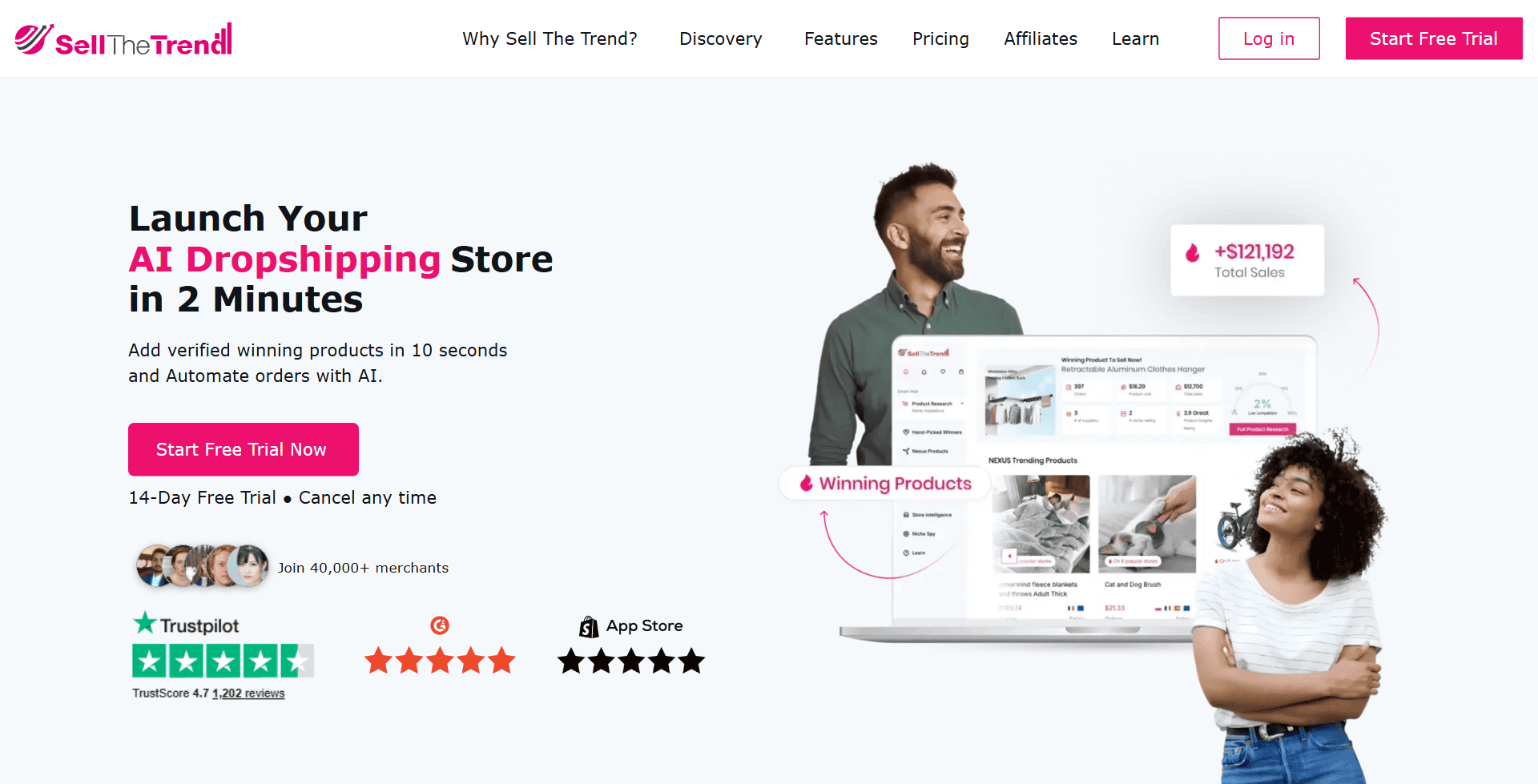
If product research is your bottleneck, Sell The Trend is the first tool we'd look at.
It pulls data from AliExpress, Amazon, CJdropshipping, and competitor stores, which gives you more context before testing random items.
The main feature is NEXUS, Sell The Trend's AI product discovery engine. It looks at product, store, and trend signals to surface items that are gaining traction.

Sell The Trend also includes SellShop, an AI store builder that can help you turn a product idea into a ready-to-edit ecommerce store.
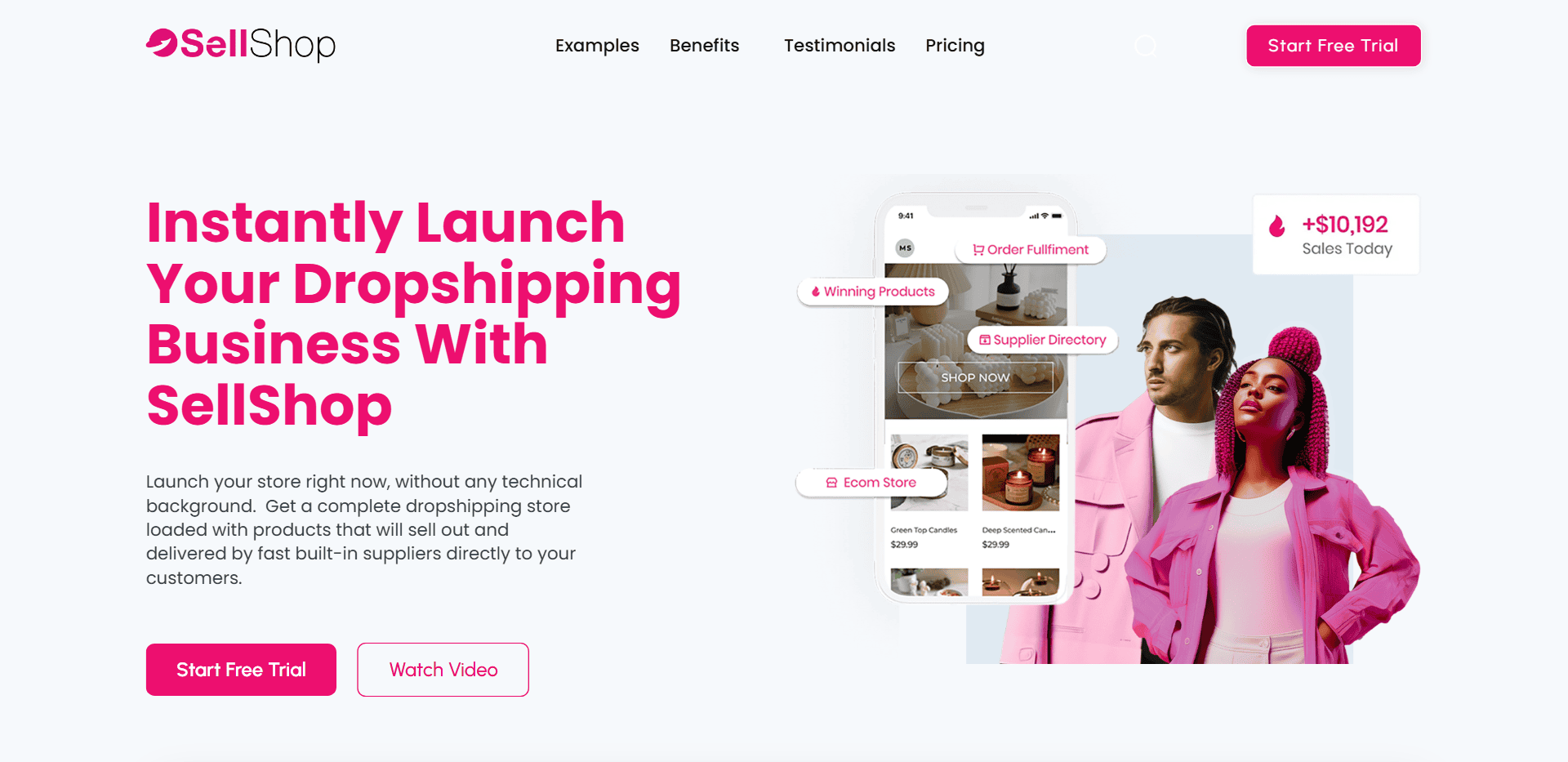
So you can research products, import them, and start building from one subscription.
For more details, check out our Sell The Trend review or our SellShop review.
Key features
- NEXUS AI Product Discovery. Find product ideas with Sell The Trend's research engine instead of guessing manually.
- Store Intelligence. Drop a competitor's URL in and review products, estimated performance signals, and store activity.
- AI Brand Builder. Generate product descriptions and ad copy with ecommerce context built in.
- SellShop. Build a dropshipping store from inside the same ecosystem.
Pricing
Currently, Sell The Trend has three monthly tiers:
Lite at $29.97/month, Essential at $49.97/month, and Pro at $99.97/month.
Yearly billing lowers the monthly equivalent.
Alternatives
If Sell The Trend isn't the right fit, here are three other options for product research:
- Niche Scraper. A budget-friendly product research option.
- Thieve.co. A curated AliExpress product discovery tool.
- Dropship.io. A research tool that helps you study products, stores, and ads.
2. Storebuild.ai
Best for: Beginners stuck at the blank-store stage who want a free Shopify starting point.
Not for: Sellers who want products from outside Zendrop's catalog.
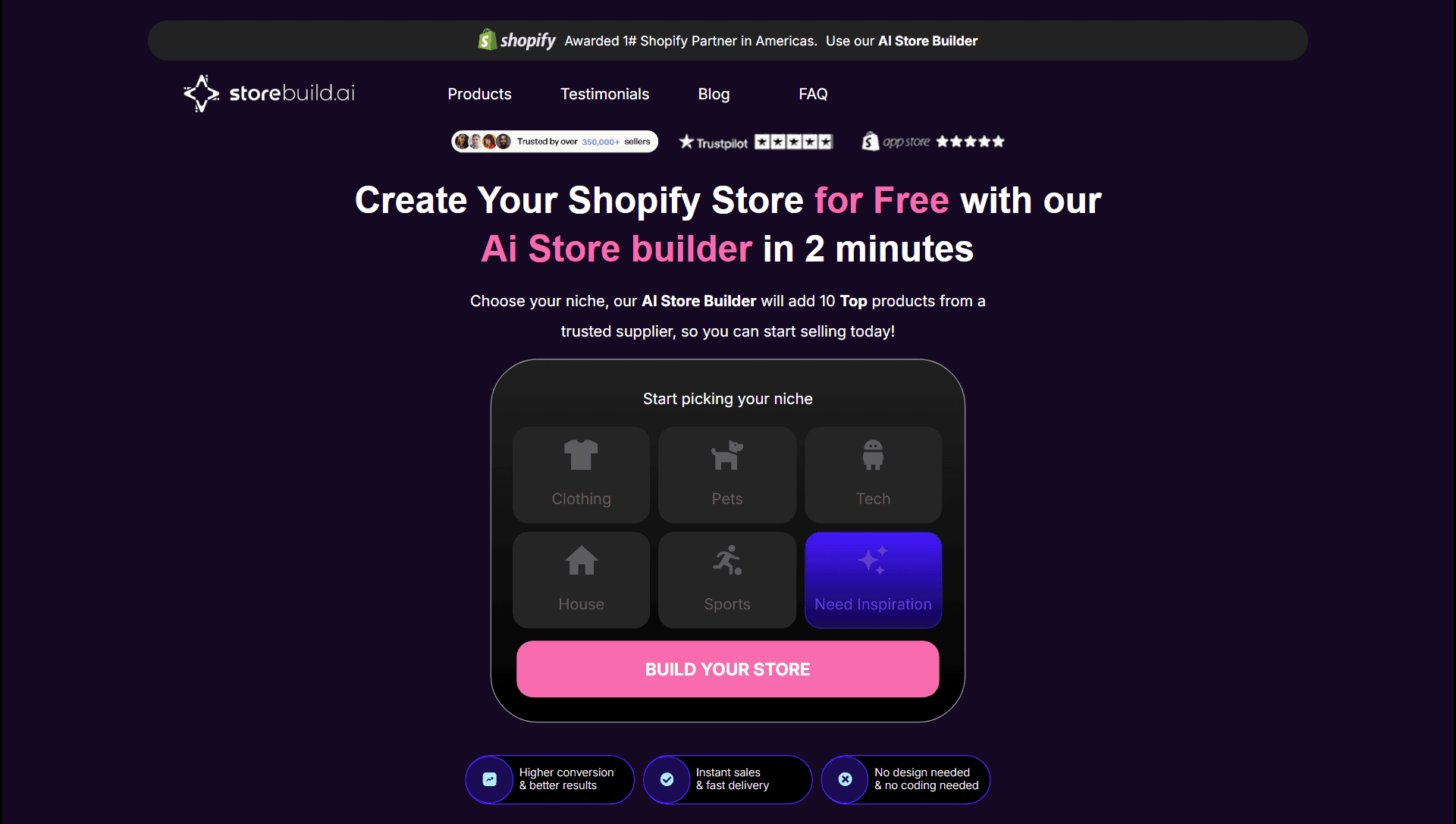
Storebuild.ai is a free Zendrop platform for building a Shopify store with AI.
You pick a niche, products, and brand colors. Storebuild.ai then creates a ready-to-edit Shopify store:
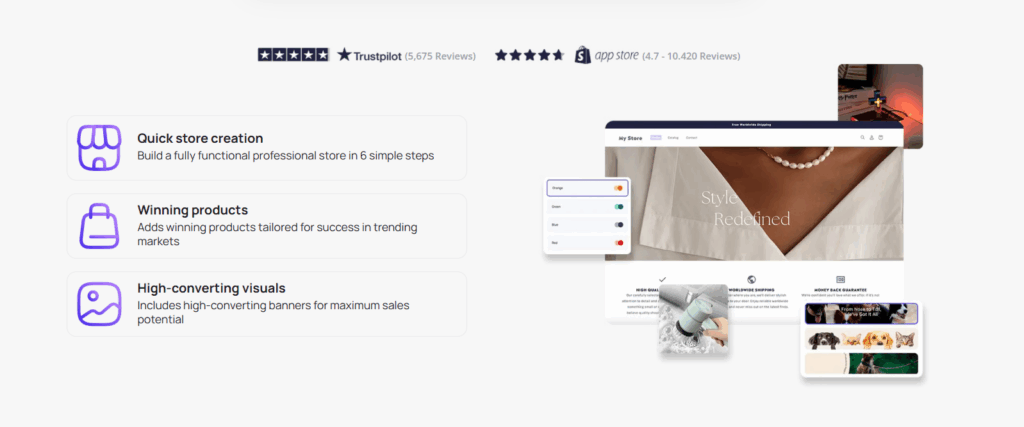
It's helpful if you're stuck at the blank-store stage and want a faster starting point.
You should still review the store carefully afterward. AI can create the base, but you still need to check the product choices, pricing, images, policies, and positioning.
Key features
- Products sourced from Zendrop. Since Storebuild.ai is built by Zendrop, products are pulled from Zendrop's catalog.

Related article: Zendrop Review 2026: Pricing, Features & Honest Verdict
- Full customization freedom. Once the store is built, you can edit the theme, swap products, change the design, and connect other Shopify apps.
- Good beginner shortcut. It gives you a base store faster than starting from a blank Shopify theme.
Pricing
Currently, Storebuild.ai is free to use. You still pay for your Shopify subscription once your Shopify trial or promotional period ends.
Storebuild.ai earns an affiliate commission from Shopify, which is how it can keep the tool free for users.
Alternatives
If Storebuild.ai isn't the right fit, here are a few other Shopify AI website builders to compare:
- Shopify Website Builder. Best if you want to stay inside Shopify and use the native AI store setup flow.
- DropMagic. A product-to-store generator that can help you turn one product idea into a Shopify store draft.
- Atlas. A paste-a-link Shopify app for building product-led pages, landing pages, bundles, and cart upsells.
For the full comparison, read our guide to the best Shopify AI website builders.
3. Printify
Best for: Sellers who want their own designs on products without holding any stock.
Not for: Stores that want one supplier handling production in house.
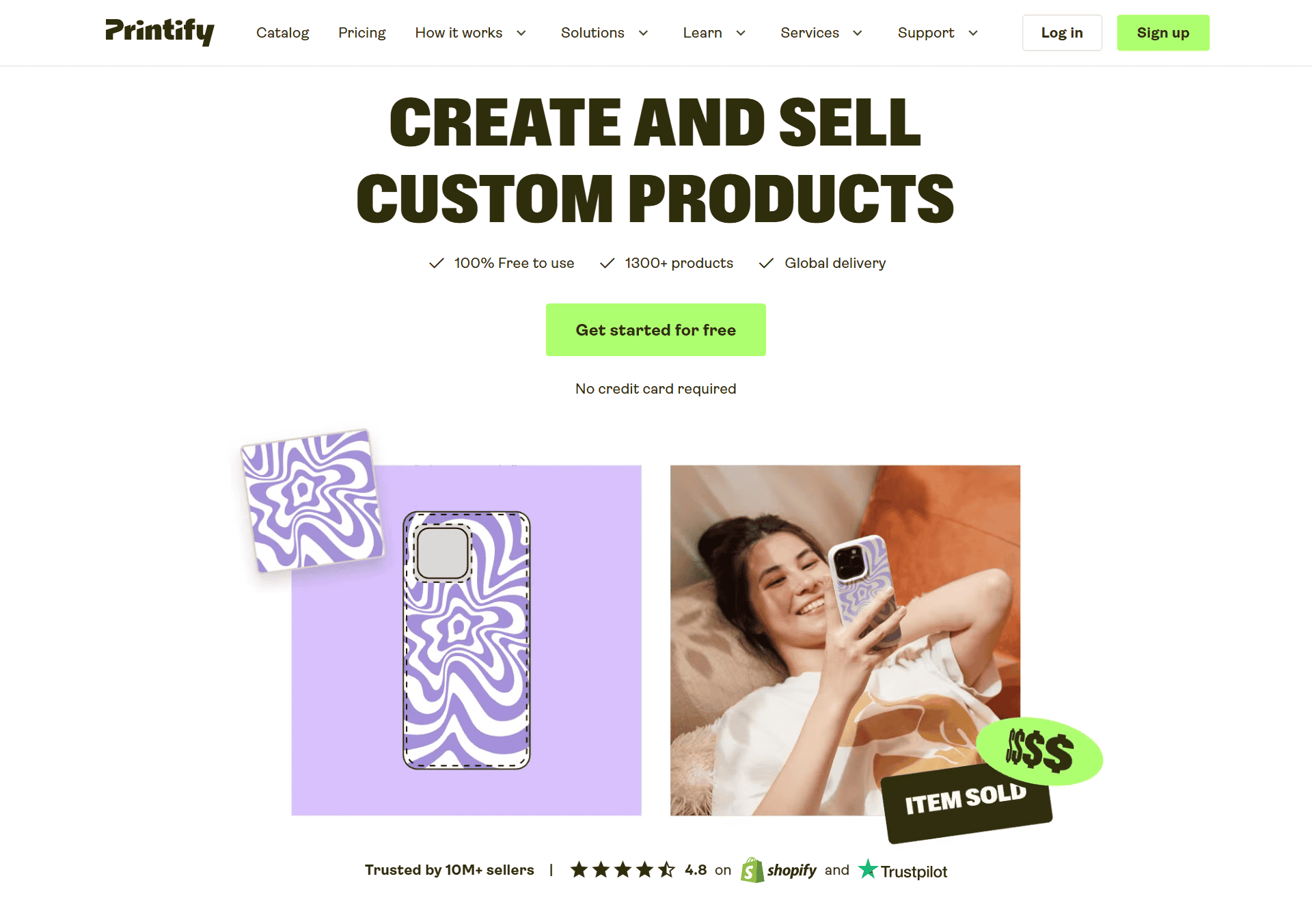
Printify is the tool we'd start with for print on demand.
Printify sits between your store and a network of print suppliers that handle production and shipping straight to your customers.
That supplier network is the main reason it works well for dropshipping.
Printify's AI Image Generator can turn a text prompt into a print-ready design.
According to Printify, free generations reset daily, and the feature is available to merchants inside the platform.
Key features
- Multiple suppliers. Switch print providers per product so you're not locked into one factory's shipping speed or quality.
- Native integrations. Printify connects with Shopify, WooCommerce, BigCommerce, Wix, Etsy, and API-based workflows.
- AI design generation. Helpful when you want to test print ideas without hiring a designer for every first draft.
Pricing
Currently, Printify has three plans:
Free at $0, Premium from $39/month on monthly billing, and Enterprise with custom pricing.
Annual billing lowers Premium to $24.99/month.
Alternatives
Three print on demand alternatives worth comparing:
- Printful. Worth comparing if you want a print on demand platform with more in-house production.
- CustomCat. Worth comparing if you want a US-focused print on demand option.
- Gelato. Worth comparing if global print coverage matters.
And if you want more on print on demand specifically, these guides go deeper:
- Is Print on Demand Still Profitable in 2026? Honest Answer
- 27 Best Print on Demand Niche Ideas for Your Store
- 10 Best Print on Demand Tools for Your Business
4. AutoDS
Best for: keeping your listings, prices, and stock in sync without doing it by hand.
Not for: Sellers who only need product research and don't want a broader store automation platform.
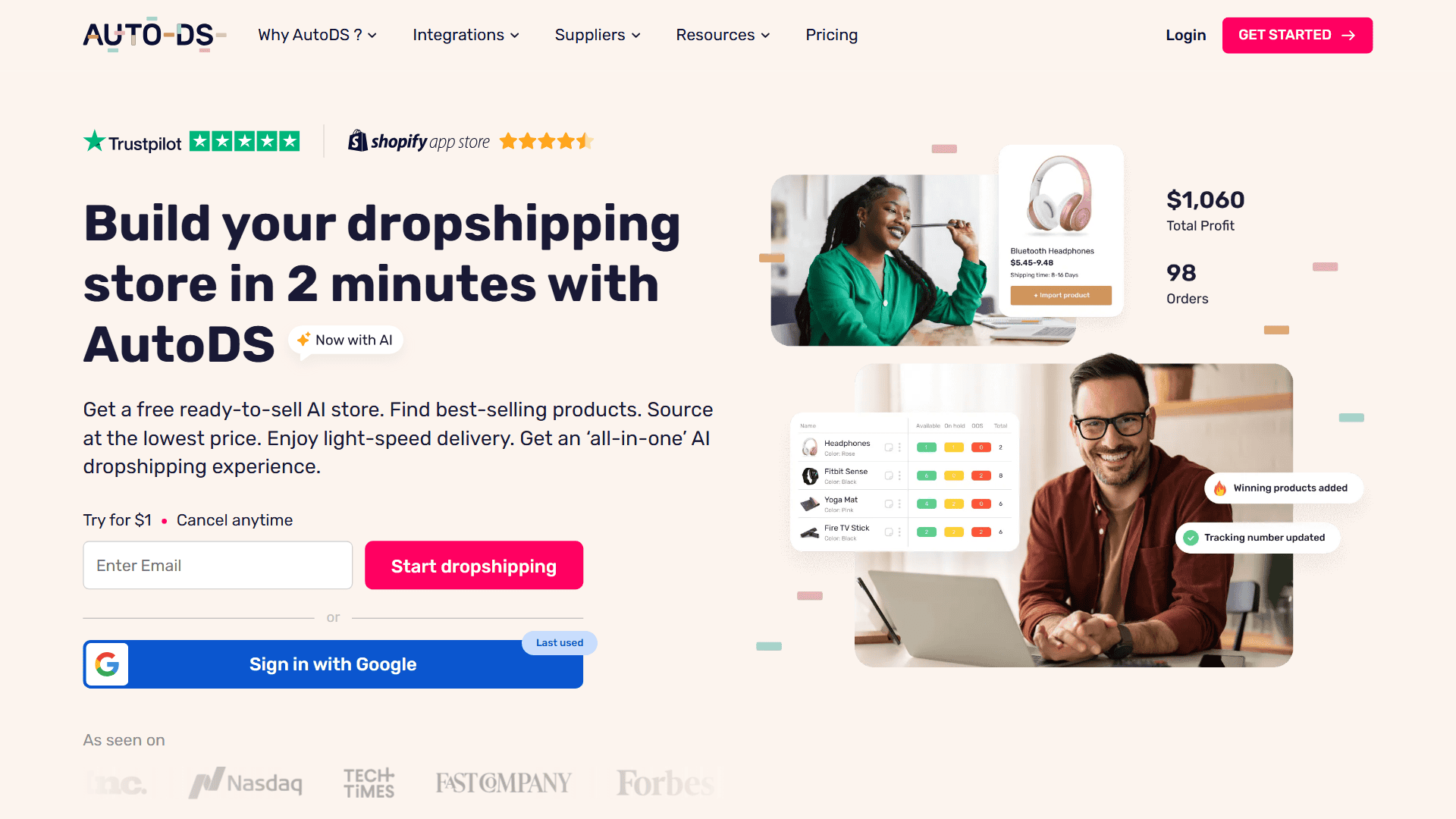
Finding a product is one thing. Getting it listed, priced, and shipped without touching it every day is another.
AutoDS covers both ends of that.
You can search its product database, import what you find straight into your store, and then let it watch your suppliers for price and stock changes.
So if a supplier hikes a price or runs out, AutoDS updates your listing instead of leaving you to find out from an angry customer.
Key features
- Product research. Search AutoDS' own database and import products into your store.
- Price and stock monitoring. Your listings update automatically when a supplier changes something.
- Automatic price optimization. Set the rules once and let AutoDS handle your margins.
- Order fulfillment. Orders can be placed with your supplier automatically as an add-on.
- Works across platforms. Shopify, eBay, Amazon, Wix, WooCommerce, and more.
Pricing
You can try AutoDS for three days for $1, and cancel any time.
After that, plans are priced by how many products you run. Import is $26.90 per month for up to 200 products, Starter is $39.90 for up to 500, and Advanced is $66.90 for up to 1,000. Above that, you'll need a custom Enterprise plan.
Paying yearly takes 25% off. Some features sit on top as add-ons: automatic order fulfillment is $9.90 per month, VA Access is $14.97, and mentoring is $39.97.
Alternatives
Have a look at Sell The Trend if you want research and importing in one place, or Syncee for supplier sourcing.
5. Browse AI
Best for: Sellers who want to know the moment a competitor changes a price or adds a product.
Not for: Anyone who needs a one-off scrape rather than ongoing monitoring.
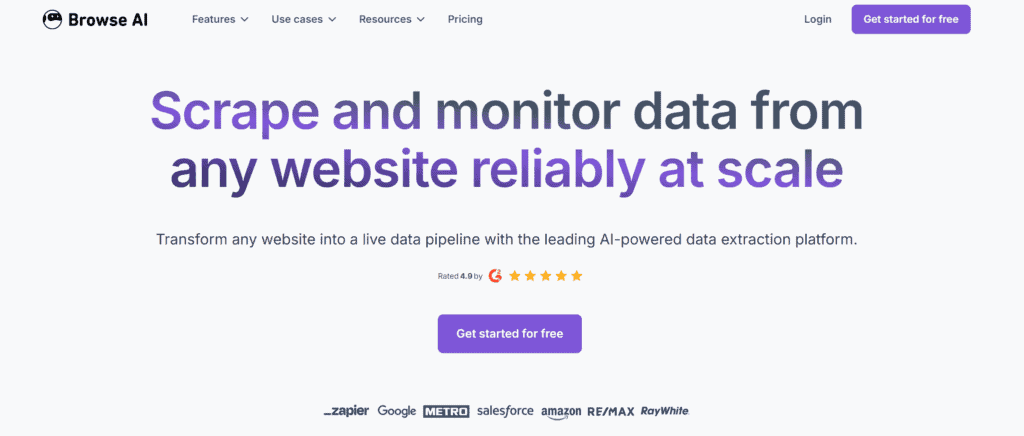
Browse AI is a no-code web scraping and monitoring platform.
For dropshippers, the useful part isn't scraping for the sake of scraping.
It's scheduled monitoring.
You can point Browse AI at competitor pages, marketplace pages, pricing tables, or product lists, then set a refresh cadence.
When something changes, the data can go to Google Sheets, Airtable, Zapier, Make, or an API workflow.
For a dropshipping store, that gives you four practical use cases:
- Competitor price tracking. Monitor competitor products and get alerted when prices change.
- Product launch radar. Detect when a competitor adds a new product before it gets widely copied.
- Supplier catalog monitoring. Pull product data into Google Sheets or Airtable for review.
- Review monitoring. Track low-star reviews on competitor products to find weaknesses you can position around.
Key features
- Native integrations. Google Sheets, Airtable, Make, Zapier, Pabbly Connect, REST API, and webhooks.
- Prebuilt robots. Browse AI has a large library of prebuilt robots, so many common use cases don't need to be built from scratch.
- Scheduled monitoring with change detection. This is what separates it from a one-off scraper.
Pricing
Currently, Browse AI has a free tier and paid plans:
The Free plan has a limited number of monthly credits.
Personal starts at the $19/month equivalent when billed annually, while month-to-month billing starts at $48/month.
Professional starts at $69/month annually or $87/month month-to-month. Premium starts at $500/month, billed annually.
Credits and billing options depend on the plan, so check the current limits before building a workflow around them.
Alternatives
- Apify. More developer-focused, with a large catalog of community-built scrapers.
- ParseHub. A scraper with a free tier, better suited to ad-hoc scraping than automated monitoring.
6. Mailchimp
Best for: Beginners who want their first email automations running without learning a complex tool.
Not for: Stores with a large list, because the price climbs with your contact count.
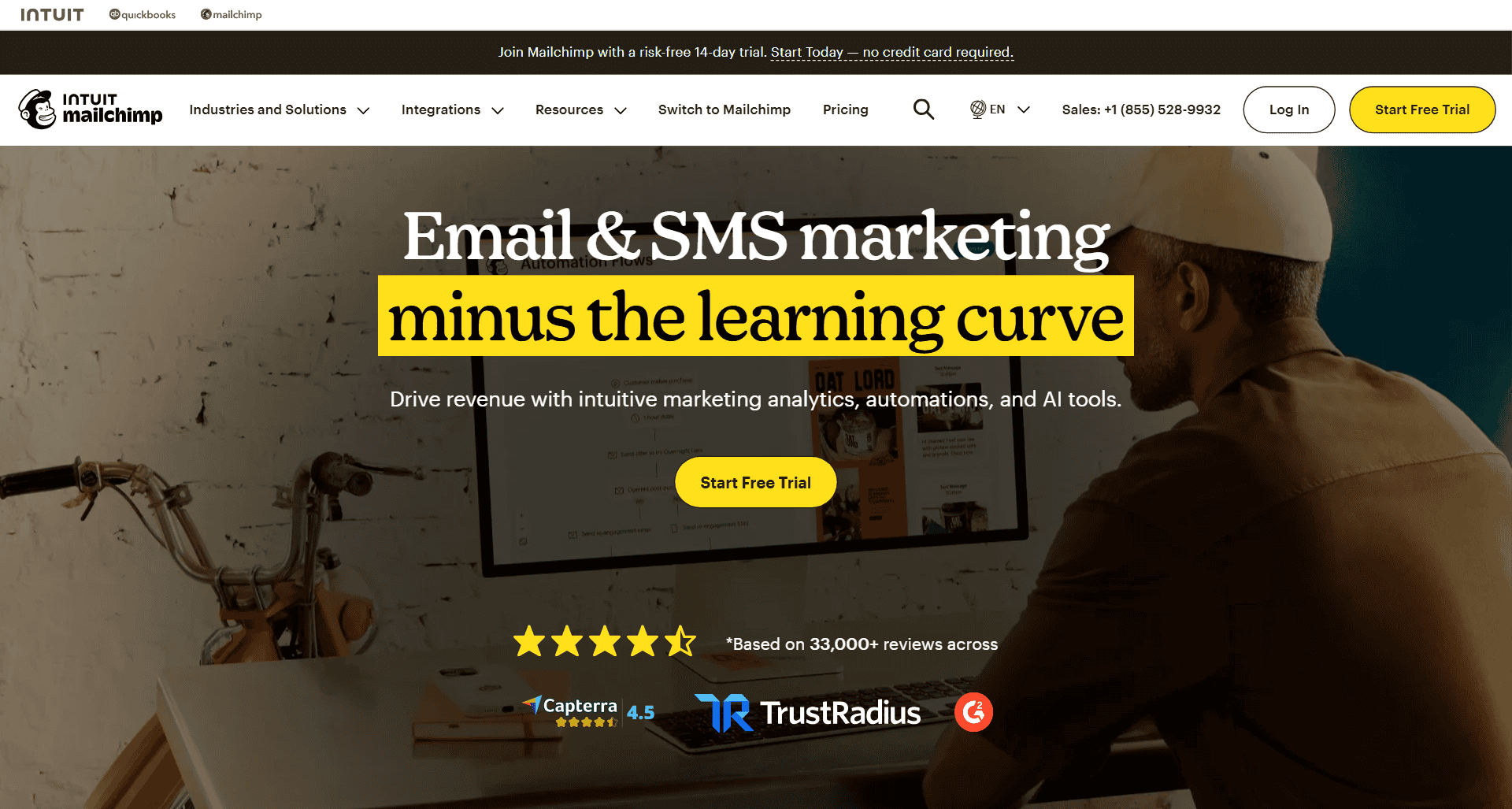
Email marketing matters in a dropshipping marketing strategy because it gives you a direct line to people who have already shown interest in your store.
Mailchimp has been a default email tool for ecommerce for years. Its AI features now make it more useful for automation and first-draft email content.
You can use Mailchimp to generate email copy, improve content, personalize emails, and build automations for abandoned carts, welcome flows, and customer reactivation.
For a dropshipping store, this matters because most visitors won't buy on their first visit to your site.
Email gives you another chance to bring them back without paying for the same click again.
Key features
- Content Optimizer. Helps improve readability, calls to action, tone, and subject lines.
- Dynamic Content. Personalize email content for different audience segments.
- A/B testing. Test subject lines, send times, and content variations.
- Automations. Helpful for welcome emails, abandoned carts, post-purchase sequences, and customer win-back flows.
Pricing
Currently, Mailchimp has four main marketing tiers:
Free, Essentials, Standard, and Premium.
Pricing scales with your contact count, region, and billing setup.
Entry pricing often starts around $13/month for Essentials, $20/month for Standard, and $350/month for Premium.
Note: Mailchimp's Free plan now includes up to 250 contacts and 500 sends per month, with a daily send limit of 250.
Alternatives
Want a different email option? These three are worth comparing:
- ActiveCampaign. Combines sales, marketing, and customer service automation in one platform.
- Rasa.io. An AI newsletter tool that personalizes newsletter content per subscriber.
- Customer.io. An automated messaging platform for data-driven email and SMS.
7. Jasper
Best for: Stores producing marketing copy every week that want a saved brand voice and templates.
Not for: Sellers writing the odd product description, where opening ChatGPT is enough.
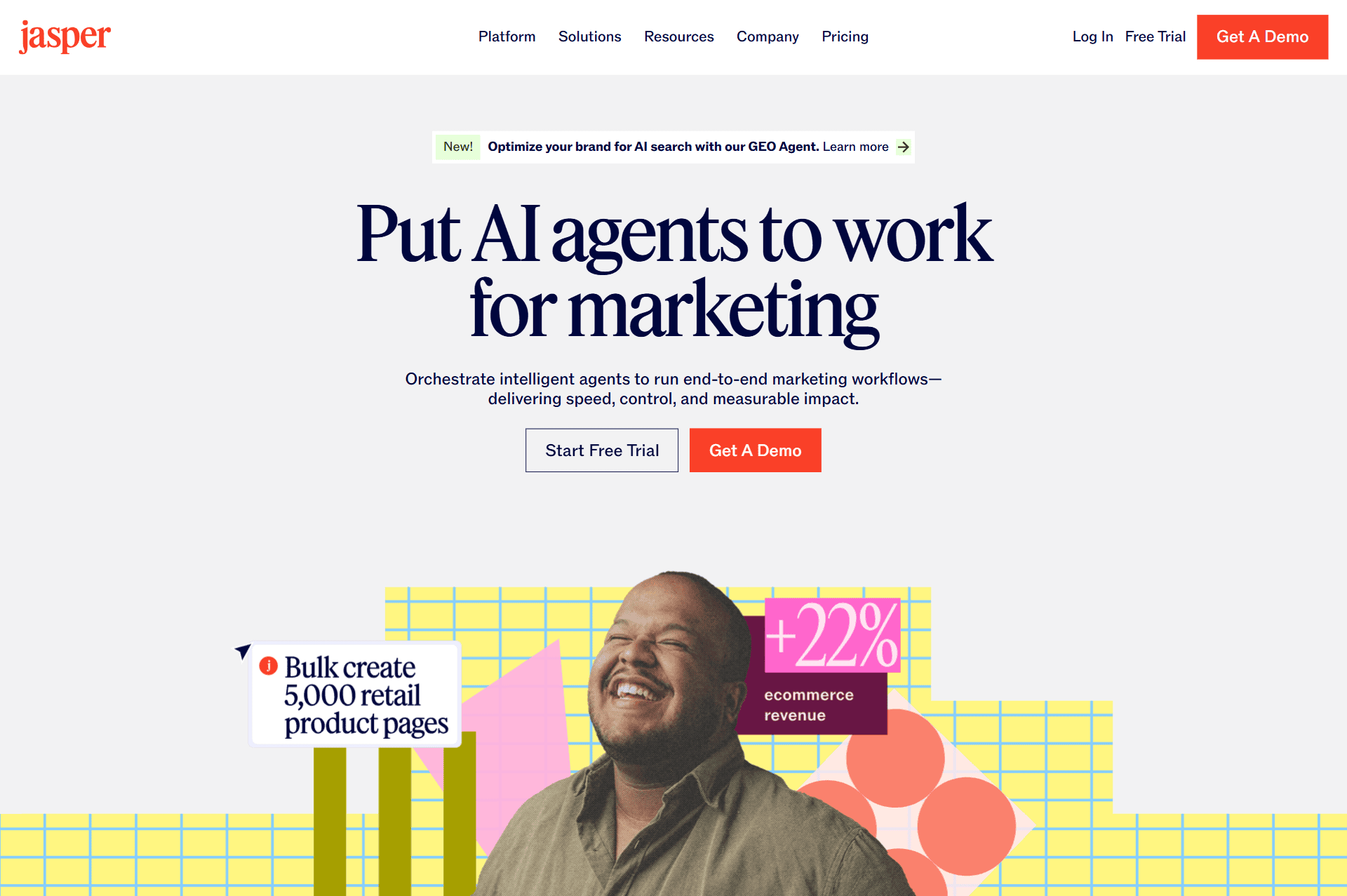
Originally launched as Jarvis, Jasper is the content tool we'd consider if you want something more structured than a general chatbot.
It can help write blog articles, product descriptions, ad copy, scripts, and email sequences.
Jasper's biggest advantage over a basic chatbot is the marketing workflow around the writing.
You can set a brand voice, create repeatable workflows, use templates, and build content with more structure than a blank prompt box.
That makes it useful if you publish a lot of content and want a more organized writing system than opening ChatGPT every time.
Key features
- Brand voice. Keep product copy, emails, and blog drafts closer to your store's tone.
- Templates. Product descriptions, ad angles, captions, emails, scripts, and other marketing formats.
- Marketing workflows. Helpful if you want content creation to follow a repeatable process.
- SurferSEO integration. Pair Jasper's writing with SurferSEO's on-page content signals.
Pricing
Currently, Jasper has Pro and Business pricing:
Pro is priced at $69/month per seat on monthly billing, or $59/month per seat on yearly billing. Businesses use custom pricing.
Jasper also offers a seven-day free trial on the Pro plan.
Alternatives
If Jasper is more than you need, compare these:
- ChatGPT. A flexible general-purpose AI assistant for product descriptions, ad angles, email drafts, product research prompts, and store planning.
- Writesonic. A structured AI writing platform for blog content, landing pages, ads, and ecommerce copy.
- Copy.ai. A marketing-focused AI platform for repeatable sales, content, and campaign workflows.
For more on content creation, these articles go deeper:
- 13 Best AI Copywriting Tools for Dropshipping (Free & Paid)
- Dropshipping With ChatGPT: 18 Ways It Can Help Your Store
- Copywriting for Dropshipping: Everything You Need to Know
8. PagePilot
Best for: Sellers testing lots of products who need a product page draft in minutes.
Not for: Anyone who wants a whole store built rather than single product pages.
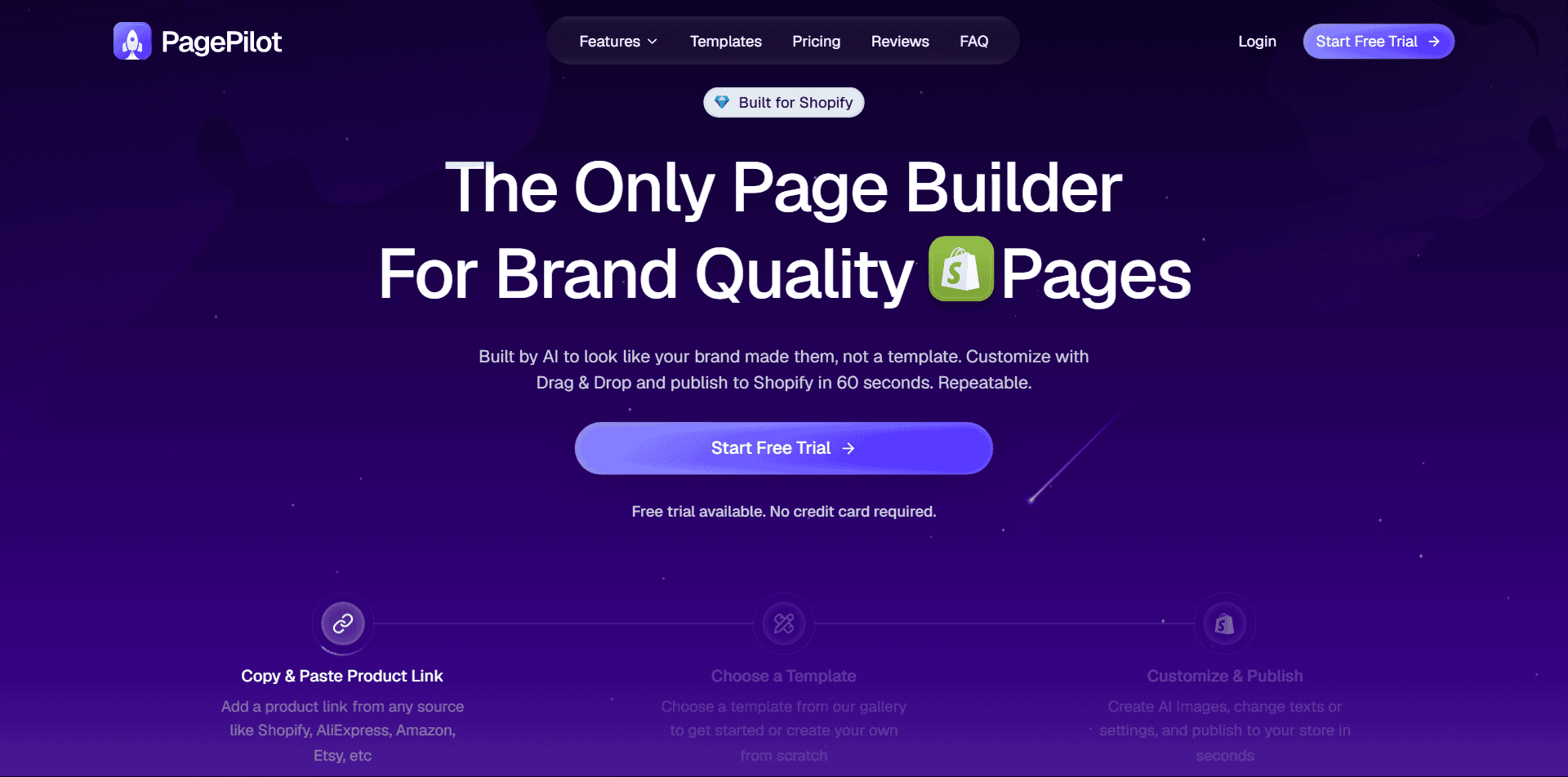
If product pages slow you down, PagePilot is worth a look.
The workflow is simple:
Start with an AliExpress or Shopify product, like this baby towel:

Drop the AliExpress link into PagePilot:

PagePilot then generates the page layout, copy, sections, reviews, and product-page structure.
Here's the page it built for that baby towel:

That doesn't mean you should publish the page untouched.
You still need to check claims, product details, images, pricing, reviews, and compliance.
But as a first draft, it's much faster than building every product page from scratch.
Key features
- Full product page generation. Drop an AliExpress or Shopify link, and PagePilot creates a product page draft.
- Ad copy generation. Hooks and angles for Facebook Ads sit inside the same dashboard.
- Daily winning products. PagePilot also publishes product ideas inside the platform.
Pricing
Currently, PagePilot has three monthly tiers:
Lite at $39/month, Starter at $59/month, and Scaler at $99/month.
PagePilot also advertises a free trial on its pricing page. Yearly billing gives two months free.
9. Pencil
Best for: Sellers running paid ads who want to compare creative options before spending on them.
Not for: Stores running on organic traffic that don't buy ads at all.
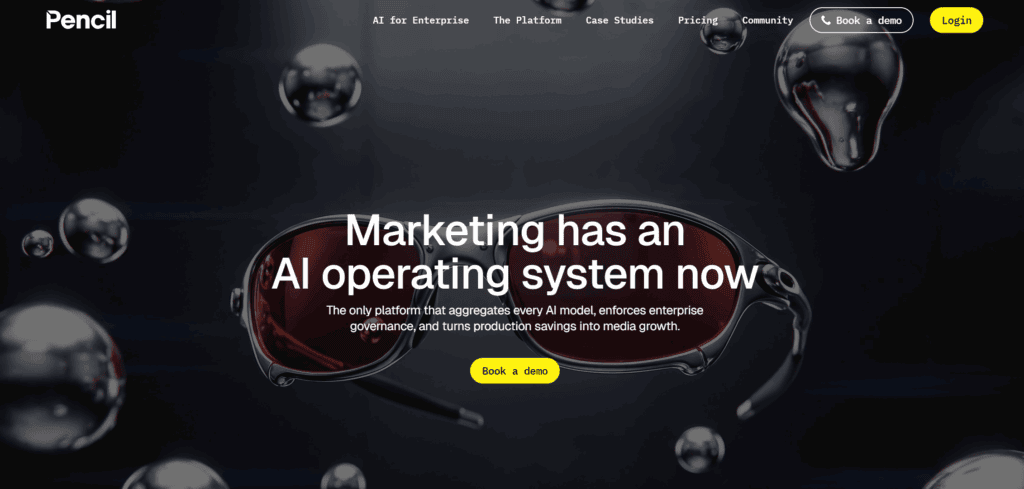
Pencil is a generative AI ad creative platform owned by The Brandtech Group.
It helps create text, image, video, and ad creative assets from one workspace.
The useful part for dropshipping is the scoring layer.
Instead of generating one ad and hoping it works, Pencil lets you create multiple variations and compare them before launch using its AI insights and scoring features.
That helps if paid ads are already your bottleneck and you need more creative variations without increasing weekly production time.
Key features
- Self-serve AI agents. Generate text, images, video, ad creatives, and other marketing assets.
- Real-time AI insights and scores. Review creative options before you launch.
- Ad platform coverage. Pencil lists launch and tracking support across platforms like Facebook, Instagram, TikTok, YouTube, Google Display, DV360, and LinkedIn.
Pricing
Currently, Pencil has Core, Growth, and Pro pricing:
Core starts at $14/month and includes 50 generations per month. Growth is $55/month with 250 generations per month. Pro uses custom pricing.
Annual billing lowers Core and Growth to $11/month and $44/month equivalents.
Alternatives
- AdCreative.ai. Generates static and video ads with a conversion-score model.
- Omneky. A more enterprise-leaning creative platform with cross-channel testing.
10. Creatify
Best for: Sellers who want short video ads from a product URL without filming anything.
Not for: Brands that want real footage of their own product on camera.
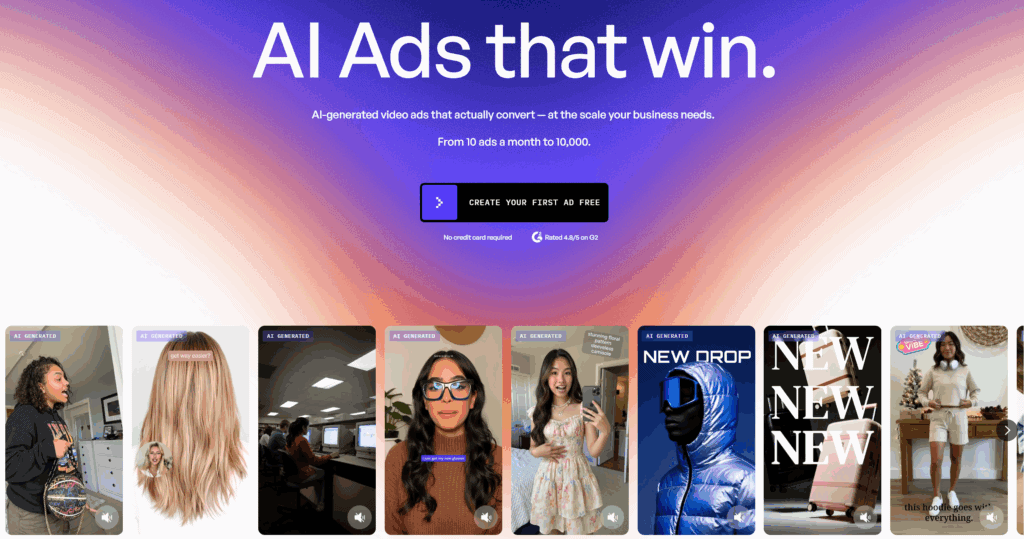
Creatify is a URL-to-video AI ad generator built for performance marketers and ecommerce teams.
The workflow is simple:
Paste your Shopify, Amazon, or product URL into Creatify.
Creatify pulls product details from the page and helps generate short video ad variations with AI actors, voiceovers, templates, and product footage.
For dropshippers, the main use case is speed.
You can test more TikTok, Meta, or short-form video concepts without filming every first draft yourself.
Key features
- URL-to-video workflow. Start from a product URL instead of a blank video timeline.
- AI actors. Creatify's paid plans include access to large AI actor libraries, depending on the tier.
- Ad templates. Helpful for producing multiple video variations quickly.
- Multi-language support. Helpful if you test products in more than one market.
Pricing
Currently, Creatify uses a credit-based pricing model:
The Free plan includes 10 monthly credits and watermarked exports.
Paid plans add more credits, templates, actors, languages, and export options, with Starter commonly listed from $33/month.
Alternatives
- HeyGen. More focused on AI avatars, but less focused on the ecommerce URL-to-video workflow.
- Arcads. Another UGC-style AI video generator with a deep actor library.
11. Tidio
Best for: Stores getting enough repeat questions that answering them by hand eats the day.
Not for: Brand-new stores with a handful of messages a week.
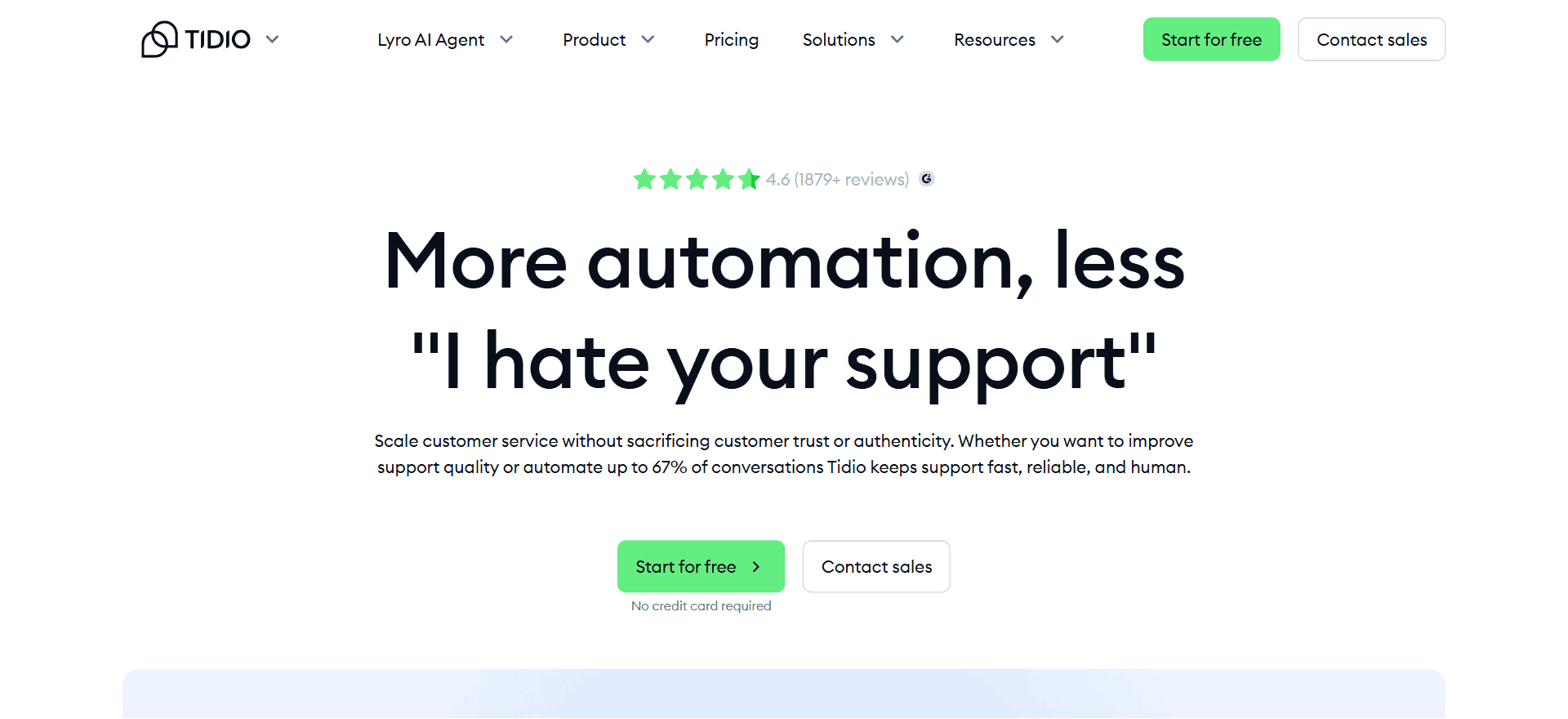
For customer service, Tidio is the tool we'd check first.
Tidio includes live chat, help desk tools, analytics, automation, and messaging channels in one app.
The AI side is why it made this list.
Tidio says Lyro can automate up to 67% of customer conversations. That's Tidio's claim, so treat it as a benchmark for what the tool is trying to solve.
Lyro is trained on your store content, such as FAQs, product information, and policies, and then responds in natural language instead of relying only on keyword scripts.
Key features
- Lyro AI agent. Handles routine customer questions so you can focus on cases that need a human.
- Reply Assistant. Helps clean up grammar, tone, and brand voice on agent replies.
- Live chat and help desk. Keeps AI and human support in one workspace.
Pricing
Currently, Tidio has Free, Starter, Growth, Plus, and Premium options:
On an annual billing plan, Starter starts at $24.17/month, Growth starts at $49.17/month, and Plus starts at $749/month.
Monthly billing is higher, and Lyro conversation limits depend on your plan and add-ons.
Alternatives
Consider Re:amaze. It combines live chat, help desk, knowledge base, and AI workflows in one app, with a different pricing curve.
12. Commerce AI
Best for: Stores with a big catalog where shoppers struggle to pick the right product.
Not for: Small catalogs a shopper can browse in a couple of clicks.
Tidio is strong for support.
But what if you want a chatbot focused on recommending products?
That's what Commerce AI is built to do.
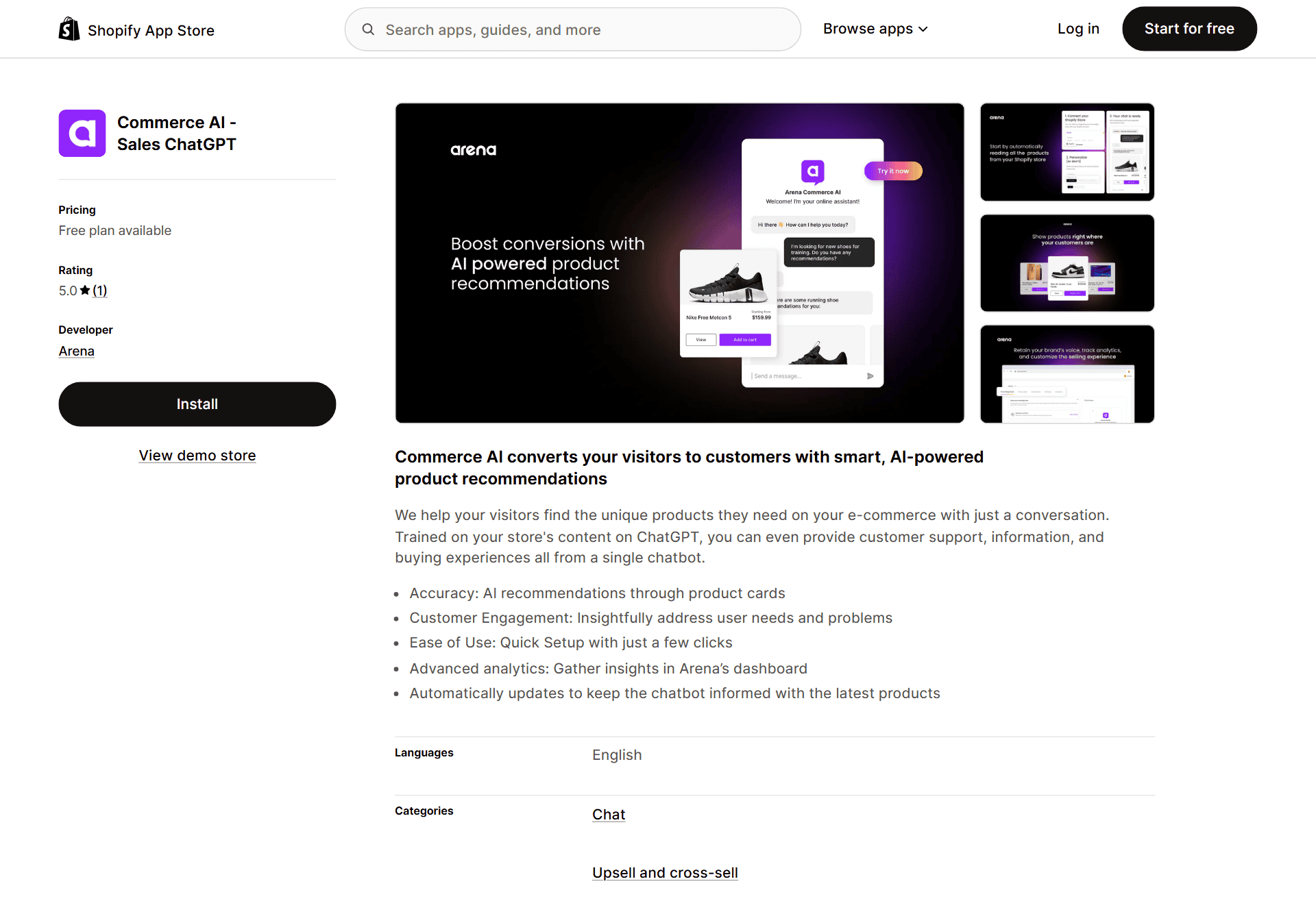
Commerce AI gives shoppers a chat-style experience that can answer product questions and recommend items from your store.

It trains on your store's website content, so it can answer questions about shipping, policies, products, and product comparisons.
The trade-off is that we'd treat Commerce AI as a focused recommendation tool, not a full support platform replacement.
Key features
- Product recommendations. The chatbot can guide shoppers toward relevant products.
- Store-content training. It learns from your product and website content.
- Multi-language support. Helpful if your store serves customers in more than one language.
Pricing
Currently, Commerce AI is priced by monthly store pageviews:
It starts with a free plan for low-traffic stores, then paid tiers at $29/month and $99/month.
So if you're still early, you can test it before your traffic reaches the paid tiers.
Alternatives
- ConvertWise AI. AI product recommendations on the homepage, product pages, and inside the cart drawer.
- Doofinder. An AI-powered search bar that helps shoppers find the right product faster.
13. Chargeflow
Best for: Stores losing real money to chargebacks that want the disputes handled for them.
Not for: New stores with few orders, where chargebacks aren't a problem yet.
Chargeflow is the tool on this list for dealing with chargebacks.
If you have run a store for any length of time, you know how quickly a chargeback can derail your week.
Chargeflow handles the dispute process on your behalf.
It scores the recovery potential of each disputed transaction, pulls evidence from your store data and payment processor, and prepares dispute responses.
There's also a dashboard that aggregates chargebacks across multiple payment processors so you can see the full picture.
The pricing is why Chargeflow is worth a look: you only pay when a chargeback is recovered.
Key features
- Integrations. Shopify, PayPal, WooCommerce, Stripe, ReCharge, and more.
- ChargeResponse. Builds dispute responses from your transaction and store data.
- Success-based pricing. No recovered chargeback, no fee.
Pricing
Currently, for chargeback recovery automation, Chargeflow uses success-based pricing:
There's no payment until a chargeback is recovered.
You pay 25% of successfully recovered chargebacks, and nothing for recovery automation if Chargeflow loses the dispute.
This does not include separate dispute fees. Chargeflow also has other products, such as prevention and alerts, with separate pricing.
Alternatives
Two AI-driven alternatives for chargeback and fraud management:
- SEON. Real-time validation of email, IP, and card data using AI and machine learning.
- Kount. A fraud prevention solution focused on risk management.
14. Canva
Best for: Sellers who need clean product images and social posts without hiring a designer.
Not for: Anyone who only wants a quick product background, where a leaner tool is faster.
Most dropshippers eventually hit the same image problem.
The default product images from suppliers are often generic, and your competitors may be using the same ones.
That's where Canva fits.
Canva helps with social posts, product images, infographics, banners, and ad creative. You don't need to hire a designer every time you need a clean visual.
Canva's AI features make it more useful for ecommerce work.
You can generate images from a prompt, remove backgrounds, erase objects, create design variations, and clean up simple product visuals.
Key features
- Magic Edit. Brush over part of an image and describe what should be there.
- Magic Eraser. Remove objects from images by brushing over them.
- Magic Design. Upload an image and generate full design variations from it.
- Background tools. Helpful for cleaning up product visuals and social media graphics.
Pricing
Currently, Canva has Free, Pro, and Business plans.
Pricing can vary by region, plan, billing setup, and number of users, so check Canva's current pricing page before upgrading.
Alternatives
Canva can feel like a lot if you only need a clean product background. These three are leaner:
- Mokker. AI-driven product background generator.
- Pixelcut. Quick AI-generated product photo backgrounds.
- CreatorKit. Product photo and video creation for ecommerce stores.
If you want to go deeper, here's how to use Canva for your dropshipping store.
15. ConvertMate
Best for: Shopify stores with lots of thin product pages copied straight from suppliers.
Not for: Sellers who want a broader SEO tool for content planning and competitor research.

ConvertMate is a Shopify app built to improve organic traffic to product pages.
It generates SEO-friendly product titles, descriptions, meta titles, meta descriptions, and URL handles for products in your catalog:

For dropshippers, the appeal is simple:
Most product pages are thin, copied from suppliers, or written with no keyword strategy. ConvertMate helps clean that up at scale.
ConvertMate claims stores using the app can see organic traffic improvements, but treat that as a case-study signal rather than a guaranteed result for your store.
Key features
- Keyword research. Keyword data inside the dashboard.
- Bulk page updates. Product and collection page titles, descriptions, metadata, and URL handles can be updated at scale.
- Shopify focus. Built specifically around Shopify product-page workflows.
Pricing
Currently, ConvertMate has a free tier and paid Shopify plans:
The free tier includes trial credits. Paid plans are listed at $49/month, $149/month, and $399/month.
Enterprise-style usage can require higher limits or custom workflows.
Alternatives
If you want a broader SEO tool instead of a Shopify product-page optimizer, compare these:
- Semrush. A full SEO and competitor research suite for keyword research, content planning, PPC research, and competitor tracking.
- AnswerThePublic. Useful for turning seed keywords into questions, comparison ideas, FAQ topics, and blog angles.
- SurferSEO. Best when you already know the target keyword and want guidance on optimizing a page or article.
16. Syncee custom GPT
Best for: Sellers already browsing Syncee who want free product ideas from a prompt.
Not for: Anyone sourcing outside Syncee, or without access to ChatGPT.

The Syncee Dropshipping Product & Supplier Search GPT is a custom GPT that recommends products from suppliers listed on Syncee.
As you would expect, it connects back to Syncee, a marketplace where you can find products from brands and suppliers:
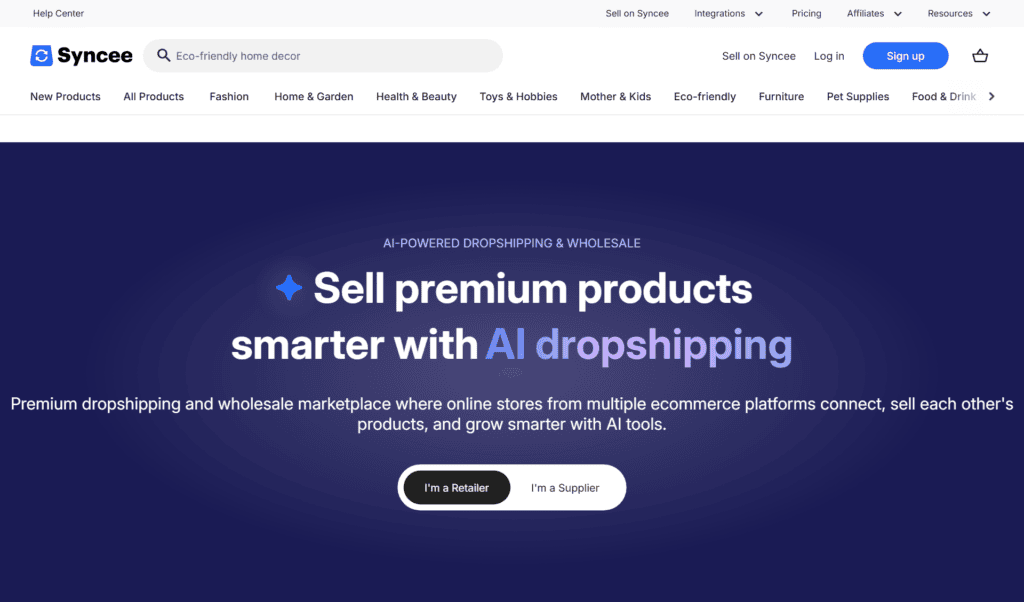
Syncee calls this collective dropshipping. In simple terms, stores from different ecommerce platforms can connect and sell each other's products.

Tell the custom GPT what products you're looking for, and you'll get specific suggestions:

Click a product to land on Syncee's listing for it:

Key features
- Directly linked to Syncee. Click a recommended product and you land on Syncee's product page.
- Product search by prompt. Describe what you're looking for and get relevant product suggestions.
- Similar-product research. Drop in a product idea and use the GPT to search for related options.
Pricing
Currently, Syncee's custom GPT is free to use, but you need access to ChatGPT.
Learn more: Syncee Review: Does It Have the Best Global Suppliers?
Alternatives
There aren't many direct alternatives to Syncee's custom GPT. If you want more Shopify-tailored GPT options, check out this article.
17. Predis.ai
Best for: Sellers who need social posts out fast and keep staring at a blank canvas.
Not for: Stores that mainly need scheduling and campaign management.
Say you need a social post live in the next 10 minutes.
You're staring at a blank canvas with no idea where to start.
That's where Predis.ai can help.
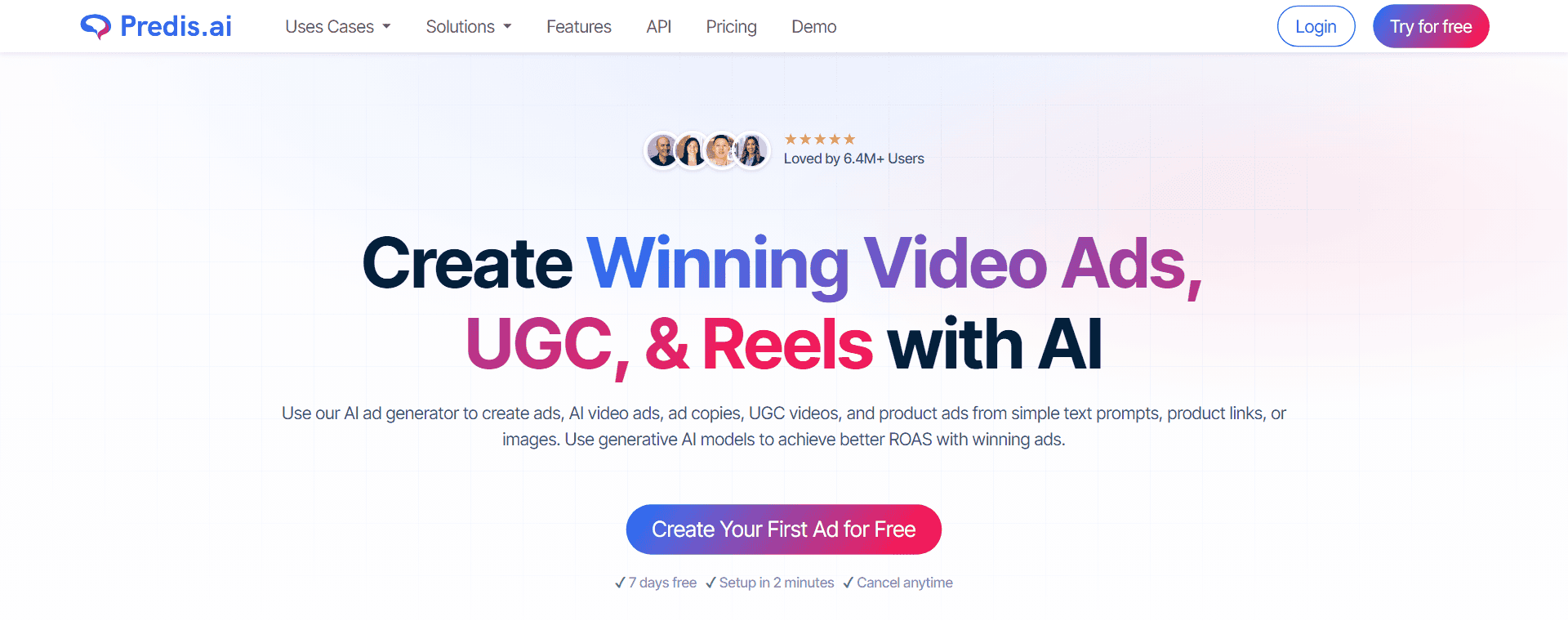
Predis.ai is our pick for social media content creation. It can create copy, images, carousels, and short videos from a prompt.
Pick a format, give a quick description, and Predis generates a post you can edit.
You can also schedule posts from the same dashboard and review analytics after they go live.
Key features
- Competitive analysis. Review engagement stats, content distribution, and post-type breakdowns for accounts you track.
- Ecommerce product video maker. Predis can scan your store and generate short product videos for promotions.
- Integrations. Predis connects with Shopify, WooCommerce, Etsy, Ecwid, and other ecommerce platforms.
Pricing
Currently, Predis.ai offers a free trial and three paid tiers:
Core is displayed at $19/month, Rise at $40/month, and Enterprise+ at $212/month, but those prices are shown with yearly billing and current discounts.
Alternatives
If Predis isn't a fit, these two are worth comparing:
- Buffer. More focused on scheduling and campaign management.
- Ocoya. Generate images and posts, schedule them, and benchmark against competitors.
18. SEOWILL (formerly SEOAnt)
Best for: Shopify stores that have never had their technical SEO looked at.
Not for: Sellers who need an SEO tool that works outside Shopify.
New dropshippers often skip SEO.
That can be a costly mistake, because organic traffic can keep working after the first page update is done.
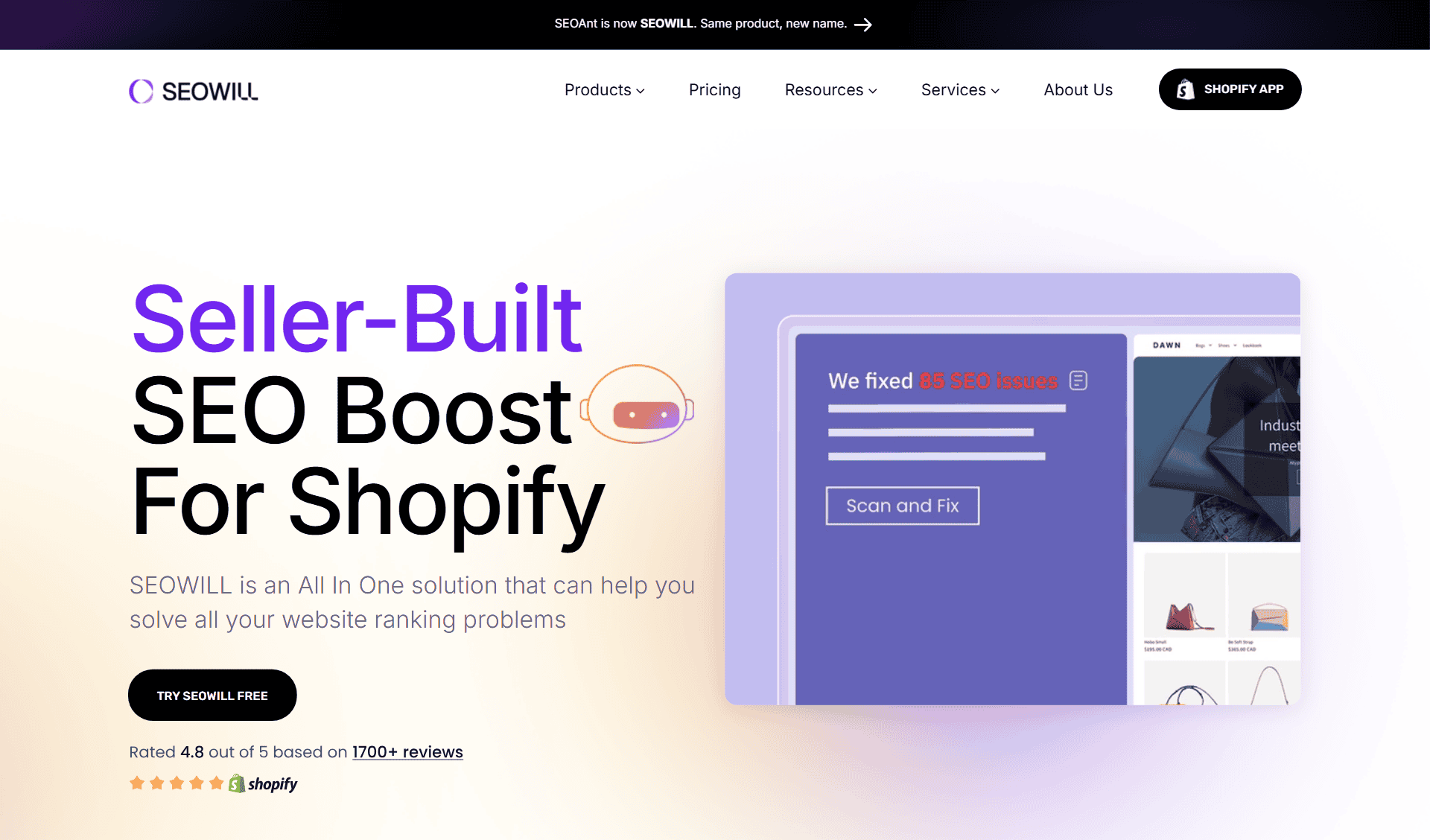
SEOWILL handles technical and on-page SEO tasks like scans, metadata, image SEO, broken links, and structured optimization workflows.
The AI angle is simple: it can surface issues, suggest fixes, and help improve content faster than doing everything manually.
Key features
- Auto-scan SEO. Review site speed, content gaps, tag errors, and other SEO issues.
- Image SEO. Compress images and generate alt tags.
- Broken link management. Detect and manage 404 errors.
- Structured data support. Add JSON-LD and other structured optimization improvements inside Shopify.
Pricing
Currently, SEOWILL has a free plan and paid Shopify app tiers:
Pro is listed at $29.99/month, and Premium is listed at $59.99/month. Annual billing lowers the monthly equivalent.
Alternatives
If you want a tool that isn't Shopify-specific, compare these:
- Semrush. A full toolkit covering SEO, content marketing, PPC, and competitor research.
- SurferSEO. An AI-driven content optimization tool for improving page relevance and rankings.
19. Octane AI
Best for: Stores where shoppers need help narrowing down a wide range of options.
Not for: Small stores, since plans start at $50 per month.
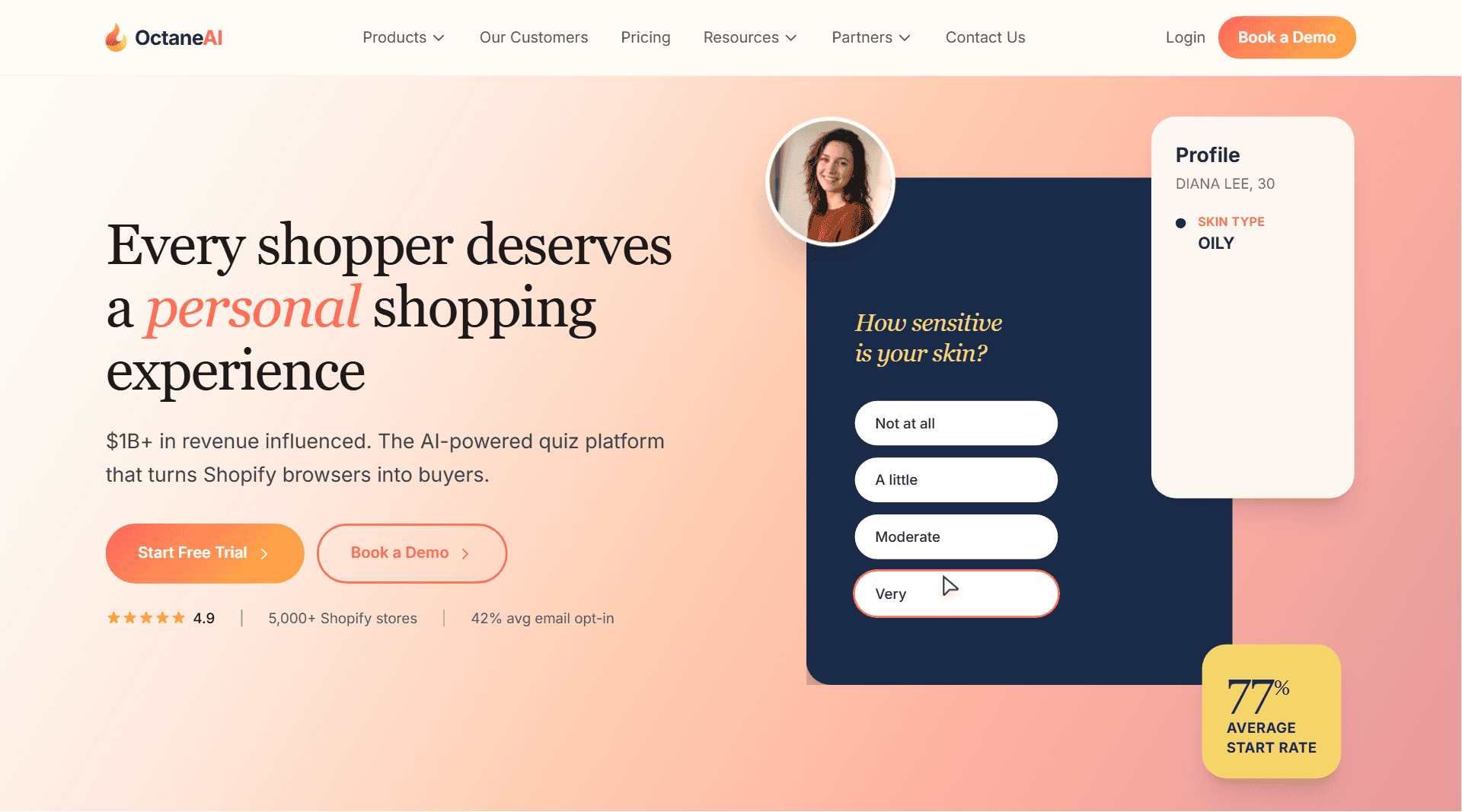
A quiz is a simple way to make your store feel more personalized.
Octane AI is our pick for building product-recommendation quizzes.
Octane AI is a Shopify quiz maker that pairs AI with structured product matching.
Shoppers answer a few questions, and Octane's recommendation engine returns the products that fit their answers.
You can customize fonts, images, layouts, and CSS so the quiz matches your brand.
For dropshippers, this helps when the customer needs help choosing between similar products, sizes, routines, bundles, or styles.
Key features
- Product recommendation quizzes. Match customers with products based on answers.
- Insights tools. Use quiz answers and customer data to understand buyer intent.
- Easy sync. Push quiz data into Klaviyo, Zapier, and other downstream tools.
Pricing
Currently, Octane AI prices plans by quiz usage and credits:
Octane AI Basic starts at $50/month, Octane AI Plus starts at $200/month, and Enterprise & Unlimited start at $500+/month.
Alternatives
If you sell skincare or haircare specifically, check out Tangent. Tangent uses selfie-based skin analysis and personalized product recommendations.
20. Shopify Magic and Sidekick
Best for: Shopify sellers who want AI help with store content at no extra cost.
Not for: Anyone who needs longer or more detailed content than Shopify Magic produces.
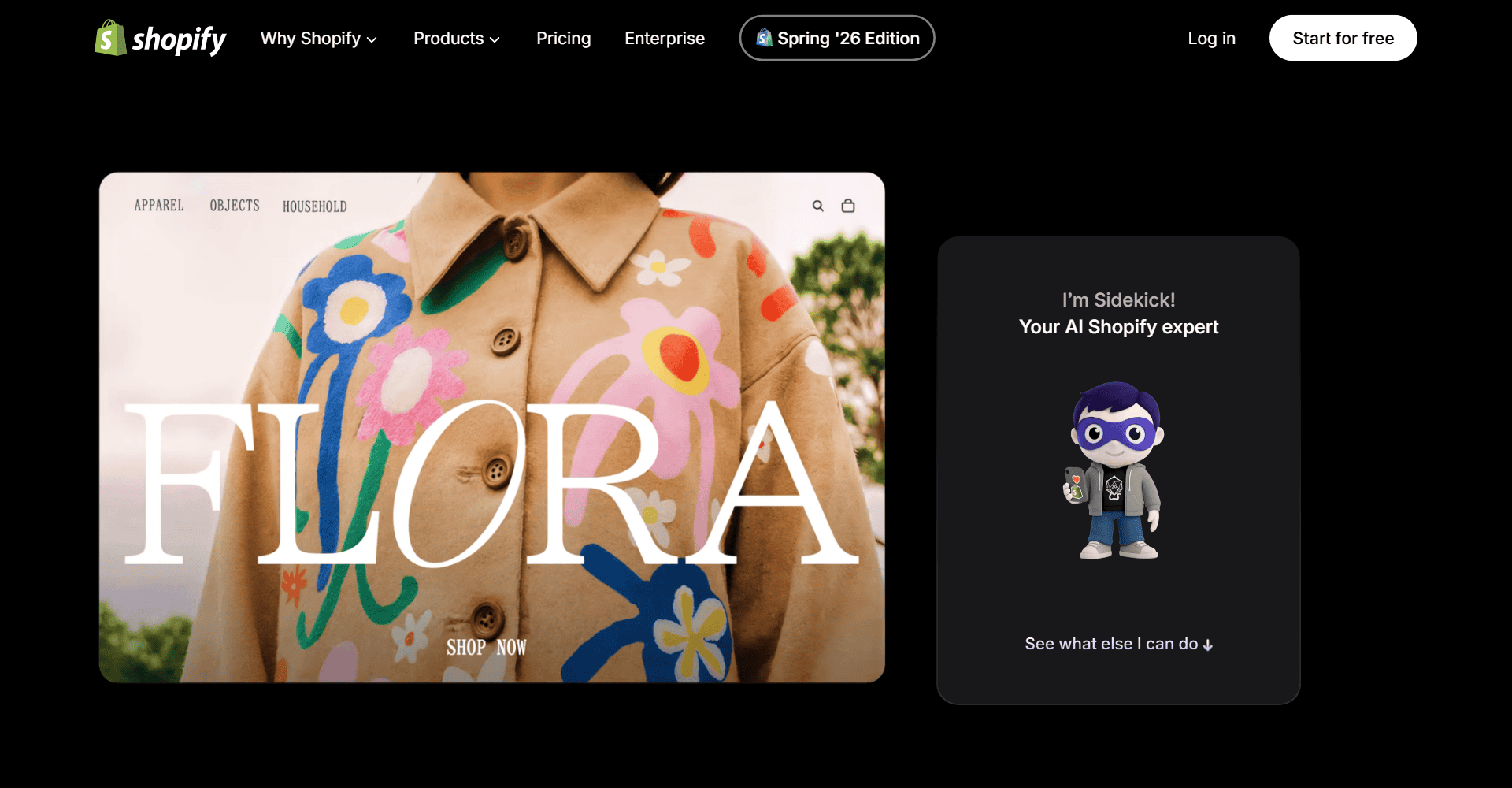
Shopify Magic is Shopify's built-in AI layer.
It helps with store content like product descriptions, blog content, email content, smart replies, and other admin tasks, depending on where you're working inside Shopify.
Then there's Sidekick.
Sidekick is Shopify's AI assistant. Shopify describes it as a commerce-focused assistant that can connect store data, surface insights, create content, and help with tasks inside the admin.
Sidekick also supports voice mode and screen sharing inside Shopify.
The biggest benefit is that you don't need a separate subscription for the basics.
If you already use Shopify, these AI features are worth testing before you pay for a third-party content tool.
Key features
- Product descriptions. Generate or improve descriptions inside Shopify.
- Smart replies. Help draft live chat replies inside Shopify Inbox.
- Email generation. Help with Shopify Email content.
- Sidekick assistant. Ask Shopify-specific questions and get help with store tasks.
Pricing
Currently, Shopify Magic and Sidekick are included with Shopify.
Feature access can vary by account, region, language, and plan, so check what's available inside your own Shopify admin.
Full comparison of the 20 best dropshipping AI tools
Here's one clean comparison of every tool we covered, including free tier, pricing model, primary integrations, AI layer or disclosure, and the dropshipping task each one fits best:
| Tool | Free tier | Pricing model | Primary integrations | AI layer / disclosure | Best for |
| Sell The Trend | No | Flat monthly tiers | Shopify, AliExpress, Amazon, CJdropshipping, WooCommerce, Wix, TikTok Shop | Proprietary NEXUS engine | Product research and validation |
| Storebuild.ai | Yes | Free; Shopify subscription still applies | Shopify, Zendrop | Not disclosed | Free AI Shopify store drafts |
| Printify | Yes | Flat monthly tiers | Shopify, WooCommerce, BigCommerce, Wix, Etsy | Not disclosed | Print on demand product creation |
| AutoDS | $1 trial | Tiered by product count | Shopify, eBay, Amazon, Wix, WooCommerce, and more | Not disclosed | Product research plus automated fulfillment |
| Browse AI | Yes | Credit-based monthly tiers | Google Sheets, Airtable, Zapier, Make, REST API | Not disclosed | Competitor and product monitoring |
| Mailchimp | Yes | Monthly tiers by contact count | Shopify, WooCommerce, Magento, Squarespace | Proprietary AI features | Beginner-friendly email marketing |
| Jasper | Trial available | Monthly tiers per seat and feature set | SurferSEO, WordPress, Webflow, browser extension | Multi-model AI platform | Structured marketing copy |
| PagePilot | Trial available | Flat monthly tiers | Shopify, AliExpress | Not disclosed | AI product page drafts |
| Pencil | No | Generation-based monthly tiers | Facebook, Instagram, TikTok, YouTube, Google Display, DV360, LinkedIn | Multi-model platform | AI ad creative testing |
| Creatify | Yes, watermarked | Credit-based monthly tiers | Product URLs, Meta, TikTok, YouTube, Snap, ecommerce video workflows | Not fully disclosed | Product URL-to-video ads |
| Tidio | Yes | Monthly tiers plus AI conversation limits | Shopify, WooCommerce, BigCommerce, Wix | Lyro AI agent | AI customer support |
| Commerce AI | Yes | Pageview-based monthly tiers | Shopify | GPT-4 is listed on the app page | AI product recommendation chat |
| Chargeflow | N/A | Success-based recovery fee | Shopify, PayPal, Stripe, WooCommerce, ReCharge | AI-built evidence / LLM-powered dispute evidence | Chargeback recovery automation |
| Canva | Yes | Flat monthly per user or business plan | Shopify workflows, Meta Business, Google Drive, Slack, and more | Magic Studio and partner AI models | Product and social visuals |
| ConvertMate | Yes, credit-limited | Flat monthly tiers | Shopify | Not disclosed | Shopify product page SEO |
| Syncee GPT | Yes | Free GPT | Syncee and ChatGPT | OpenAI GPT | Syncee product and supplier discovery |
| Predis.ai | Trial available | Monthly tiers plus credits | Shopify, WooCommerce, Etsy, Ecwid | Multi-model AI platform | Social media content generation |
| SEOWILL | Yes | Flat monthly tiers | Shopify | Not disclosed | Shopify SEO cleanup |
| Octane AI | Trial available | Credit-based monthly tiers | Shopify, Klaviyo, Zapier | Proprietary and AI-assisted features | Product recommendation quizzes |
| Shopify Magic and Sidekick | Included with Shopify | Included with Shopify | Shopify native | Shopify AI features | Built-in Shopify AI |
AI dropshipping tools FAQs
How can AI tools help business owners in dropshipping?
AI tools can help dropshipping business owners with repetitive tasks like product research, store setup, product descriptions, ad creative, customer support, SEO, email marketing, and competitor monitoring.
They don't replace judgment, supplier checks, or product validation, but they can speed up the work around those decisions.
How do AI tools improve customer loyalty?
AI tools can improve customer loyalty by answering questions faster, recommending better-fit products, personalizing emails, and reducing support delays.
The tool doesn't create loyalty by itself. It supports the basics: clear communication, faster answers, good product fit, and fewer frustrating moments for the customer.
What AI tool should a beginner dropshipper start with?
A beginner should usually start with free or built-in tools first: Storebuild.ai for a store draft, Shopify Magic for product descriptions and emails, Canva Free for images, Tidio Free for support, and a free product research route like Syncee's custom GPT.
Once you have sales, then it makes more sense to pay for tools like Sell The Trend, PagePilot, or ConvertMate.
Related artificial intelligence articles
Want to keep learning?
These AI-related articles are a good next step:
- The 16 Best AI Tools for Shopify in 2026 (Free & Paid)
- 9 Best Shopify AI Website Builders in 2026
- 8 Best Print on Demand AI Tools in 2026 (Free & Paid)
- 13 Best AI Copywriting Tools for Dropshipping (Free & Paid)
- Dropshipping With ChatGPT: 18 Ways It Can Help Your Store
Conclusion
The AI tool category looks crowded from the outside, especially in 2026.
It gets much easier once you split the tools by job.
But don't forget: you don't need 20 subscriptions.
You need one tool for the bottleneck you actually have.
If you're new, start with the beginner stack: Storebuild.ai, Syncee GPT, Shopify Magic, Canva Free, Mailchimp Free, and Tidio Free.
Once you have sales, tools like Sell The Trend, PagePilot, and Tidio Starter start to make more sense.
When paid traffic, video creative, or competitor monitoring becomes the bottleneck, tools like Pencil, Creatify, and Browse AI start to make more sense.
And cancel anything that isn't moving a number on your dashboard within 30 days.
That's the simplest way to use AI without turning your store into a messy pile of subscriptions.
Want to learn more about dropshipping?
Want to keep learning? These guides are good next steps:
- GPT-4 for Ecommerce: What You Should Know in 2026
- 11 Best Free Dropshipping Tools to Get Started in 2026
- Dropshipping Automation Software: 11 Tools That Help You!
Also, check out our in-depth guide on how to start dropshipping here.








2 Comments
Nice Post
Hi Nora,
Thank you so much for your comment! We appreciate it 😊
Have a great day!
– Patryk