

Paid ads only run as long as your card does.
Free traffic can keep sending visitors to your dropshipping store long after the first piece of work is done, but only if you build the right channel for your product.
In this article, we'll walk you through nine organic channels you can use for a dropshipping store: SEO, TikTok, Pinterest, YouTube, Instagram Reels, Reddit and Quora, email automations, an affiliate program, and Facebook Marketplace.
For each one, you'll get a realistic timeline, the tool we'd consider paying for, and where most beginners waste their first three months.
Quick Answer: How to promote your dropshipping store for freePromote your dropshipping store for free by using SEO, TikTok, Pinterest, YouTube, Instagram Reels, Reddit, Quora, email automations, affiliates, and Facebook Marketplace. Pick 2 channels, post consistently for 30 to 180 days, track results in GA4, and avoid spamming links.
Let's look at which channels are actually worth your time!
Start your store on Shopify
Free 3-day trial + $1/month for 3 months
- Grows with you from first test product to full brand
- Thousands of apps and hundreds of themes to customize your store
- Beginner-friendly editor with pro features when you're ready
No card to start. Cancel anytime.
Best free traffic channels for dropshipping at a glance
Not every free traffic channel fits every store. Use this table to rule out the bad fits before you spend months creating content for the wrong place:
| Channel | Best for | Realistic timeline | Main risk |
| SEO | Long-term compounding traffic | 6+ months | Slow start |
| TikTok organic | Visual, impulse-friendly products | 30 to 60 days for early signals | Inconsistent reach |
| Photogenic products and lifestyle niches | 90 to 120 days | Needs consistent pinning | |
| YouTube | Reviews, comparisons, and education | 6+ months | High effort per video |
| Instagram Reels | Repurposed short-form content | 30 to 60 days for early signals | Lower buying intent than search |
| Reddit, Quora, and forums | High-trust referral traffic | 3 to 6 months | Spam risk |
| Email automations | Recovering and converting existing traffic | Immediately after setup, if traffic exists | Needs traffic first |
| Affiliate program | Word-of-mouth sales | 3 to 6 months after trust exists | Needs a proven offer first |
| Facebook Marketplace | Local or high-intent product discovery | 1 to 4 weeks for first inquiries or test sales | Policy and fulfillment risk |
Is organic dropshipping right for you?
Free traffic isn't free.
It's paid for in time, content, consistency, and patience.
Before you commit, run yourself through these five checks:
- Time. Can you put in five to ten hours a week, every week, for at least six months?
- Niche depth. Do you really know your target customer, or are you running a general store?
- Store readiness. Is your store conversion-ready, or will the traffic bounce when it lands?
- Patience. Are you okay seeing very little traction until month three, four, or five?
- Content comfort. Can you write, film, design, or commission content consistently?
If three or more answers are 'no,' you may get further by running small paid tests first, then putting what you learn into content later.
If most answers are 'yes,' organic traffic is worth taking seriously.
Here are the nine channels:
1. SEO
Best for: Store owners who can keep publishing for six months before judging the results.
Not for: Anyone who needs sales this month to keep the store alive.
SEO is usually the strongest long-term free traffic channel for a dropshipping store.
Get it right, and a single blog article, collection page, or product page can keep sending buyers to your store without you paying for every click.
The catch?
It's also one of the slowest channels to start working.
An Ahrefs study of two million pages found that only a small percentage of newly published pages ranked in Google's top 10 within a year.
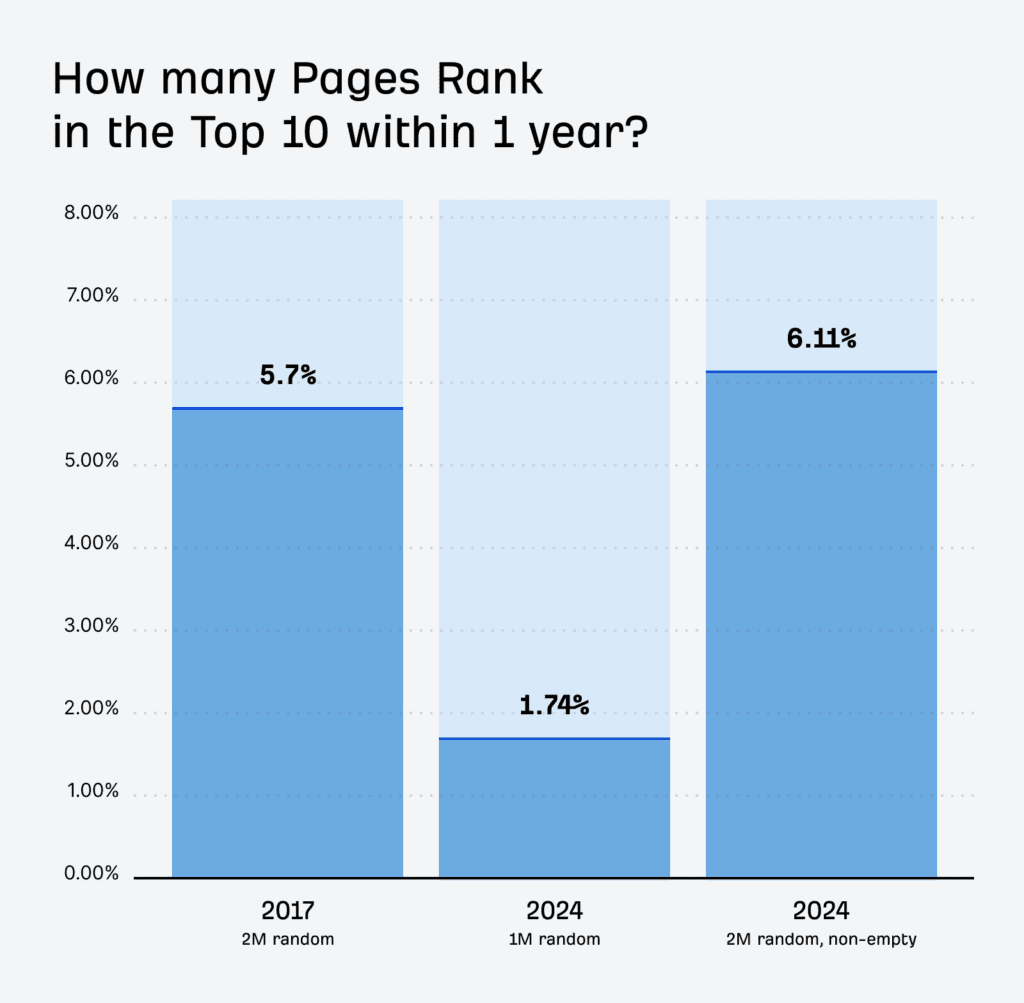
The exact numbers can vary by niche, but the lesson remains the same: SEO is not a 30-day traffic plan.
Plan for at least six months before you judge SEO properly, and longer if your domain is brand new.
SEO snapshot:
Realistic timeline: 6+ months
Tool we'd consider paying for: ConvertMate, Ahrefs, or a good Shopify SEO app once the store has enough products
Beginner trap: Writing generic blog posts while leaving product and collection pages thin
Here's what we'd focus on in 2026:
Target long-tail keywords, not head terms
A head term is short and broad, like "phone case."
A long-tail keyword is more specific, like "waterproof iPhone 16 case for surfing."
Head terms get more searches, but they're usually harder to rank for and less clear in intent.
Long-tail keywords are where most new dropshipping stores should start, since buyers have already told you more about what they want.
Use a free tool like Ubersuggest, Ahrefs Free Keyword Generator, or Keyword Tool to find specific variations with clear buying intent and lower competition.
That is where most new stores have a better chance.
Write collection page descriptions that rank
Most dropshippers leave their collection pages with two sentences of copy and zero internal context.
That gives Google less context and buyers fewer reasons to trust the page.
A collection page like /collections/waterproof-phone-cases is a keyword landing page in disguise.
Treat it like one.
A stronger collection page usually has:
- An H1 with the collection's keyword. "Waterproof Phone Cases," not just "Featured Products."
- A 200 to 400-word intro. Explain what the products are, who they're for, and how to choose.
- Internal links to sub-collections. For example, waterproof iPhone cases, Samsung waterproof phone cases, or waterproof phone pouches for swimming.
- FAQs at the bottom. Answer the three questions buyers actually ask before purchasing.
If writing all that sounds painful, ConvertMate is a Shopify app that can help generate SEO-friendly titles, descriptions, and metadata for product and collection pages.

ConvertMate claims an average 84% lift in organic traffic in three months.
That's their internal benchmark, so treat it as directional, not a guarantee.
Improve speed and Core Web Vitals
Google has used speed as a ranking signal for years, and Core Web Vitals are part of the broader page experience signals that Google's ranking systems aim to reward.
Speed will not save weak content, but a slow store can hurt both rankings and conversions.
The conversion side is easier to see.
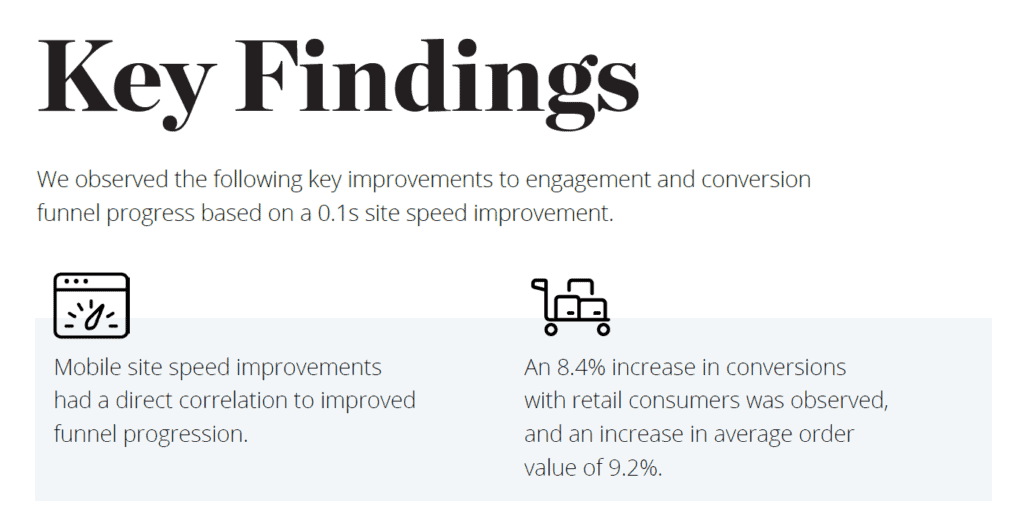
A Deloitte study commissioned by Google found that a 0.1-second improvement in mobile speed increased retail conversions by 8.4%.
Run your store through Google PageSpeed Insights. If mobile performance is weak, fix these first:
- Convert large hero images to WebP using a free tool like Squoosh or a Shopify app like TinyIMG.
- Enable lazy loading on product gallery images if your theme does not already handle it.
- Remove apps you stopped using. Many apps leave scripts behind that slow down every page.
- Pick a lightweight theme. Shopify built Dawn with performance in mind, and Shopify's theme performance table is worth checking before choosing a heavy premium theme.
Get backlinks the real way
Backlinks still matter.
Ahrefs analyzed roughly one billion pages and found that pages with zero referring domains overwhelmingly get zero Google traffic.
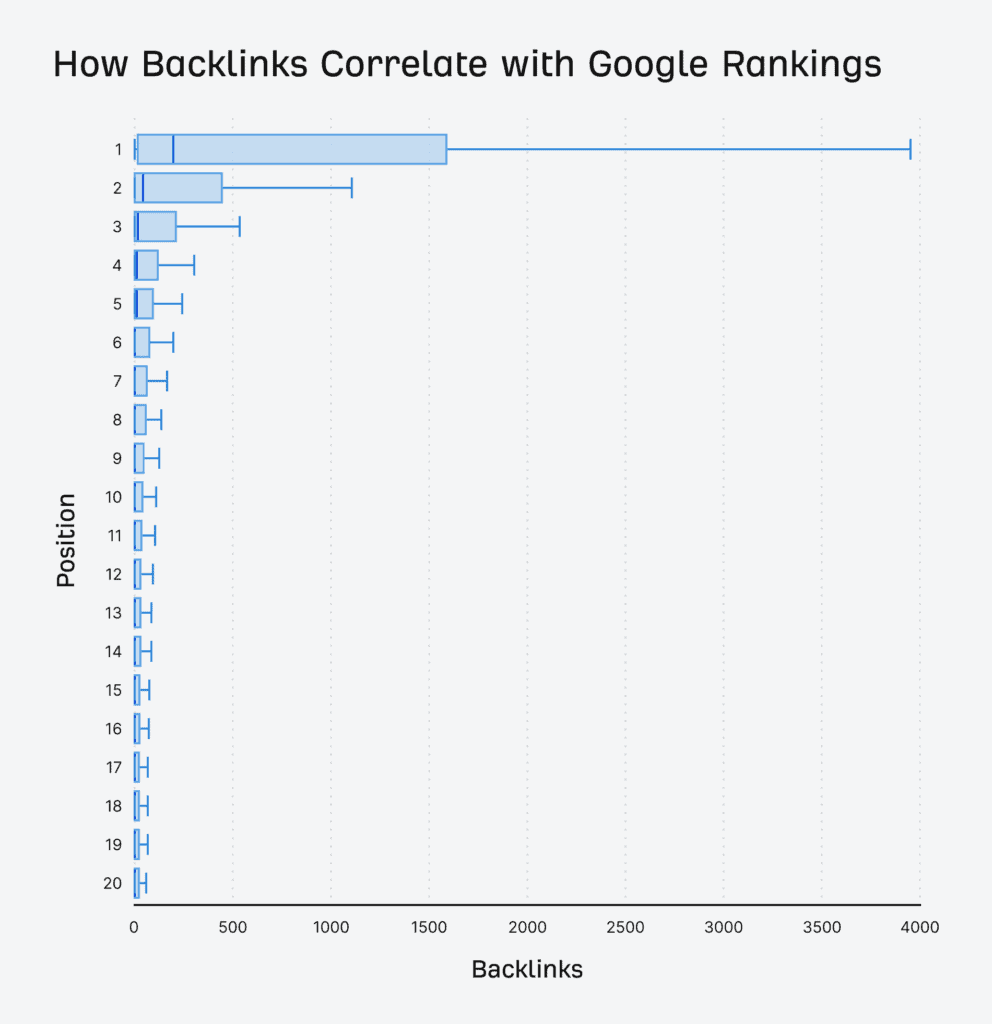
You do not need link spam.
You need a few good links from relevant sites in your niche.
Three tactics that can work for dropshipping stores:
- Guest posting. Pitch a useful article to a niche blog in exchange for one contextual link back.
- Supplier "where to buy" pages. Ask brand suppliers to list you as a stockist if you sell their products legitimately.
- Product seeding. Send a free unit to a niche reviewer in exchange for an honest review. Do not demand positive coverage.
Skip paid link networks.
They are not worth the long-term risk.
Think about AI Overviews, but don't chase tricks
Google's AI Overviews have changed how some search results behave.
Semrush analyzed more than 10 million keywords and found AI Overviews expanding across search results in 2025, especially beyond purely informational queries.
Several industry studies have also found that AI Overviews can reduce clicks to traditional organic results.
The practical lesson is simple: ranking below the answer box may not be enough. Your page needs to be clear, useful, and source-backed enough to be worth citing.
Seer Interactive's September 2025 study found that brands cited inside an AI Overview got more organic and paid clicks than non-cited brands on the same type of results page.
To improve your chances:
- Answer the exact question clearly near the top of the article.
- Use real statistics with source links instead of vague claims.
- Build clear trust signals. Use a real author bio, update date, citations, product screenshots, and original examples.
- Add useful Q&A sections that help the reader. FAQ schema and clean answer blocks can make the page easier to understand, but they do not guarantee AI Overview citations.
The good news?
Most small ecommerce competitors still publish thin product pages and generic blog posts.
A clear, useful, well-sourced page is more likely to stand out.
Learning SEO from scratch
If you're starting from zero on SEO, these are good places to learn the basics:
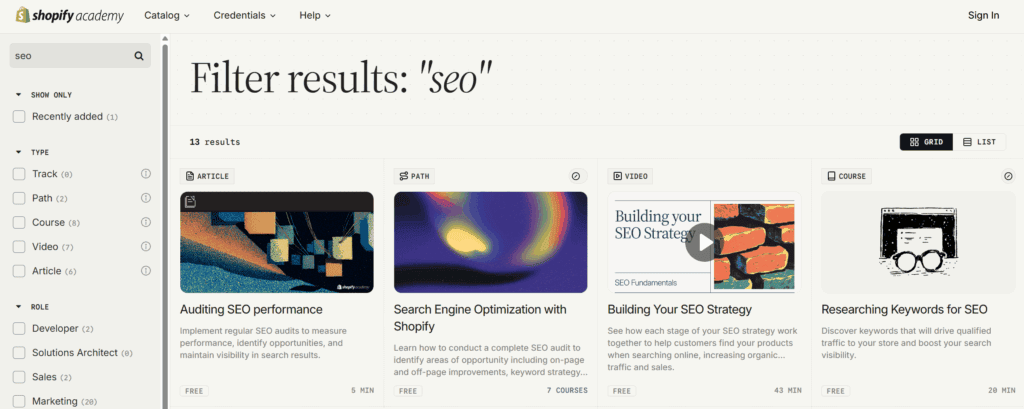
- Free, fast. Shopify Academy's videos and courses on SEO cover the basics in a few hours.
- Paid, deeper. This Udemy course on Shopify SEO goes into on-page and off-page detail.
- Internal. Our walkthroughs on the Shopify SEO checklist and SEO for dropshipping stores.
Tip: If you're using free traffic because your ad budget is tight, also check our guide to free ad credits for marketing. You may be able to test platforms like Google, Pinterest, TikTok, Snapchat, Reddit, or Amazon Ads with a starter credit before paying fully out of pocket.
2. TikTok organic
Best for: Sellers with a product that is easy to show off on camera in a few seconds.
Not for: Niches where the product is hard to demonstrate, or owners who won't post regularly.
TikTok is one of the strongest free traffic channels for visual, impulse-friendly products in 2026.
It is not magic, and it will not fit every niche.
But if your product is easy to demonstrate, solves a visible problem, or has a clear before-and-after angle, TikTok is hard to ignore.
Some numbers help explain why sellers still pay attention to it:
- #TikTokMadeMeBuyIt has generated huge visibility around product discovery, with TikTok's Creative Center showing the hashtag as one of the platform's major shopping-related trends.
- Capital One Shopping estimates that there were 71.4 million TikTok social-commerce shoppers in the US in 2025. Other research firms use different definitions, so treat the exact number as an estimate, not a fixed platform total.
- Oxford Economics research for TikTok found that many small businesses report sales growth from TikTok activity, including cases where a product sold out after a TikTok promotion.
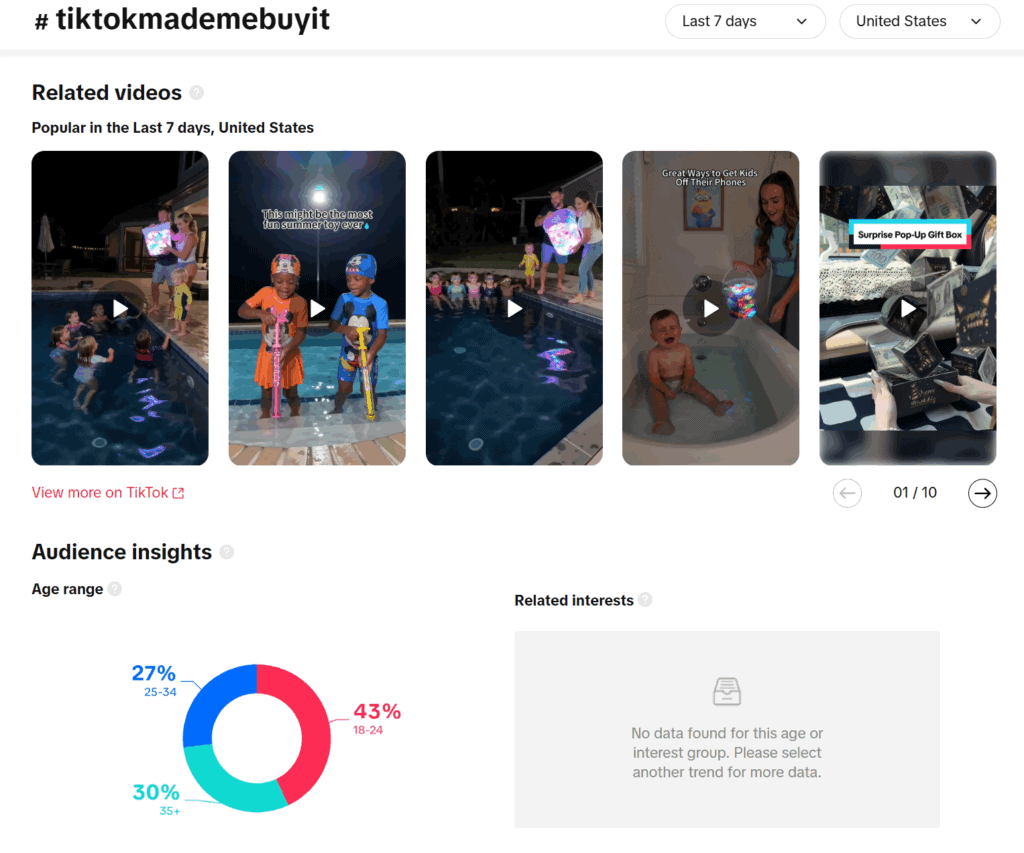
In plain English, people do discover products on TikTok, but a typical polished ad usually feels out of place.
TikTok snapshot:
Realistic timeline: 30 to 60 days of consistent posting for early signals
Tool we'd consider paying for: CapCut Pro, a simple UGC creator, or TikTok Creative Center if you only use free tools
Beginner trap: Making polished ads instead of native, useful, lo-fi content
How the For You Page works in practice
TikTok does not rely on follower count the same way older Instagram did.
It pays attention to how people react to each video.
Signals like watch time, full watches, shares, comments, saves, sounds, hashtags, and topic relevance can influence distribution by helping TikTok understand how people respond to the video.
That means a brand-new account can still get reach if the video hits.
It also means a larger account can post a weak video and get very little traction.
Every video is a fresh test.
What to post
The format that often works for dropshipping stores is lo-fi user-generated content (UGC).
That means phone camera, natural light, native fonts, no long logo intro, and no overproduced ad feel.
Polished brand content often gets ignored.
Useful content that feels native to the platform has a better chance.
Five content types to test:
- Product sample checks. Show the product sample, packaging check, or what you tested before adding it to the store.
- Product demonstrations. Show the product solving a problem, with the hook in the first three seconds.
- Niche education. Give tips for your customer's life, not just your product.
- Customer reactions. Repurpose real user-generated content with permission.
- Build-in-public clips. Show what you are testing, what is not working yet, and what you are improving.
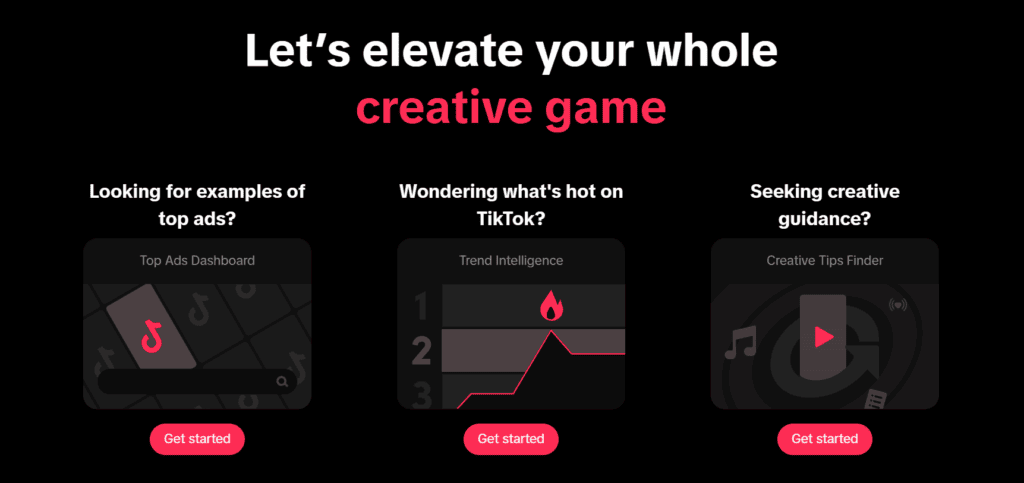
For trend and competitor research, the TikTok Creative Center is the free tool to start with.
Realistic timeline: post one useful video a day for 60 days before judging whether TikTok is working.
The first format is rarely the winner. The fourth or fifth useful test is often the one that surprises you.
Tip: For the full playbook on hooks, posting cadence and product picks, see our deep dive on TikTok organic dropshipping.
3. Pinterest as a visual search engine
Best for: Stores with photogenic products in niches like home, decor, and fashion.
Not for: Sellers who want quick wins, because Pinterest takes months of steady pinning.
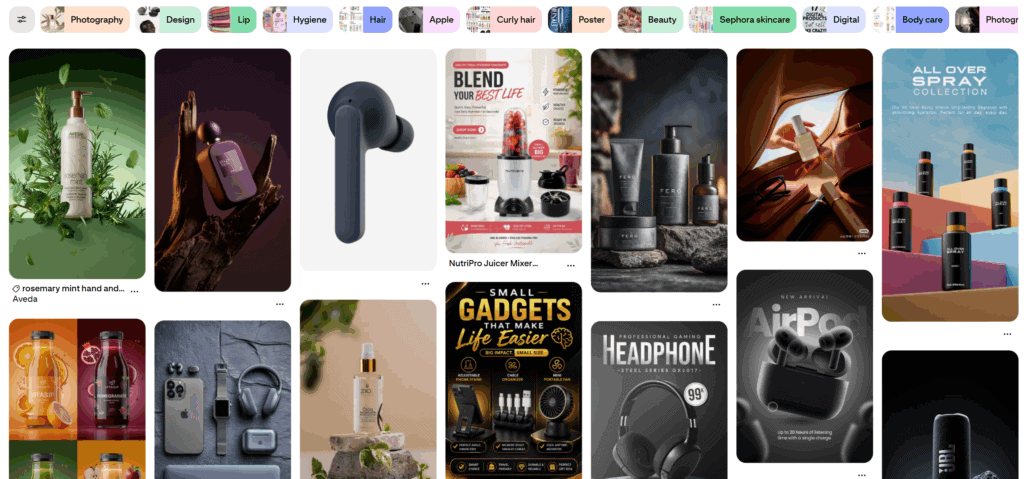
The biggest Pinterest mistake is treating it like Instagram.
For ecommerce, it is better to treat Pinterest as a visual search engine.
People use Pinterest to plan purchases, save product ideas, and compare styles before buying.
The audience is bigger than many beginners expect, and the buying mindset is different from most social feeds:
- Pinterest says it now has 631 million monthly active users worldwide.
- Sprout Social reports that Pinterest users save more than 1.5 billion Pins each week.
- Pinterest says Gen Z now accounts for 42% of its global user base, making it one of the platform's fastest-growing segments.
For dropshipping stores with photogenic products, such as home goods, fashion, pet, beauty, DIY, and food, Pinterest can be a strong free traffic channel.
Pinterest snapshot:
Realistic timeline: 90 to 120 days
Tool we'd consider paying for: Tailwind if you are serious about scheduling Pins consistently
Beginner trap: Uploading random product images with weak titles and no keyword strategy
Pin specs that matter
Pinterest's own specs recommend a 2:3 aspect ratio, such as 1000 x 1500 pixels.
Other formats can still work, but vertical Pins usually get more visual space in the feed, while overly tall Pins may be cut off.
Each Pin should have:
- A keyword-loaded title. "Waterproof iPhone case for surfers," not just your brand name.
- A useful description. Explain what the product is and who it helps.
- A direct link to a useful page. Product page, collection page, or helpful blog post. Not your homepage.
The 40/30/20/10 content mix
A practical mix for dropshipping stores is:
- 40% product Pins. Direct shots of your products in lifestyle settings, linked to product pages.
- 30% lifestyle or mood Pins. Aspirational images that fit your niche but aren't direct product shots.
- 20% educational Pins. Step-by-step or infographic Pins linked to your blog or buying guides.
- 10% curated Pins. Useful saves from other accounts in your niche, to keep your boards active and helpful.
If Pinterest starts working, scheduling Pins ahead of time with Tailwind can save you from having to log in every day.

For a deeper walkthrough, our full guide is here: How to Get Free Traffic From Pinterest for Dropshipping in 2026.
4. YouTube
Best for: Sellers happy to film reviews and tutorials that keep earning views for years.
Not for: Anyone who can't commit real time to filming and editing every video.
YouTube is slower than TikTok or Reels, but useful videos can keep showing up in search long after you publish them.
A useful product review or tutorial can keep sending visitors to your store for a long time, especially if the product category does not change often.
Two reasons a YouTube channel is worth considering for product content:
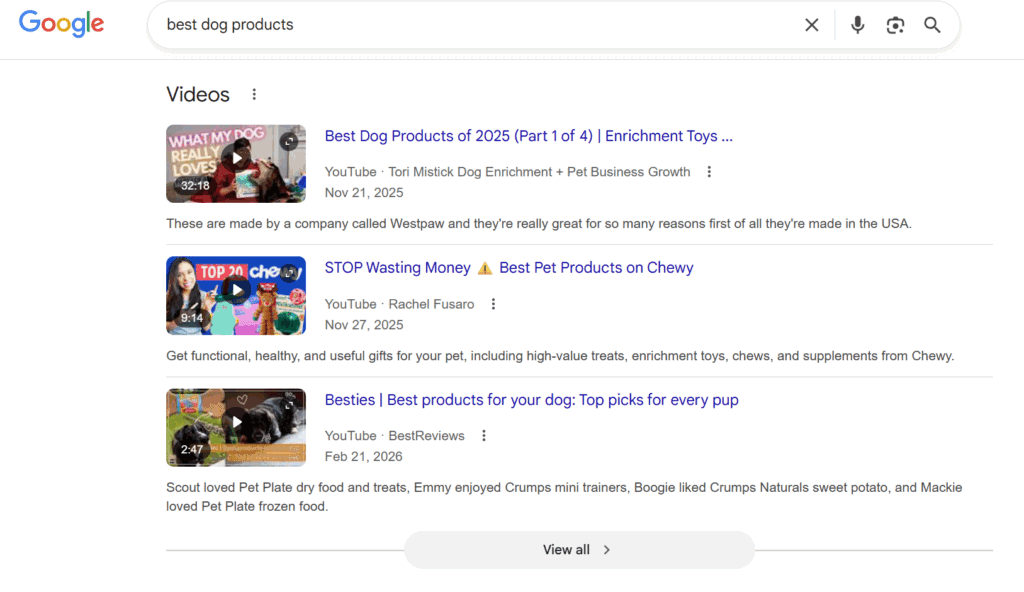
- YouTube videos can rank on Google. A well-optimized video can show up in search results, sometimes above written articles targeting the same keyword.
- YouTube has its own search behavior. People search directly for product reviews, comparisons, tutorials, and how-tos.
YouTube snapshot:
Realistic timeline: 6+ months
Tool we'd consider paying for: CapCut Pro, Descript, or a simple microphone before buying expensive camera gear
Beginner trap: Making random videos instead of choosing one repeatable format
Three video types that work for dropshipping stores
Pick one format first. Do not try all three at once:
- Product reviews and comparisons. "Best dog harness for pullers" or "Brand X vs. Brand Y." Link the product in the description.
- Niche education. Tutorials, how-tos, or explainers for your customer, such as "How to teach a dog to heel in 7 days."
- Customer testimonials. Real buyers on camera. These are hard to fake and easier to trust.
Example product review where the product link is in the description:

Example niche education video:

Tip: Repurpose every long YouTube video into five to ten short clips for TikTok, Instagram Reels, and YouTube Shorts. Same core work, more surface area.
5. Instagram Reels
Best for: Stores already making short videos they can repost from TikTok.
Not for: Sellers who expect the same buying intent they'd get from search traffic.
Instagram is still useful for a dropshipping store, but Reels should usually be the primary discovery format.
Static photo posts can still support your grid and brand trust, but Reels are better for reaching people who do not already follow you.
Socialinsider's Instagram benchmark report says Reels have become table stakes for brands, while static-image engagement continues to decline, and carousels remain strong for engagement.
For a dropshipping store, that changes what you should post:
- Stop relying only on product flatlays. They mostly serve as a portfolio for your grid, not a discovery driver.
- Format every Reel for 9:16 vertical. Use native text, a clear first-three-seconds hook, and a simple product demonstration.
- Repurpose TikTok content to Reels. Remove TikTok watermarks first so the video looks native to Instagram.
- Use product tags where available. That gives users a shorter path from the Reel to the product.
Instagram Reels snapshot:
Realistic timeline: 30 to 60 days for early signals
Tool we'd consider paying for: CapCut Pro, Canva Pro, or a simple UGC creator
Beginner trap: Treating Instagram like a product catalog instead of a short-form discovery channel
For the setup side, see our walkthrough on creating an Instagram account for dropshipping.
For content ideas, check our 11 dropshipping Instagram account examples.
6. Reddit, Quora, and niche forums
Best for: Owners who really know their niche and can answer questions without pitching.
Not for: Anyone hoping to drop store links and leave, which gets you banned fast.
Question-and-answer communities are slow, but they can be high-trust.
A single useful answer on a high-traffic Reddit thread, Quora question, or niche forum can keep sending visitors long after you write it.
The warning is simple: spam earns bans fast.
The rule is simple: give value first, link later, and only link when it genuinely helps.
Community traffic snapshot:
Realistic timeline: 3 to 6 months
Tool we'd consider paying for: None at first. Use Reddit search, Google, and Quora manually before buying monitoring tools.
Beginner trap: Dropping store links before building trust
Reddit is bigger than most ecommerce beginners realize.
Reddit reported 121.4 million daily active users and 471.6 million weekly active users in Q4 2025.
That scale makes Reddit useful for product research and niche trust-building, but only if you respect each community's rules.
Find subreddits that fit your niche or are tied to the products you sell:
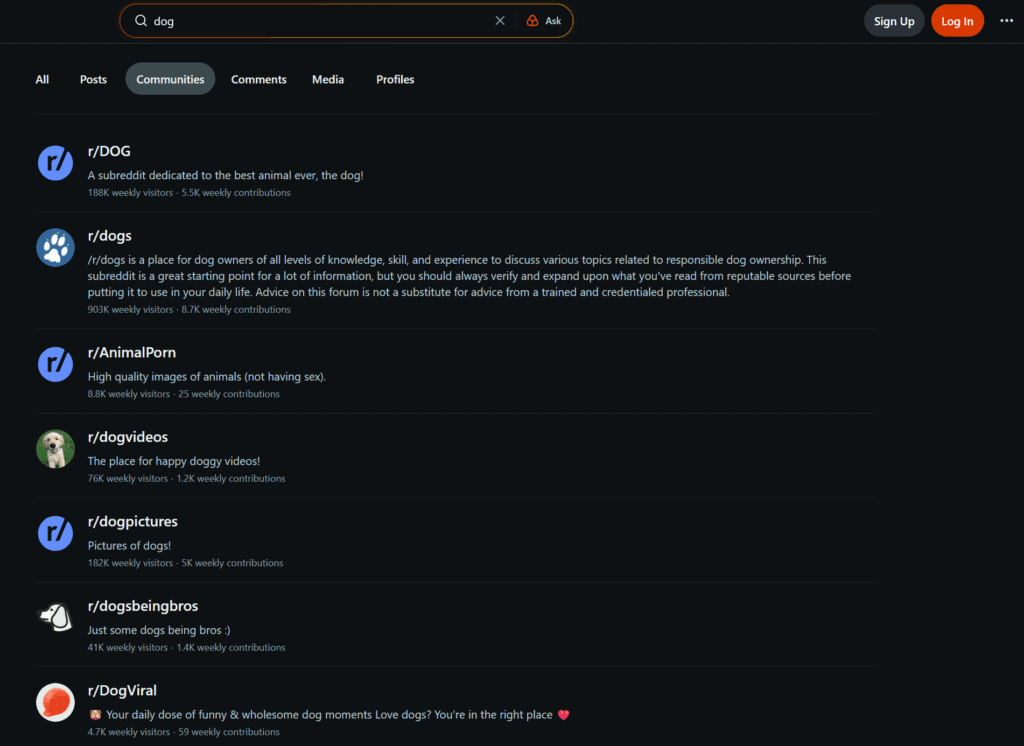
Read the rules in the sidebar before posting. Many subreddits ban self-promotion outright.
Spend time reading, upvoting, and answering before you link to anything.
The traffic that does come can be strong because Redditors click links from people they trust, not from accounts that look like ads.
Quora
Quora says it reaches over 400 million monthly unique visitors.
Third-party traffic estimates also suggest that a large share of Quora's visits come from organic search.
What that means for you:
A Quora answer has two possible discovery paths: Quora users can find it inside Quora, and Google may rank it for related searches.
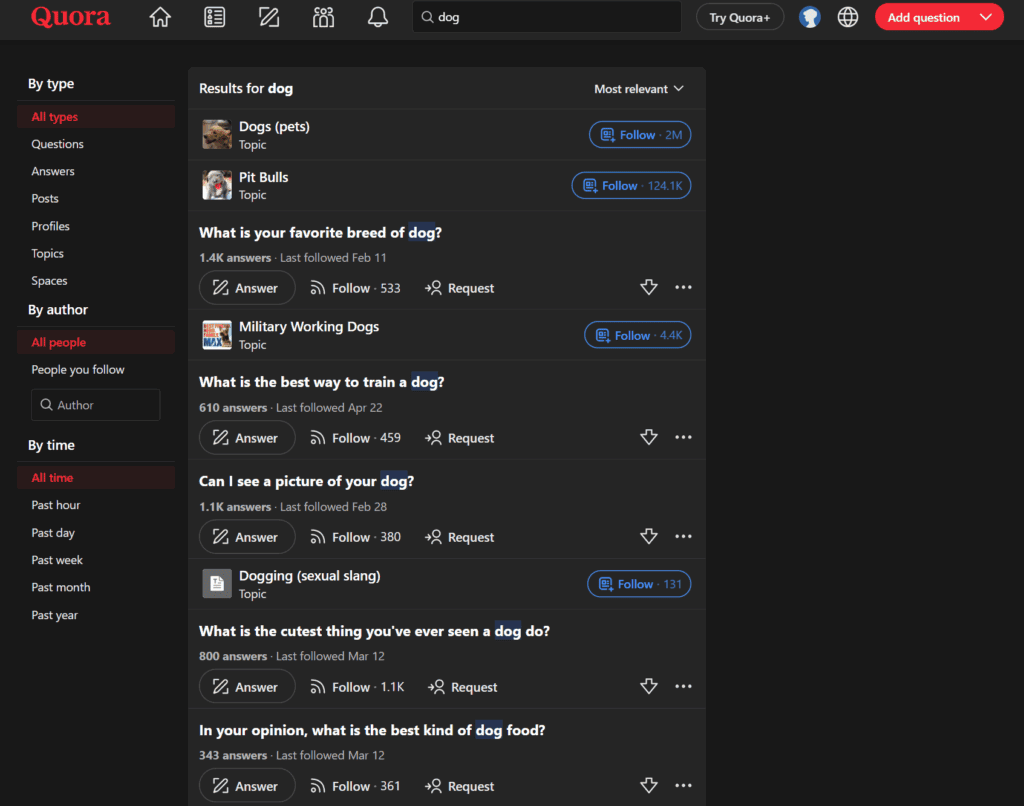
Focus on questions with existing views, followers, or strong Google visibility. Brand-new questions usually go nowhere.
Niche forums and Facebook Groups
Almost every niche still has its own forum or Facebook Group.
Find them by searching "your niche + forum" or "your niche + group" in Google.

One small but useful tactic: some forum software lets you add a link in your signature. That signature can show under every reply you post.
Answer 50 useful questions over three months, and you can see real traffic without posting a single self-promotional thread.
Tip: When you join niche Facebook Groups, follow the group rules closely. Some groups allow business Pages, some only allow personal accounts, and many ban promotion entirely. Treat groups as trust-building spaces first.
7. Email automations
Best for: Stores already getting visitors that want to recover the sales they're losing now.
Not for: Brand-new stores with no traffic yet, because there's nobody on the list to email.
This one technically needs traffic before it can do much.
But once visitors start coming in, email automations can help you recover sales you would otherwise lose.
Email is also one of the few channels you partly control. Algorithms can reduce your reach overnight, but your email list is still an audience you can contact directly.
Klaviyo's benchmark data shows why automated flows matter: email flows can generate a large share of email revenue from a small share of total sends.
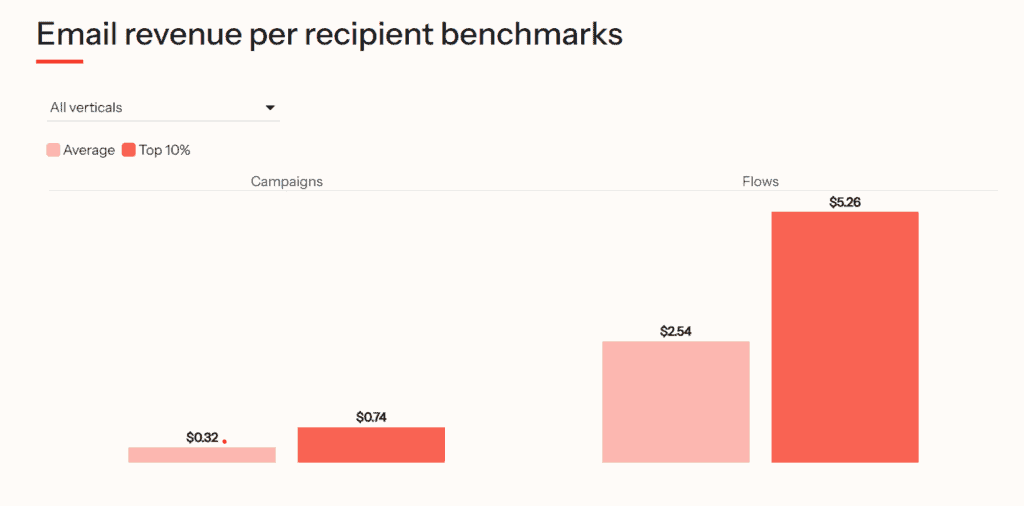
And Klaviyo's abandoned cart benchmark shows abandoned cart flows as one of the highest-revenue email automations by revenue per recipient.
Email snapshot:
Realistic timeline: Immediate after setup, but only once you already have traffic or subscribers
Tool we'd consider paying for: Klaviyo or Omnisend once your list and revenue justify it
Beginner trap: Waiting until you have lots of traffic before setting up basic flows
The three automations most stores should start with
You do not need 12 flows on day one.
Start with these three:
- Welcome flow. Triggers when someone joins your list. Use it to introduce the brand, set expectations, and give a first-purchase reason.
- Abandoned cart flow. Triggers when a visitor adds to cart but does not check out. This is usually the first flow to build because intent is already high.
- Browse abandonment flow. Triggers when a visitor views a product page but does not add to cart. Useful once your store has enough traffic on product pages.
The numbers in benchmark reports are platform averages from their own customer base, so treat them as direction, not a promise.
Even then, a simple abandoned cart flow is worth setting up before you start driving serious traffic to the store.
Which platform to use
- Klaviyo. A common Shopify choice for ecommerce automation, segmentation, and revenue tracking.
- Omnisend. Similar ecommerce focus, often attractive to smaller stores comparing costs.
- Shopify Email. A simple starting point if you want to keep costs low and do not need advanced automation yet.
Full breakdown here: Email Marketing for Dropshipping: A Beginner's Guide (2026).
8. Affiliate program and nano-influencer seeding
Best for: Stores with proven sales that want more reach without paying upfront.
Not for: New stores, since nobody wants to promote a product that hasn't sold yet.
An affiliate program lets other people promote your products in exchange for a percentage of the sales they generate.
You don't pay until they bring you a buyer.
No upfront ad spend, no fixed creator fee, and no fake promise of results.
The catch is the same as email: you need some trust first, or no one wants to promote you.
Affiliate snapshot:
Realistic timeline: 3 to 6 months after the store has trust or consistent sales
Tool we'd consider paying for: UpPromote, Refersion, GoAffPro, or Social Snowball once you have consistent sales
Beginner trap: Trying to recruit affiliates before the store, product, and offer are proven
Nano-influencer seeding
Most beginners chase the wrong influencer tier.
Nano-influencers, with 1,000 to 10,000 followers, can outperform larger creators in engagement because their audience still feels personal.
eMarketer's creator engagement data shows nano-influencers outperforming mega-influencers on Instagram, and TikTok also shows strong engagement for smaller creator tiers.
Some niche creators may be open to testing a product in exchange for the product itself, especially if it fits what they already post.
Just make sure gifted products, affiliate links, discount codes, and paid relationships are disclosed properly. Rules differ by country, but hidden sponsorships are a bad idea everywhere.
A simple playbook:
- Find 30 nano-creators in your niche. Use hashtag search on TikTok, Instagram, and YouTube Shorts.
- DM a short, honest pitch. "We make X. Happy to send one if you'd consider posting an honest review."
- Do not demand a positive review. Ask for honest content and use it only with permission.
- Track each creator with a code or link. Otherwise, you won't know which posts actually drove sales.
Setting up the actual affiliate program
Shopify-friendly affiliate apps worth looking at include UpPromote, Refersion, GoAffPro, and Social Snowball.
For the full playbook, our beginner's guide to affiliate marketing for ecommerce walks through commission structures, tracking, and recruiting affiliates.
9. Facebook Marketplace
Best for: Sellers with practical items like home goods, furniture, and pet supplies.
Not for: Stores selling nationally, or anyone who can't follow Meta's current commerce rules.

This one surprises people.
Facebook is not dead. Marketplace can still work when the product feels practical, local, or easy to ask questions about before buying.
Meta has said that more than one billion people globally visit Marketplace each month.
For physical-product dropshipping stores, especially in local-friendly niches like home, furniture, baby gear, pet products, and tools, Marketplace can still be a free discovery channel.
Be careful here.
Marketplace rules, shipping options, checkout flows, and seller eligibility can vary by region and account.
Always follow Meta's current commerce rules, rather than trying to force users off-platform in a way that looks suspicious.
Facebook Marketplace snapshot:
Realistic timeline: 1 to 4 weeks for first inquiries or test sales, longer for a repeatable channel
Tool we'd consider paying for: None at first. Test manually before using listing or automation tools.
Beginner trap: Treating Marketplace like an ad board instead of a trust-first selling channel
The basic playbook is:
- List your hero products as individual Marketplace listings where allowed. Use real photos, full descriptions, and clear pricing.
- Start with a realistic location strategy. Some products fit local listings better; others need shipping-enabled listings where available.
- Respond fast. Marketplace buyers often message before they commit.
- Follow Meta's checkout and messaging rules. Use Marketplace for the first touchpoint. Build repeat purchases later through compliant follow-up, email capture on your own store, and clear customer service.
For the full breakdown, see our guide to dropshipping with Facebook Marketplace.
How to track your free traffic
If you're not tracking, you're guessing.
Two free Google tools do most of the measurement work once they are set up properly.
Google Analytics 4 (GA4)
GA4 tells you what happens after a visitor lands on your store: which pages they view, how long they stay, and whether they make a purchase.
The report starts with Acquisition → Traffic acquisition.
Group by source/medium, and you can see which free channels are driving real buyers, not just visitors.
To set up GA4 on Shopify, create a GA4 property first, then use Shopify's Google & YouTube sales channel setup route to connect your Google Tag.
Shopify's older "paste a tracking ID" setup has changed, so use the current Google & YouTube channel workflow instead of relying on outdated tutorials.
Google Search Console (GSC)
GSC tells you what happens before someone lands on your store: which queries you show up for, your average position, your click-through rate, and whether Google can index your pages.
The report you will use most is Performance → Search results.
Sort by impressions and watch these patterns:
- High impressions, low CTR. Your title and meta description may not be compelling enough to earn clicks.
- High impressions, position 8 to 15. You are close to page one. A small content refresh, better internal links, or stronger product copy may help.
- Low impressions for a target keyword. Google may not yet understand that your page is relevant. Improve the content and internal links before blaming the keyword.
To install on Shopify, verify your domain via the DNS record method in your domain provider's settings, then submit your sitemap at yourstore.com/sitemap.xml.
Tip: Tag every social and email link with UTM parameters, such as ?utm_source=tiktok&utm_medium=organic, so GA4 can properly attribute the click.
Use Google's free Campaign URL Builder to generate them.
Examples of dropshipping stores using organic-style traffic well
These are not clean 'free traffic only' case studies.
Most successful ecommerce stores use a mix of organic content, paid ads, email, affiliates, and retention.
And many stores that started with classic dropshipping eventually move into hybrid fulfillment, private-label products, or stocked bestsellers.
So, do not study these stores as exact business models to copy.
Study the traffic angle instead.
Each one shows something useful you can learn from: Pinterest, blog content, short-form social, niche community building, or evergreen branded content.
Warmly (Pinterest and visual search)
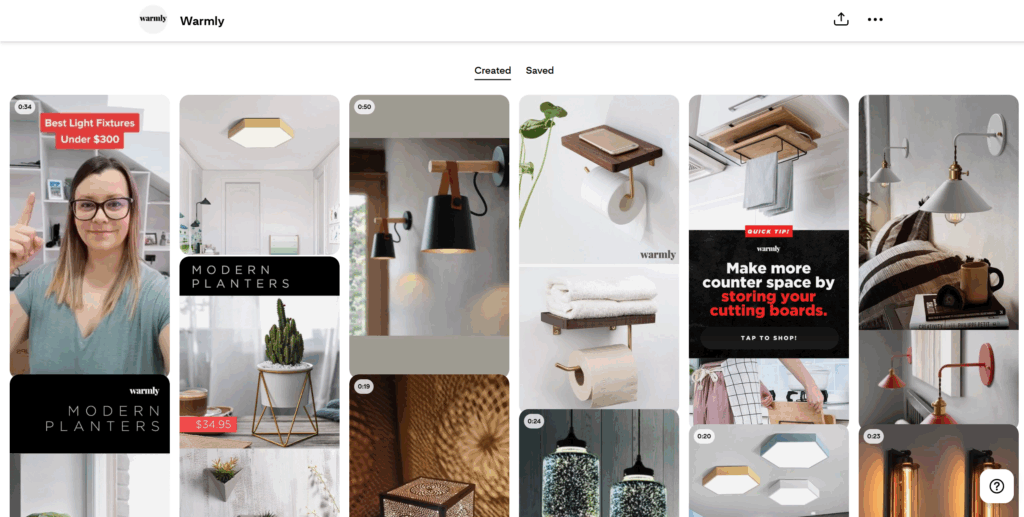
Warmly is a home decor and lighting store that is often mentioned as a dropshipping success example.
The products are visual, the store has a clear design style, and its Pinterest presence is built around room ideas, lighting, decor, and product discovery.
That works much better than dumping random product photos onto a board and hoping people click.
The takeaway: if your niche is visual, show the product in context. A lamp works better inside a room setup.
A desk accessory works better on a full desk. A pet product works better in a real pet routine.
People on Pinterest are usually planning, comparing, and saving ideas. Give them something worth saving.
Notebook Therapy (Instagram, blog content, and aesthetic community)
Notebook Therapy sells Japanese and Korean-inspired stationery, journals, washi tape, stickers, bags, pens, and creative accessories.
The useful lesson is how the store turns a simple niche into a full aesthetic.
When you look at Notebook Therapy, the organic angle is clear: the products are tied to visual hobbies people already search for and save.
Bullet journaling, desk setups, doodles, study inspiration, and stationery collections all give the brand repeatable content ideas for Instagram, Pinterest, and blog posts.
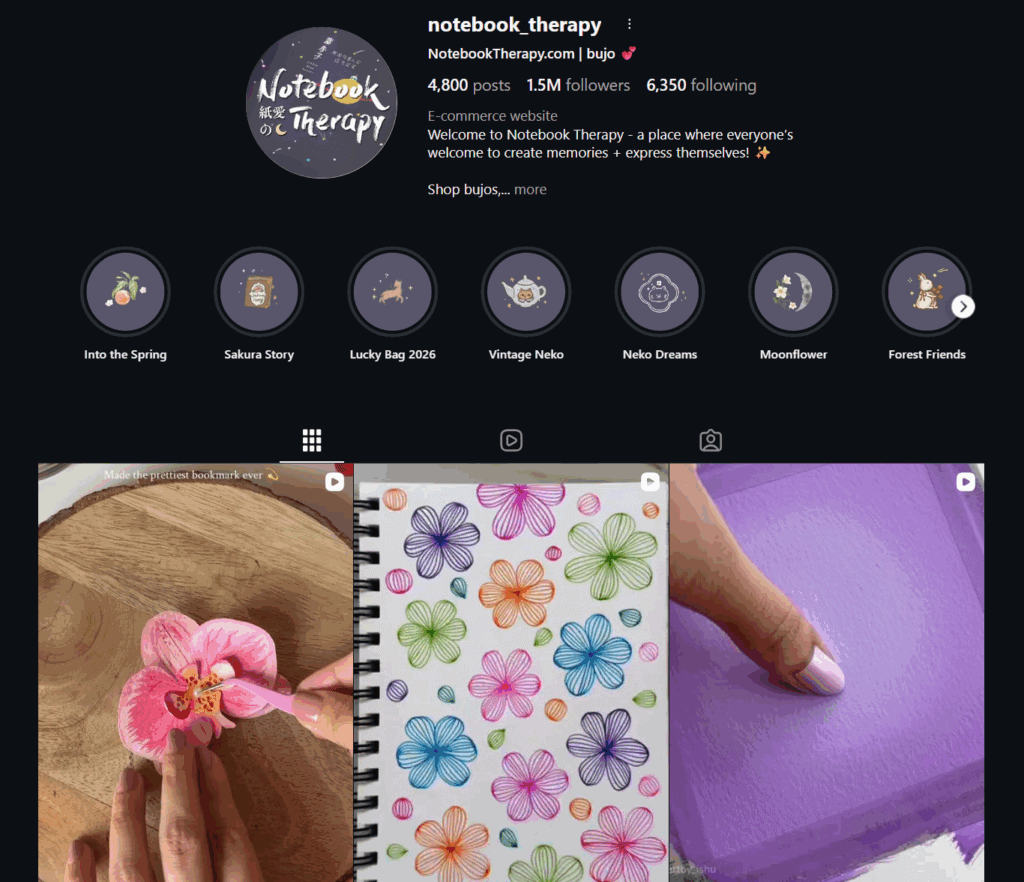
The takeaway: if your store is built around a hobby or lifestyle, do not only post products. Show how people use them.
Tutorials, inspiration posts, collection ideas, and niche tips give people a reason to follow you before they are ready to buy.
Meowingtons (niche content and community building)
Meowingtons is a cat-focused ecommerce store that sells products for cats and cat lovers, including cat furniture, toys, apparel, accessories, home decor, and personalized gifts.
The useful part is how focused the brand is.
Instead of looking like a random pet product catalog, Meowingtons is built around one clear audience: cat people.
Its site includes a blog, cat comics, rescue-related content, gift guides, and a recognizable brand voice.
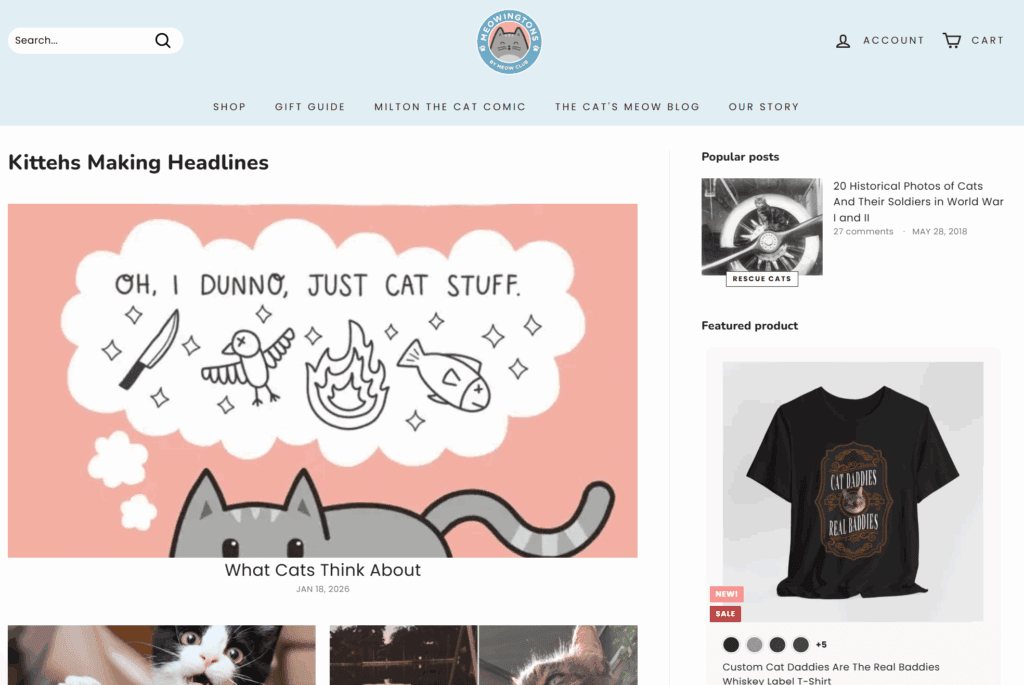
That is exactly what most beginner dropshipping stores miss.
The takeaway: free traffic gets easier when your store has a real niche.
A cat store can publish cat behavior tips, funny comics, gift guides, adoption stories, and product roundups.
A generic 'pet products' store has a much harder time building the same connection.
Common mistakes that kill free traffic
Most free-traffic attempts fail for boring reasons: wrong channel, weak consistency, or too much promotion too early.
These are the six mistakes to avoid:
- Copy-pasting supplier descriptions. Every other dropshipper using the same supplier already has that copy. Rewrite it for your customer.
- Posting to the wrong audience. A general store posting random TikToks dies fast. The algorithm and the customer both need a clear signal.
- Expecting results in 30 days. SEO, YouTube, Pinterest, and community traffic all take time. Quitting at week six wastes the work.
- Spamming links. One self-promotional comment on a forum or subreddit can get your account banned. Give value first.
- Skipping email capture. Free traffic that doesn't convert into email subscribers is one-shot traffic.
- Running ten channels at once. Pick two. Get good at them. Add a third later.
Free traffic for dropshipping FAQ
How long does free traffic take to work?
Expect 30 to 60 days for early signals from TikTok and Instagram Reels, 90 to 120 days for Pinterest, and six months or more for SEO and YouTube. Email automations can go live as soon as they are ready, but only if you already have traffic or subscribers driving them.
Which free channel should I start with for a new dropshipping store?
Start with the channel that best fits your product and your skills. If the product is visual and easy to demonstrate, try TikTok or Instagram Reels. If it is photogenic and lifestyle-driven, try Pinterest.
If you can write and have patience, start with SEO. Do not try all three at once.
Can I get free traffic without a blog?
Yes. TikTok, Pinterest, Instagram Reels, YouTube, Reddit, Quora, niche forums, and Facebook Marketplace can all work without writing a blog.
SEO without a blog is harder, but you can still optimize product pages, collection pages, and FAQs.
How much time per week should I spend on free traffic?
Five to ten hours a week is the realistic minimum for most beginners. Less than that can still work, but progress will be slower. The better approach is to block consistent time each week instead of doing one big content push and then disappearing.
Is free traffic better than paid traffic for dropshipping?
Neither is automatically better. Paid traffic gives you fast feedback but stops when you stop spending. Free traffic takes longer but can compound over time.
Most serious stores use both: paid traffic to test offers and organic traffic to build a stronger brand over time.
What is the biggest mistake beginners make with free traffic?
The biggest mistake is spreading yourself too thin. Beginners often try TikTok, SEO, Pinterest, YouTube, Instagram, Reddit, and email all at once.
It is better to pick two channels, commit for a few months, measure what works, and then add another channel later.
Conclusion
Nine channels are a lot, but you do not need to use all of them.
Pick the two that fit your product, your skills, and the time you can realistically commit. Run them long enough to get real data before adding another channel.
Use GA4 and GSC to see what is actually working, then layer in a third channel once the first two have a rhythm.
If you build it properly, organic traffic can become one of the few advantages competitors cannot copy overnight.
Want to learn more about dropshipping?
Want to keep learning? These guides are good next steps:
- Instagram Marketing for Dropshipping: A Complete Guide
- 13 Best SEO Tools for Dropshipping in 2026 (Grow Traffic)
- 10 Dropshipping Marketing Strategy Tips to Grow Your Business
Plus, our in-depth guide on how to start dropshipping is a good starting point if you want the full setup process.







8 Comments
In-depth article and very helpful also thank you.
Great to hear! Let me know if you have any questions.
Really informative, thanks for sharing this!
Awesome to hear! I wish you the best!
Hi . I’m Jonah from Hashtagify.me. I’ve just read your article and want to thank you very much for introducing our tool to your readers 🙂 Appreciate it a lot!
Hi Jonah, awesome to get a comment from you! Thank you for the great tool!
This is just a masterpiece! Overall, I knew about these options for attracting free traffic, but it took me 2 years to learn it myself. And now I found your article:) What do you say about Medium and other analogues for attracting free traffic to your site? Thanks
Hi Vitalii,
Thank you for your great comment! That’s great to hear 😊
Medium can be a great option; however, if you ask me, I would focus on creating a blog on your own site (and focusing a bit more on SEO) – instead of solely using Medium. (But you can then still use Medium to repurpose your content – more information about that here)
I hope that helps, and good luck with everything!
– Richard