If you're considering starting dropshipping, one of the questions that you may be thinking about is: "Is dropshipping legal in my country?"
The short answer: Yes, dropshipping is legal in all nine markets covered here.
But the rules are not the same everywhere.
Each country has its own laws about consumer protection, taxes, and importing products.
For example, what's perfectly fine in the United States might require extra paperwork in Germany or face high import taxes in Australia.
In this article, we'll look at the top 9 dropshipping markets and explain the most important rules you need to know in each one.
Key takeaways
- Verdict: Dropshipping is legal in all nine countries covered here. The rules differ by country, especially around consumer protection, taxes, imports, and business registration.
- Good to know: Selling through an overseas supplier doesn't remove your responsibilities to the customer. Depending on the market, that can cover refunds, product safety and misleading listings.
- Watch out: Tax thresholds aren't comparable. Australia's A$75,000 GST threshold can reach non-resident sellers, while the UK's £90,000 threshold doesn't reach non-established ones. The EU's €10,000 rule is narrower again and covers only certain sales inside the EU.
- Important caveat: Some markets add extra steps, like Germany's Impressum requirement or a business license in the UAE, so check local rules (and remember this isn't legal advice).
- Next step: Check the specific rules for the country you're selling to and work with reliable suppliers to stay on the right side of consumer law.
Here's how the rules compare across the nine markets.
Disclaimer: We are not lawyers, and this post should not be considered legal advice. You should seek appropriate counsel for your own situation.
Is dropshipping legal? (An overview table)
Before we dive into the details, here's a quick overview of how dropshipping is treated in 9 of the world's most popular markets:
| Country | Legal status | What to consider | Learn more? |
| United States | Legal | FTC consumer protection, sales tax nexus, and product liability | Click here |
| United Kingdom | Legal | Consumer rights, VAT, and post-Brexit customs | Click here |
| Canada | Legal | GST/HST tax, import duties, consumer protection | Click here |
| Australia | Legal | 10% GST on imports, strong refund & warranty laws | Click here |
| Germany | Legal | EU consumer law, product compliance, VAT and import rules | Click here |
| France | Legal | Consumer rights, VAT, and website requirements | Click here |
| India | Legal | High import taxes, customs delays, and a complex tax system | Click here |
| Singapore | Legal | Consumer protection law, low tax environment | Click here |
| United Arab Emirates (UAE) | Legal | VAT since 2018, ecommerce license (free zone vs mainland) | Click here |
1. United States

Good news: dropshipping is completely legal in the United States.
In fact, the US is one of the biggest and most beginner-friendly markets for dropshippers.
But just because it's legal doesn't mean you can ignore the rules.
If you want to build a business that lasts, there are a few key things you need to understand:
Consumer protection (FTC rules)
The Federal Trade Commission (FTC) is the leading agency that protects buyers.
This means:
- You must be honest in your product descriptions.
- You can't sell fake or counterfeit items.
- You're responsible if the product is dangerous or misleading, even if you didn't make it.
In short: don't overpromise, and don't sell low-quality items just because they're cheap.
Sales tax (the tricky part)
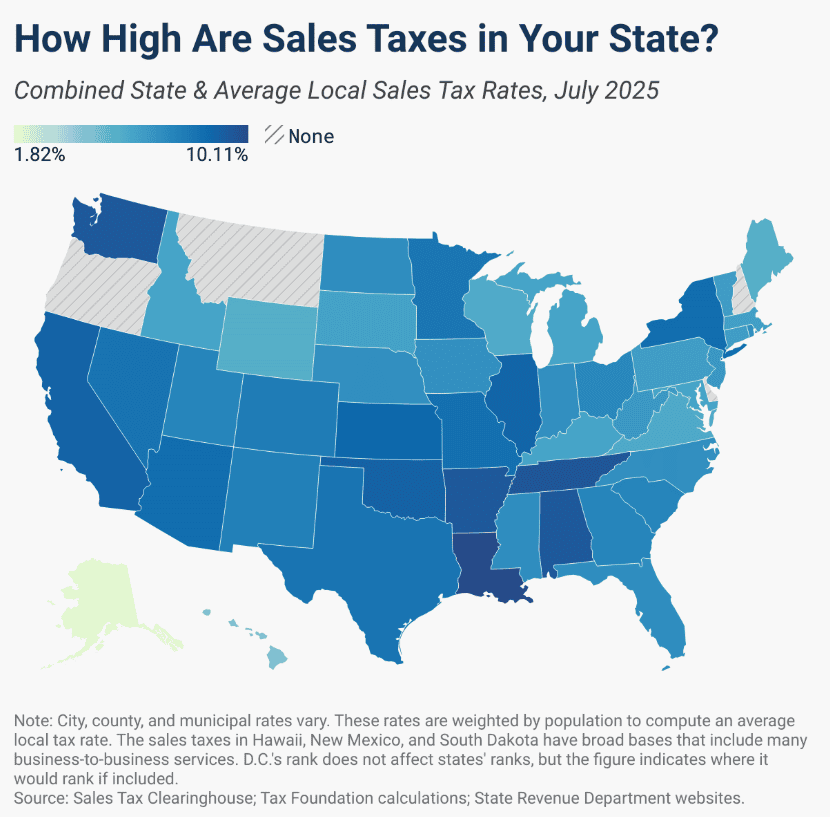
The biggest challenge in the US is sales tax:
- Every state can decide if it needs to collect sales tax.
- If you have a "nexus" (a legal presence, such as an office, warehouse, or a certain amount of sales in a state), you must collect sales tax from customers in that state.
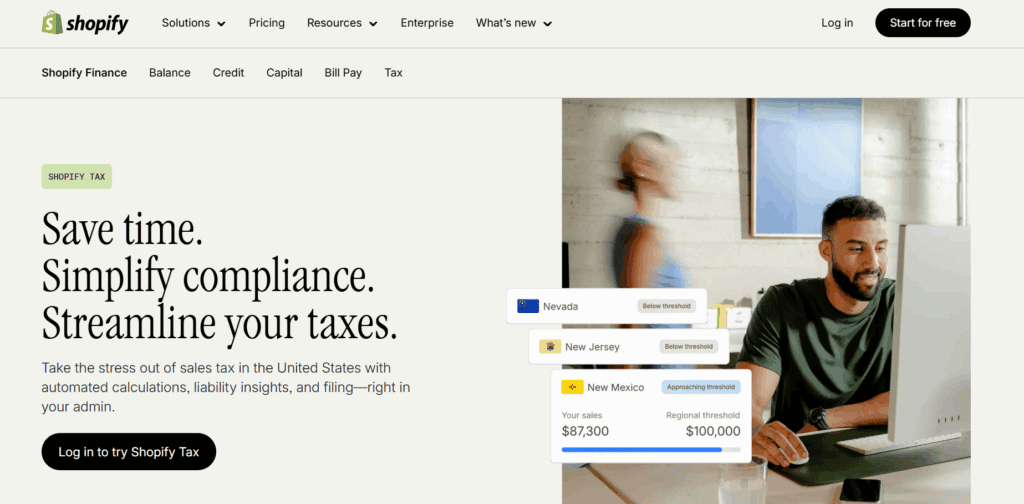
- Platforms like Shopify often help with automated tax collection, but you must still register correctly:
For example, if you live in California and make a lot of sales to customers in Texas, you might need to collect Texas sales tax, too, not just California's.
Start your store on Shopify
Free 3-day trial + $1/month for 3 months
- Grows with you from first test product to full brand
- 8,000+ apps & themes to customize your store
- Beginner-friendly editor with pro features when you're ready
No card to start. Cancel anytime.
Product liability
If something goes wrong with a product you sold (for example, a charger that catches fire), the customer can hold you legally responsible.
That's why it's smart to:
- Work only with reliable suppliers.
- Avoid risky categories, such as health supplements or electronics, unless you are thoroughly familiar with the regulations.
- Consider business insurance once you scale up.
Bottom line: Dropshipping in the US is legal and full of opportunities, but you need to stay on top of sales tax rules and ensure you're selling safe, legitimate products. If you play by the rules, the US is one of the best places to start dropshipping.
2. United Kingdom

Yes, dropshipping is legal in the UK.
But, as in most countries, there are rules you need to follow if you don't want to run into trouble.
The UK is a great dropshipping market because people often shop online; however, the government takes consumer protection and taxation very seriously.
Consumer rights (very strict in the UK)
UK shoppers are well-protected by law:
- Customers have 14 days from receiving the item to tell you they want to cancel. They then have another 14 days to send it back, and you refund them within 14 days of getting it. That refund includes standard delivery, though not the extra for a faster option.
- You must tell customers about shipping times, return policies, and refund options.
- If a product arrives faulty or not as described, you are responsible for resolving the issue, even if your supplier is located overseas.
- UK consumer law also bans fake reviews and drip pricing. If you display reviews or add mandatory fees late in the checkout, check your setup against the current rules.
Sources:
VAT (Value Added Tax)
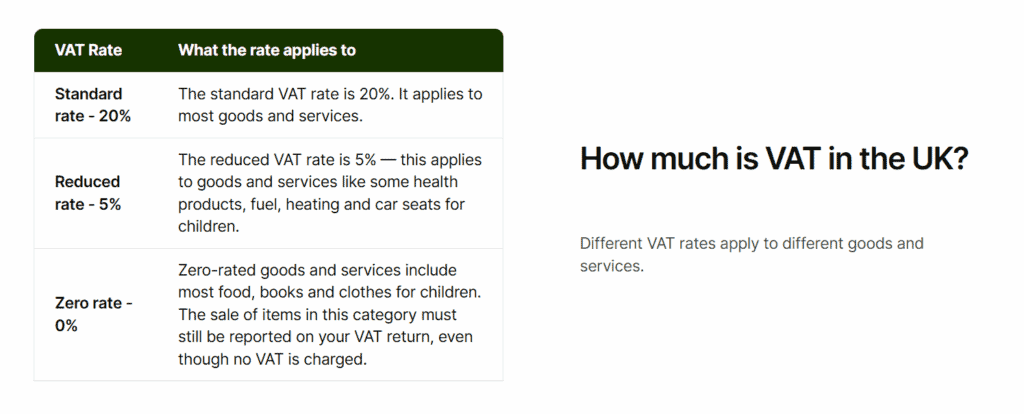
This is similar to sales tax in the US:
- You must register for VAT once your taxable turnover passes £90,000 over any rolling 12 months. The same applies if you expect to pass it within the next 30 days. That threshold is for UK-established businesses. If you're a non-established taxable person, it doesn't apply to you. You register once you make taxable supplies of any value in the UK.
- VAT is usually 20% and must be added to your product prices if you're registered.
Sources:
Post-Brexit Customs
Since Brexit, selling from suppliers outside the UK (especially from the EU) comes with extra steps:
- Customers may need to pay import duties or VAT on deliveries from abroad.
- To keep buyers happy, many UK dropshippers use local UK suppliers for faster and smoother shipping.
Bottom line: Dropshipping in the UK is legal, but you must comply with strict consumer protection laws and be prepared for VAT and customs rules.
3. Canada

Yes, dropshipping is legal in Canada.
It's actually a popular business model there, but like in the US and UK, you need to play by the rules.
Consumer protection
Canada has strong consumer protection laws, and they apply to online sellers too:
- Products must be safe and accurately described.
- Customers have the right to refunds or replacements if the product is defective or misleading.
- You are responsible for handling complaints.
GST/HST (Sales tax in Canada)
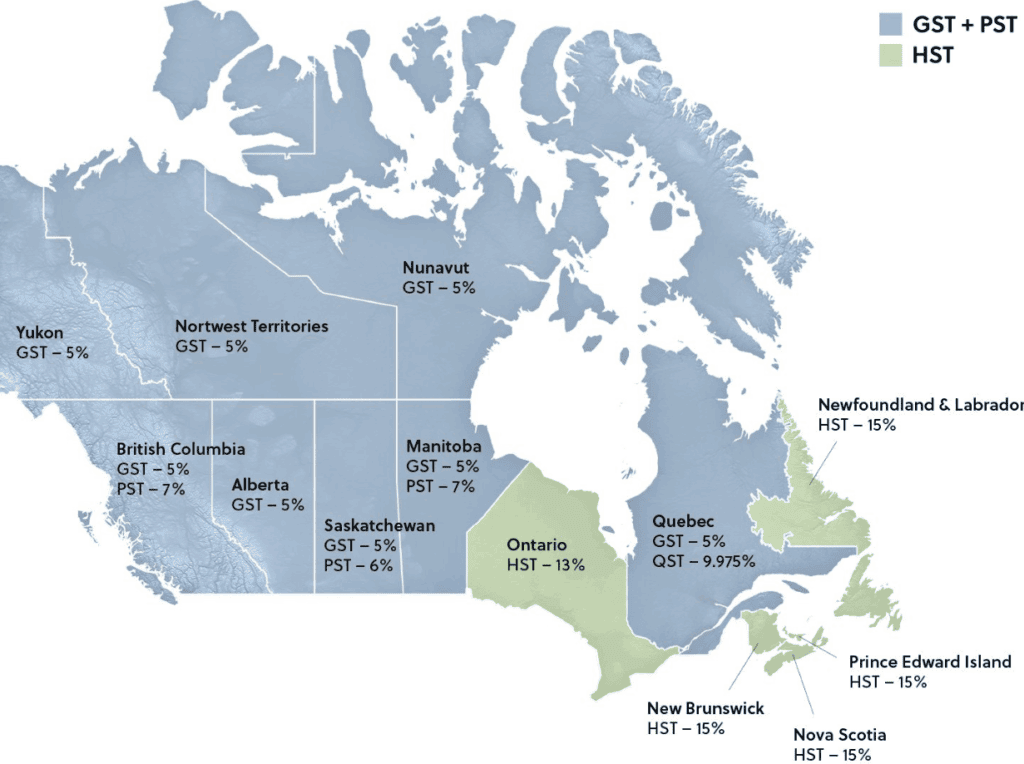
Taxes in Canada work a little differently compared to the US:
- Canada uses GST (Goods and Services Tax) at 5%, plus HST (Harmonized Sales Tax) in certain provinces.
- You can lose small-supplier status when your taxable supplies pass CAD $30,000 in one calendar quarter or over four consecutive calendar quarters. That calculation can include taxable supplies you make outside Canada. The date you have to register and start charging GST/HST depends on which test you trigger.
- Below that, registering is optional. Some sellers do it anyway to claim input tax credits.
Sources:
Customs and import duties
This is where some Canadian dropshippers run into problems:
- If your supplier ships from outside Canada (such as China or the US), the customer may be required to pay customs duties or import taxes upon arrival of the package.
- Long shipping times from overseas suppliers can also be frustrating for Canadian customers.
The solution?
Some dropshippers work with Canadian suppliers to ensure fast delivery and avoid customs surprises.
Bottom line: Dropshipping in Canada is legal, but you must handle GST/HST correctly and be careful shipping from overseas. To keep your customers happy in Canada, ensure that delivery times are short and your return policy is straightforward.
4. Australia
Yes, dropshipping is legal in Australia.
In fact, it's a well-developed ecommerce market with plenty of opportunities.
However, to succeed here, you must understand how taxes and consumer rights work, as Australia is recognized for having some of the strongest buyer protection laws in the world.
Consumer protections (Australian Consumer Law)
The Australian Consumer Law (ACL) is very strict:
- Customers have the right to refunds, repairs, or replacements if the product is faulty or does not meet the description.
- You must clearly state your shipping times and return policies.
- Even if your supplier is overseas, you are responsible for fixing the issue.
For example, if a customer buys headphones from your store and they stop working after a week, you must provide a refund or replacement, even if your supplier is in China.
GST (Goods and Services Tax)
Taxes are another important point:
- Australia charges a 10% Goods and Services Tax (GST) on most goods sold to Australian customers.
- You have to register for GST once your GST turnover from sales connected with Australia reaches AUD $75,000. That figure counts your sales into Australia, not your worldwide revenue. If every one of those sales goes through an online marketplace, you may not need to register yourself.
Source:
Bottom line: Dropshipping in Australia is legal, but you must respect strict consumer protection laws and handle GST correctly. If you're honest about delivery times and work with reliable suppliers (preferably local Australian suppliers), it can work well.
5. Germany

Yes, dropshipping is legal in Germany.
But Germany has some of the strictest consumer protection and tax rules in Europe.
German customers expect professionalism, transparency, and high-quality service.
Consumer protection (very strong in Germany)
Germany follows EU consumer protection laws, but often enforces them more strictly than other countries:
- Customers get 14 days from receiving the goods to tell you they are withdrawing from the sale. They then get another 14 days to send the goods back. You refund what they paid, including the standard delivery cost you charged. You can ask them to cover the return postage if you told them about that cost before they ordered. Some items are excluded, like customized products and unsealed hygiene goods.
- Since June 19, 2026, German law also requires an electronic withdrawal function where customers conclude distance contracts through your online store. It needs a clear label like "Vertrag widerrufen" and has to stay available throughout the withdrawal period. Add a confirmation step, then send the customer an acknowledgement showing the date and time you received the request.
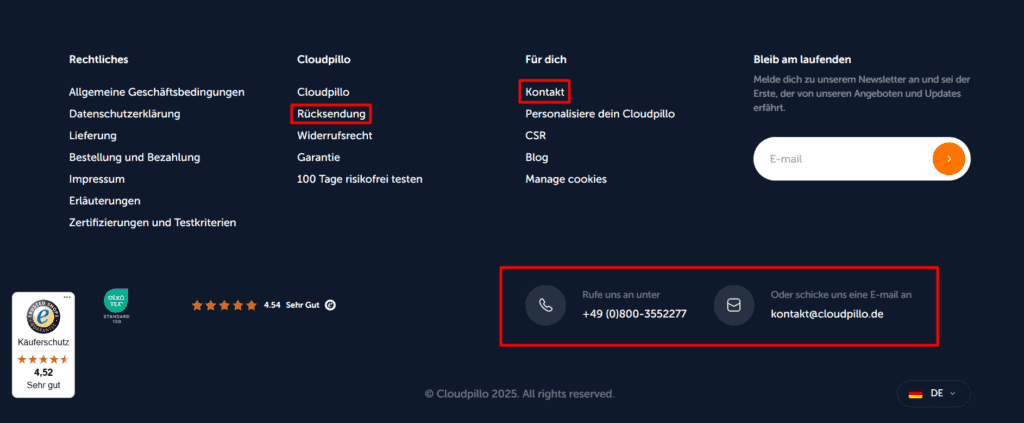
- You must display your return policy, company details, and contact information on your website:
- Products must meet EU product safety standards (especially for electronics, toys, and health products).
- Products covered by the EU's General Product Safety Regulation also need a responsible economic operator established in the EU. If the manufacturer is outside the EU, check that the product already has one before you list it. Your listing has to show that operator's name, postal address and electronic address, along with the manufacturer's own details.
For example, if you sell a children's toy without the required conformity assessment and CE marking, you could face enforcement action. Depending on the product, the manufacturer may be able to assess conformity itself, or a notified body may need to be involved.
Sources:
- BGB §355 on the withdrawal period
- BGB §357 on refunds and delivery costs
- BGB §312g on when the withdrawal right does not apply
- BGB §356a on the electronic withdrawal function
- the EU General Product Safety Regulation on the responsible economic operator and online product listings
- the European Commission on toy conformity assessment and CE marking
Find local suppliers: 6 Best Dropshipping Suppliers in Germany (Free & Paid)
VAT (Value Added Tax)
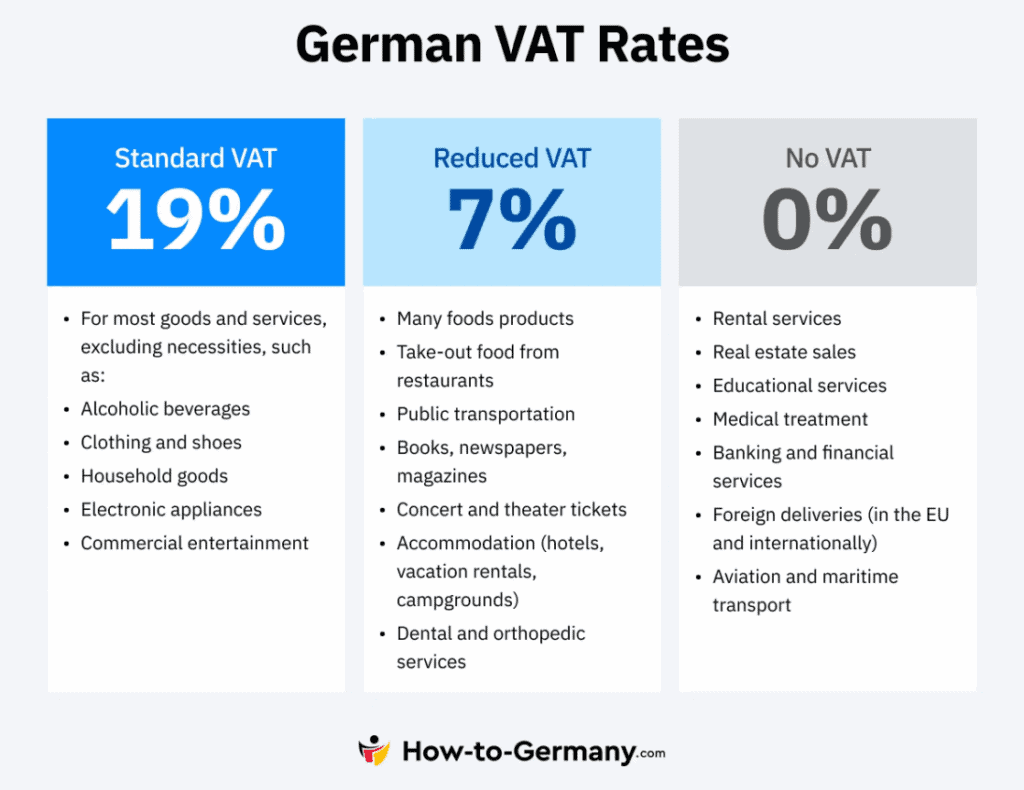
Germany's standard VAT rate is 19%, and a reduced 7% rate applies to some goods.
What matters more for you is where your goods ship from. That decides which rules apply at all.
Shipping direct from outside the EU
German VAT generally applies to these imports, whatever the order costs. The old €22 exemption for small parcels ended in 2021. And the €10,000 EU threshold you may have read about doesn't apply to these sales at all.
For eligible imports of €150 or less, the Import One-Stop-Shop (IOSS) lets you collect the VAT at checkout. Without IOSS, the VAT is normally handled through the import process instead. A marketplace may take that job over in some setups.
That €150 limit is the intrinsic value of the goods. If your business sits outside the EU, using IOSS normally means appointing an EU-based intermediary.
Since July 1, 2026, qualifying low-value ecommerce consignments worth up to €150 have faced a temporary €3 customs duty per tariff item. Five identical T-shirts in one consignment cost €3 in total. Add a watch to that parcel and it becomes €6, because that is a second tariff item.
Shipping from stock inside the EU
Don't jump straight to the €10,000 threshold here. First check where your business is established and where the parcel starts its journey.
Selling from German stock to German customers means German VAT. The €10,000 threshold covers cross-border sales inside the EU. It only applies if your business is established in one EU country, the goods are dispatched from that same country, and your qualifying cross-border sales stayed at or below €10,000 in both the previous and current calendar year.
Above the threshold, you charge VAT in the country the goods arrive in. For orders sent to German customers, that means German VAT. You can report that VAT through the One-Stop-Shop (OSS) in one EU-wide return, or register separately in the countries where you owe it. OSS is a shortcut you can choose, not something you have to join.
If your business is established in Germany, a small-business exemption may apply instead. Since 2025, qualifying German businesses can also use another EU country's exemption through the cross-border SME scheme.
We cover the EU rules properly in Cross-Border VAT for EU Dropshipping: IOSS & OSS in 2026.
Sources:
- UStG §3c on the place of supply for distance selling
- UStG §19a on the cross-border small business exemption
- the European Commission on the €10,000 threshold
- the European Commission on the temporary €3 duty on low-value imports
Business registration and transparency
German law requires online sellers to be very transparent:
- You must provide an Impressum (a legal notice page with your business address and contact details):
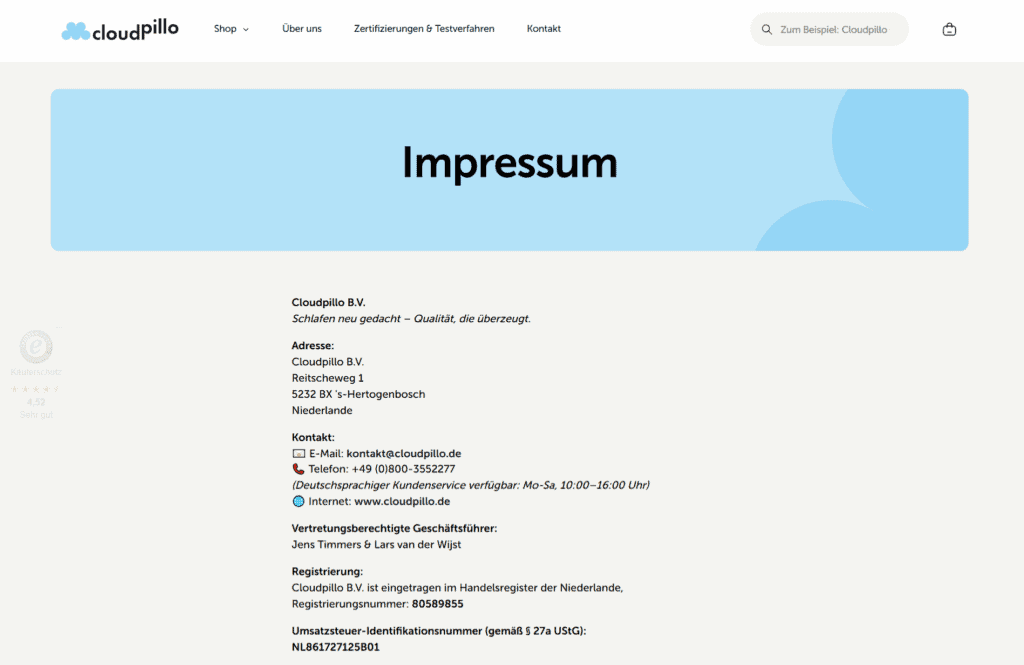
- Customers should know who they're buying from; anonymous dropshipping stores are not allowed.
- If your business is based in Germany, register your trade with the local trade office. That's the Gewerbeanmeldung. You also submit the tax-registration questionnaire to the Finanzamt through ELSTER.
- Failure to comply can result in "Abmahnungen" (legal warnings). A competitor can send one, but they can't charge you for it when the breach is an online information duty like a missing Impressum. For a justified warning that meets the statutory requirements, qualified associations can still recover their necessary costs. If one arrives, get the claim and any undertaking you are asked to sign checked before you agree to it.
Sources:
- GewO §14 on the duty to register a trade
- the German Federal Portal on the tax-registration questionnaire and ELSTER
- UWG §13 on warning notices and cost recovery
Bottom line: Dropshipping in Germany is legal, but not easy. You'll need to work out which VAT rules apply to you, follow strict EU product and safety rules, and be transparent about who you are.
If you ignore those requirements, you can run into legal trouble.
6. France

Yes, dropshipping is legal in France.
But, just like in Germany, France has strong consumer protection laws and very specific requirements for online sellers.
Consumer protection
French law, and EU law in general, is designed to protect buyers:
- Customers have 14 days from receiving the goods to tell you they are withdrawing. They then have another 14 days to send the goods back. You refund what they paid, including the standard delivery cost you charged. You can make the customer pay the return postage if you told them about that cost before they ordered.
- You must inform customers about delivery times, return policies, and the identity of the seller.
- If an item is defective, arrives late or does not match your description, you're responsible for resolving the issue with the customer.
- Since June 19, 2026, your store also needs an online function that lets customers exercise their withdrawal right free of charge. It has to be visible and easy to find throughout the withdrawal period, and it has to identify the contract. The customer then gets a confirmation and an acknowledgement.
- Products covered by the EU's General Product Safety Regulation need a responsible economic operator established in the EU. Check that yours has one before you list it.
For example, if your store says shipping takes 7 days but the product arrives in 30 days, the customer can demand a refund and even report you to consumer authorities.
Sources:
- service-public.fr on distance selling and the right of withdrawal
- the EU General Product Safety Regulation on the responsible economic operator and online product listings
Find local suppliers: 7 Best Dropshipping Suppliers in France (Free & Paid)
VAT (Value Added Tax)
In France:
- The standard VAT rate is 20%.
- If you ship from stock inside the EU, the €10,000 cross-border threshold may apply. It works only when your business is established in one EU country, the goods are dispatched from that same country, and you stayed at or below €10,000 in both the previous and current calendar year. Below it, VAT can stay in your home country unless you choose the destination-country rules instead. Once you exceed it, French VAT applies.
- If you ship from outside the EU, that threshold doesn't apply. French VAT generally applies to these imports, whatever the order costs. For eligible imports of €150 or less, IOSS lets you collect it at checkout, and without IOSS it is normally handled through the import process.
- France's tax authority calls the One-Stop-Shop and Import One-Stop-Shop optional, so neither is something you have to join.
- Since July 1, 2026, qualifying low-value ecommerce consignments worth up to €150 have faced a temporary €3 customs duty per tariff item.
- Invoices must include VAT details if you are registered; French authorities closely monitor this requirement.
Sources:
- impots.gouv.fr on the VAT One Stop Shop
- the European Commission on the €10,000 threshold
- the European Commission on the temporary €3 duty on low-value imports
Legal website requirements
Your store should have:
- Mentions légales (legal notice page). This includes your business name, address, registration details, and contact information.
- Terms & Conditions (Conditions Générales de Vente). Explains how you handle sales, returns, and refunds.
- Privacy Policy. Required for handling customer data under GDPR (EU privacy law).
Bottom line: Dropshipping in France is legal, but you must be transparent and comply with EU tax and consumer laws.
7. India

Yes, dropshipping is legal in India.
But compared to places like the US or UK, running a dropshipping business here can be more complicated.
Consumer protection
India has strong consumer protection laws:
- You must be honest in your product descriptions and pricing.
- If a product is defective, damaged, or not delivered, you are responsible for refunds or replacements.
- Hidden costs (like surprise import duties) can lead to disputes and even penalties.
Find local suppliers: The 11 Best Dropshipping Suppliers in India (Free & Paid)
GST (Goods and Services Tax)
Taxes are a bit complex in India:
- There isn't one GST threshold. The base figure is ₹20 lakh of aggregate turnover. If you supply only goods, a ₹40 lakh limit can apply instead. Thresholds can be lower in some special-category states, and the exact limit depends on the state and type of supply. Interstate selling and marketplace selling can change the answer, so check your own position.
- Online marketplaces can also have their own GST onboarding requirements, so check the platform's current seller rules before you list.
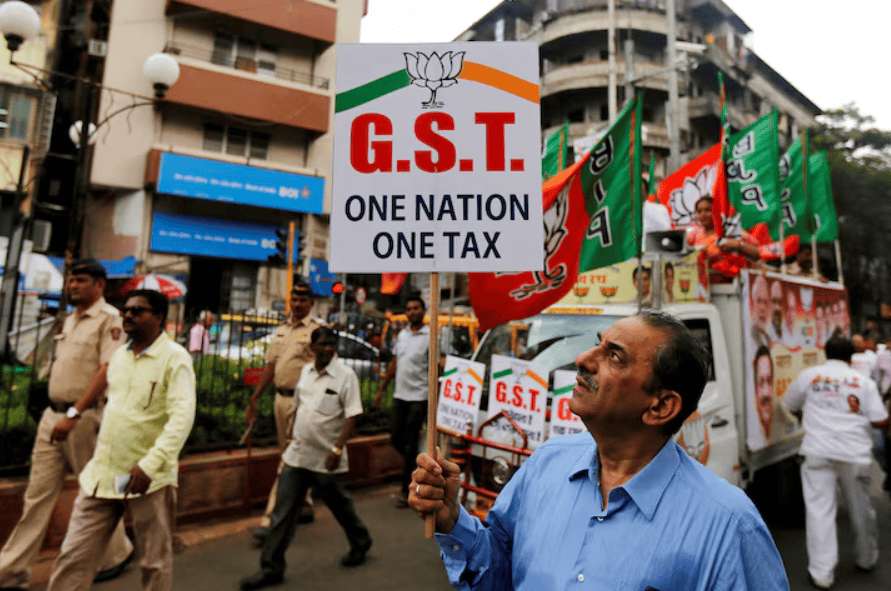
- GST rates depend on the product category. A September 2025 reform primarily moved the rate structure to two slabs of 5% and 18%. A 40% rate applies to specified luxury and sin goods such as tobacco and high-end cars:
Sources:
- the GST Council on Notification 10/2019-Central Tax
- CBIC on CGST Act section 22
- the Press Information Bureau on the September 2025 GST reform
Payment gateways
Another challenge is payment processing:
- Platforms like Shopify Payments and PayPal (commonly used by dropshippers abroad) are limited in India.
- You may need to use alternative payment gateways to accept payments from Indian customers.
- International payments can be more difficult due to Reserve Bank of India (RBI) regulations.
Bottom line: Dropshipping in India is legal, but more complex than in Western countries.
8. Singapore

Yes, dropshipping is legal in Singapore.
In fact, Singapore is known as one of the most business-friendly places in the world.
The rules here are straightforward, taxes are relatively low, and the government supports ecommerce growth.
That said, there are still a few things you need to know:
Consumer protection
Singapore has clear consumer protection laws under the Consumer Protection (Fair Trading) Act (CPFTA):
- You must be honest in your product descriptions and refrain from making false claims.
- Customers have the right to refunds or replacements if a product is defective or not delivered as promised.
- You are responsible for resolving disputes, even if your supplier is overseas.
Find local suppliers: Dropshipping in Singapore: Where to Find Suppliers? (2026)
GST taxes
Taxes in Singapore are relatively simple compared to other countries:
- The Goods and Services Tax (GST) is currently 9%.
- You register once your taxable turnover passes SGD $1 million for the calendar year. The same applies if you expect to pass it in the next 12 months. Overseas sellers are measured differently. You register when your global turnover exceeds SGD $1 million and your sales into Singapore exceed SGD $100,000 a year. That second figure covers business-to-consumer sales of low-value goods and remote services.
- Under those figures, registering is optional. That keeps the barrier low if you're starting small.
Sources:
Bottom line: Dropshipping in Singapore is legal, with a business-friendly environment and low barriers to entry.
9. UAE

Yes, dropshipping is legal in the UAE, and it has become one of the fastest-growing ecommerce hubs in the Middle East.
However, unlike some countries where you can start selling online with minimal setup, the UAE has specific rules regarding business licensing and taxes that must be followed.
Consumer protection
The UAE's consumer protection laws are becoming stricter as ecommerce grows:
- You must provide accurate product descriptions.
- Customers have the right to refunds if items are defective or not delivered as promised.
- As the seller, you are responsible for resolving complaints, not your supplier.
VAT (Value Added Tax)
The UAE introduced VAT in 2018, and it applies to ecommerce businesses too:
- The VAT rate is 5%.
- The mandatory registration threshold is AED 375,000 in taxable supplies and imports, measured over the last 12 months or the next 30 days. The Federal Tax Authority says that threshold does not apply to nonresident businesses. A seller outside the UAE may need to register regardless of value if it makes taxable supplies in the UAE and no other person is responsible for the VAT.
- If you are UAE-based and below the threshold, voluntary registration is possible from AED 187,500 in taxable supplies or expenses.
Sources:
- the UAE Federal Tax Authority on registration for VAT
- Federal Decree-Law No. 8 of 2017, Article 13 on who must register
Licensing requirements
One of the biggest differences in the UAE is that you usually need a license to run an online business:
- To operate legally, you should apply for an ecommerce license.
- Licenses can be obtained in two ways:
- Mainland license. Allows you to sell directly in the UAE market.
- Free zone license. Cheaper and easier, but may limit your ability to trade locally unless you work with a distributor.
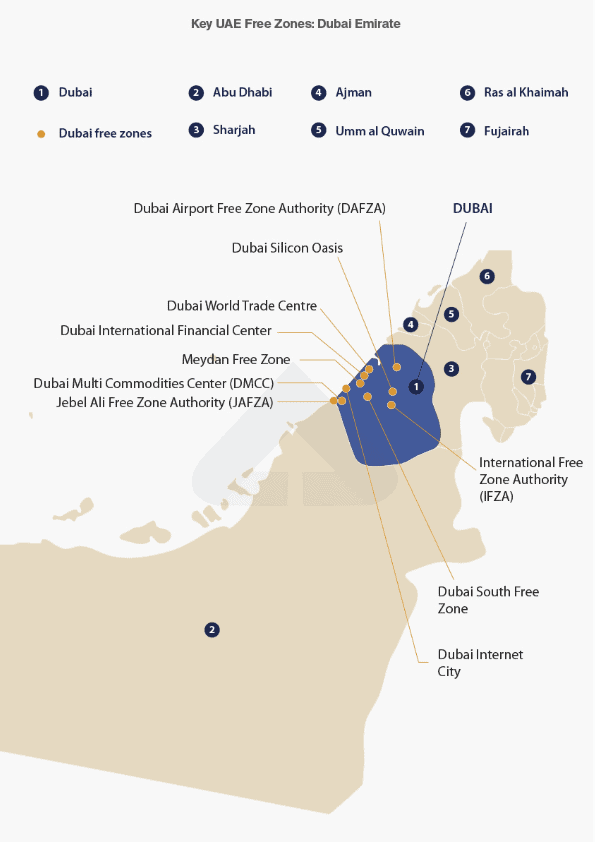
- The licensing cost can vary, but many entrepreneurs choose free zones because they are more flexible and business-friendly.
Bottom line: Dropshipping in the UAE is legal, but you will need an ecommerce license and may be required to register for VAT as your business expands.
Is there any country where dropshipping is not legal?

The simple answer is no. None of the nine markets in this guide bans dropshipping.
The business model itself is legal in every market we checked. Rules elsewhere can still restrict ecommerce, imports, licensing or specific products.
However, in some countries, the barriers are so high that it can seem almost impossible to run a dropshipping store legally.
A few examples are:
- Nigeria and other parts of Africa. While dropshipping isn't illegal, many entrepreneurs struggle with unreliable payment gateways, weak logistics networks, and strict foreign exchange rules. This makes scaling very hard compared to Western markets.
- Turkey. The Turkish government has strict rules around import licensing and customs clearance. Long shipping delays, high import taxes, and constantly changing regulations can frustrate both sellers and buyers.
- Russia. Dropshipping is technically legal, but sanctions, payment restrictions (such as PayPal's limitations), and customs challenges make ecommerce extremely difficult.
- Argentina. High inflation, strict currency controls, and high import taxes make it challenging for dropshippers to remain profitable. Even if your store is legitimate, delivering products smoothly is a significant challenge.
- Saudi Arabia. Like the UAE, you need an official license to operate an online business.
Conclusion
So, is dropshipping legal in your country?
The answer is almost certainly yes.
However, as you've seen, the experience can vary significantly depending on where you live or where you intend to sell.
In places like the US, UK, or Singapore, dropshipping is relatively straightforward if you handle taxes and consumer rights properly.
But in countries such as Nigeria, Turkey, or Argentina, the additional challenges associated with payments, imports, or licenses can make it feel like it's illegal.
Have a great rest of your day!
Want to learn more about dropshipping?
A few we'd point you to:
- The Reality of Dropshipping: 6 Truths to Know in 2026
- Is Dropshipping Legal in 2026? Rules, Risks & Store Setup
- Dropshipping Taxes: Sales Tax, Income Tax, VAT & GST 2026
- 6 Tips to Not Get Sued When Dropshipping in 2026 (Must Read)
New to dropshipping? We cover what it actually takes in our guide on how to start dropshipping here.