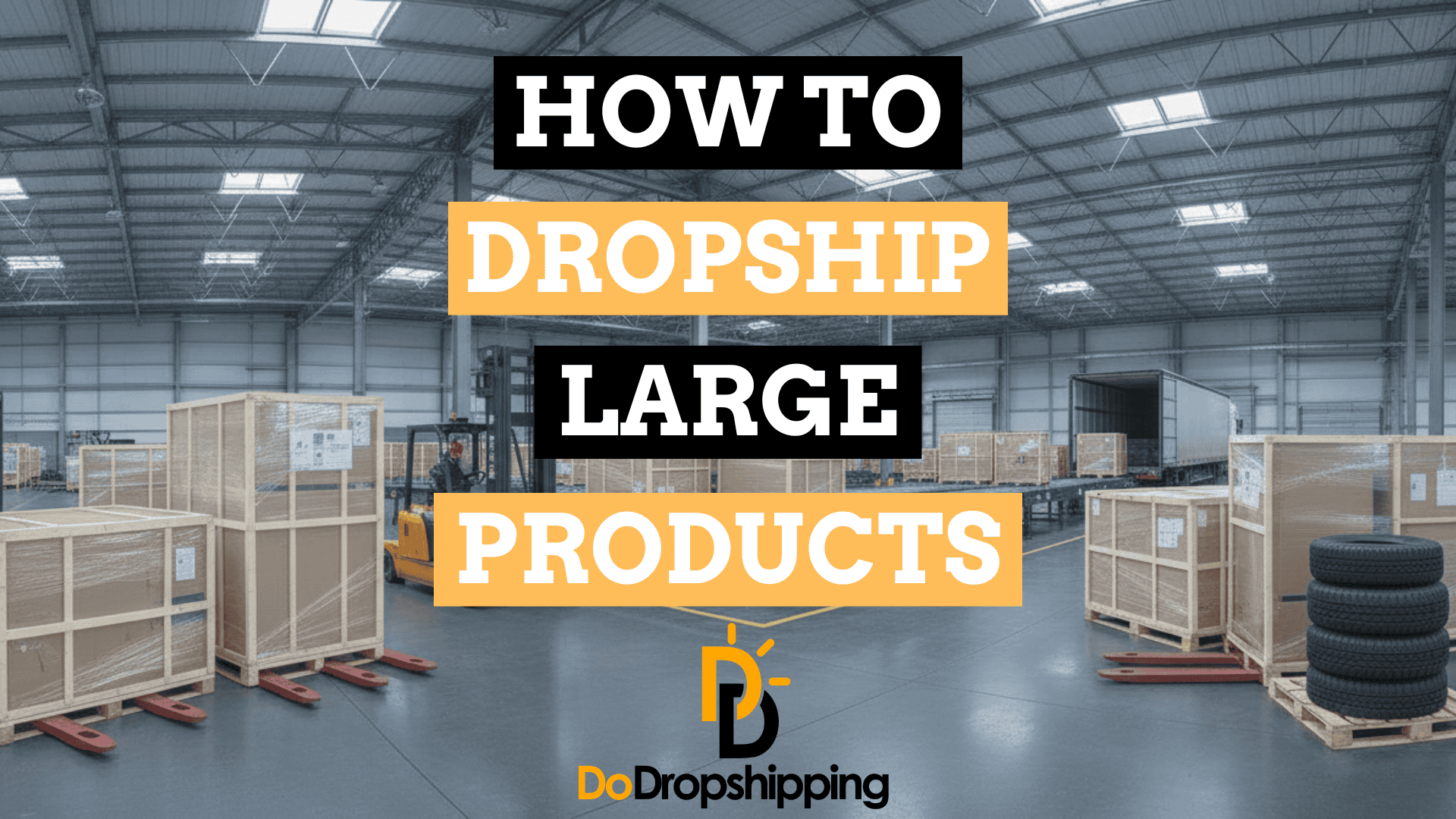
Dropshipping large and heavy products looks attractive: higher price points, fewer competitors, and bigger order values.
And it can work... if you understand the operational side.
Most sellers don't fail because they can't get sales.
They fail because of what happens after checkout: freight costs that quietly destroy margins, unreliable suppliers, long delivery timelines, and rising support issues.
The result is a slow, often unnoticed cash bleed that only becomes obvious once order volume increases.
This guide breaks down how to dropship large, heavy products so you can control costs, protect margins, and scale without constantly firefighting behind the scenes.
Key takeaways
- Verdict: Yes, you can dropship large and heavy items, and the higher order values are real. The model lives or dies on freight, suppliers, and after-sales support, not on finding the product.
- Best approach: Source from suppliers who handle freight and last-mile logistics well, then bundle shipping into a single flat or zone-based price rather than quoting per order.
- Real cost to watch: Carrier surcharges. Once an item is oversized, you can stack a FedEx Additional Handling fee, an Oversize fee, and dimensional-weight pricing on top of the base rate, and freight (LTL) is a different system again.
- Watch out: Returns and damage. Return shipping on a bulky item can cost as much as the product, so a partial refund or a carrier claim often beats taking it back.
- Next step: Get real freight quotes for your actual product to a residential address before you set a price, and read our 10 Best High-Ticket Dropshipping Suppliers to start a shortlist.
Let's break it down, starting with what actually counts as 'large or heavy.'
Start your store on Shopify
Free 3-day trial + $1/month for 3 months
- Grows with you from first test product to full brand
- Thousands of apps and hundreds of themes to customize your store
- Beginner-friendly editor with pro features when you're ready
No card to start. Cancel anytime.
What qualifies as a large or heavy item?
A product is large or heavy, and when shipping, it becomes complicated.
In practice, that means it exceeds a carrier's size or weight limit, requires special handling or a pallet, or must move via a freight network rather than a normal parcel service.
Here's the part that catches people off guard.
Carriers don't just look at actual weight.
They also calculate dimensional weight (also called volumetric weight), which prices a box based on the space it takes up.
So a bulky-but-light product can cost as much to ship as a much heavier one.

That's why a comforter or a bean bag chair can still rack up high shipping fees once it's boxed and labeled.
We'll do the actual math on this in the shipping section below.
As a general rule, products fall into the large or heavy category when they:
- Exceed standard parcel weight limits.
- Become oversized once packaged.
- Require special handling, pallets, or freight services.
Common examples include:
- Furniture and home fixtures
- Fitness and wellness equipment
- Appliances and large electronics
- Outdoor, garage, and workshop items

These products are usually 'high-ticket items,' which is part of what makes them appealing.
The demand is real, too.
US furniture and home-furnishings stores sold about $15.2 billion online in 2022, up from $9.2 billion in 2019, according to the U.S. Census Bureau.
Home fitness is a sizable niche in its own right.
The global home fitness equipment market is worth around $11.84 billion in 2026, per Mordor Intelligence.
So the buyers are there.
But the question is whether the cost structure works for you, which is exactly why the pros and cons are worth a close look.
Pros and cons of dropshipping large & heavy items
Dropshipping large and heavy products isn't better or worse than traditional dropshipping.
It's simply a different model with tradeoffs that become more visible as your business grows.
So let's walk through the pros and cons upfront, so you know exactly what you're getting into and can avoid surprises later.
Pros
1. Higher average order value

One of the biggest advantages of dropshipping large and heavy items is the higher average order value.
These products are usually high-ticket, so each sale brings in more revenue than a lightweight item.
You don't need hundreds of orders a day to build a real store.
Fewer orders also mean fewer payments to process, fewer support conversations, and fewer things to manage day-to-day, as long as your operations are set up properly.
2. Less competition than small items
Most dropshippers stick to small, easy-to-ship products for a reason: they're simpler.
Large and heavy items are more complex, and that alone filters out a big share of competitors.
You're far less likely to go head-to-head with dozens of stores selling the exact same product at rock-bottom prices.
That complexity becomes your advantage.
3. Research-driven, higher-quality customers
Your customers aren't impulse-buying bulky or expensive products.
They take their time. They compare options. They read the details.
And once they commit, they're usually more serious, more prepared, and less likely to cancel on a whim.
This works in your favor if your store gives clear product information, detailed specs, and realistic shipping expectations.
In this space, clarity and trust usually outperform aggressive discounts.

4. Stronger perceived value and trust-building potential
Large, expensive products feel like serious purchases to customers.
When your store looks professional and communicates clearly, trust builds faster.
Clean design, transparent policies, and honest delivery timelines matter more here than flashy promotions.
In many cases, trust (and not price) is what gets the sale.
Cons
1. Higher risk per order
When something goes wrong, and eventually something will, the impact is much more noticeable than with low-cost items.
A single refund, replacement, or failed delivery can wipe out the profit from several successful orders.
You feel mistakes faster in this model.
2. Increased support

Even though you're dealing with fewer orders, each one tends to need more attention.
You'll spend more time coordinating deliveries, sharing updates, and answering detailed pre- and post-purchase questions.
Customers want reassurance. And at higher price points, that's expected.
Compared to standard dropshipping, this model needs tighter systems and more active involvement to run smoothly.
3. Less room for policy mistakes
Policies matter much more when you're selling large and heavy products.
Refunds, cancellations, delivery terms, and damage handling all need to be clearly defined from day one.
What feels 'good enough' when selling small items can quickly turn into an expensive mistake at this level.
Shipping & fulfillment realities you must know

The moment your supplier ships your first large order is when it clicks that fulfillment matters as much as product selection and marketing, and sometimes more.
So before we talk price, let's clear up the vocabulary.
Most beginners lose money here simply because nobody explained how heavy items move.
Parcel, LTL, and the shipping terms you need to know
Depending on size and weight, your orders ship one of two main ways.
Here's what each term means in plain English:
- Parcel: Standard courier shipping (FedEx, UPS, USPS). It's what most dropshipping uses, and it works until your box gets too big or too heavy for their limits.
- LTL freight: Short for 'less than truckload.' Your item rides a pallet on a shared truck with other shipments. This is how most furniture, appliances, and gym equipment are transported once they exceed parcel limits.
- Dimensional weight: The 'size' price. Carriers divide the box's volume (length x width x height) by a set number, then bill you on whichever is higher: that figure or the actual weight.
- Liftgate: A powered platform on the back of the truck that lowers the item to the ground. Homes don't have loading docks, so residential freight usually needs one, and it's an added fee.
- White-glove delivery: The premium tier. The crew brings the item inside, often to the room of choice, and may assemble it and remove packaging. It costs more, but it prevents a lot of damage and support tickets.
One number ties this together: the dimensional divisor.
For domestic US parcels, FedEx and UPS both use a divisor of 139.
As of August 2025, both also round each fractional dimension up to the next whole inch before they run the calculation, according to Sifted.
Here's how that math works on a real box:
Say you ship a 30 x 24 x 12 inch package that actually weighs 25 lbs.
Multiply the dimensions (8,640 cubic inches), divide by 139, and you get a dimensional weight of about 63 lbs.
The carrier bills the 63, not the 25.
So you just paid for more than double the weight, because the box is bulky.
The surcharges that quietly stack up
Dimensional weight is only the start.
Once a parcel is big or awkward, carriers add accessorial fees on top of the base rate, and they've climbed for 2026.
These are the ones that hit heavy-item sellers most:
- FedEx Additional Handling: $29.50 to $40.75 per package by zone in 2026, per the FedEx 2026 surcharge schedule.
- FedEx Oversize: $255 to $330 per package by zone in 2026, per the same FedEx schedule.
- UPS Large Package Surcharge: $219.50 to $331 per package, depending on commercial vs. residential status and zone, per UPS.
- UPS Over Maximum Limits: $1,875 per package in 2026 if your item exceeds UPS's size or weight ceiling, per UPS.
Read that UPS Over Maximum number again.
A single oversized item that trips that limit can cost $1,875 in surcharges alone, before the base rate.
It's the reason heavy items often belong on LTL freight instead of parcel.
Why you must talk to your supplier early
All of this is why talking to your supplier early is non-negotiable.
As a dropshipper, you need to know:
- How they usually ship large or heavy items
- Whether they have negotiated rates or preferred courier partners
- If they can share shipping costs for common destinations
- What services are included by default (curbside vs liftgate vs appointment delivery)
- Whose account are the freight ships on, yours or theirs
Without clear answers, you're guessing. And guessing is expensive.
Here's a common scenario: a customer orders a desk from your store and assumes it'll arrive like an Amazon package.
Instead, the shipment goes through a freight carrier, pauses at a local terminal, and needs a scheduled delivery appointment.
If the customer isn't home, or wasn't told what to expect, the delivery can be delayed or refused. That cost usually falls on you.

Tracking works differently, too.
Freight shipments update less often, so you'll get more 'Where is my order?' messages, even when nothing is actually wrong.
The important thing to keep in mind is simple: with large and heavy items, shipping becomes part of what you're selling.
If expectations aren't clear before checkout, the issues show up later as support work, delivery problems, and pressure on your margins.
Supplier selection for large and heavy items
Some products look like a great bet but rarely work in practice, because the suppliers behind them are disorganized or running on unstable logistics.
Others run smoothly because the supplier has experience, clear workflows, and realistic timelines.
This is why what you sell and who you source from matters more than usual.
Should you source heavy items from China or domestically?
For large and heavy products, this question matters more than it does for small items.
And the reason comes down to shipping cost and time.
A heavy item coming from overseas incurs high freight, longer transit times, and more customs friction, which is hard to absorb on a single bulky order.
Here's the general rule we'd start with:
- Domestic suppliers usually win for furniture, appliances, and gym equipment. Shorter last-mile freight, faster delivery, and easier returns tend to beat a lower unit price from abroad.
- Overseas suppliers can still work if the item is high-margin enough to absorb freight, or if the supplier already holds inventory in your customer's country.
Always check where the item ships from, because that can differ from where the supplier is based.
A supplier can list a local website while the product still leaves an overseas warehouse, and for a heavy item, that gap can mean weeks of extra transit.
Where to find vetted heavy-item suppliers
If you're looking for vetted suppliers that know how to handle high-ticket logistics, take a look at 10 Best High-Ticket Dropshipping Suppliers in 2026 (Picks).
You should also know that certain niches look appealing but consistently underperform.
If you're still early, it's worth reviewing 10 Dropshipping Niches to Avoid in 2026 (Beginner Risks) before committing.
And finally, not all high-ticket products behave the same either. Some are easier to ship and support, while others create constant friction.
We outline great options in 16 High-Ticket Dropshipping Products to Sell in 2026.
Pricing strategy for large & heavy products
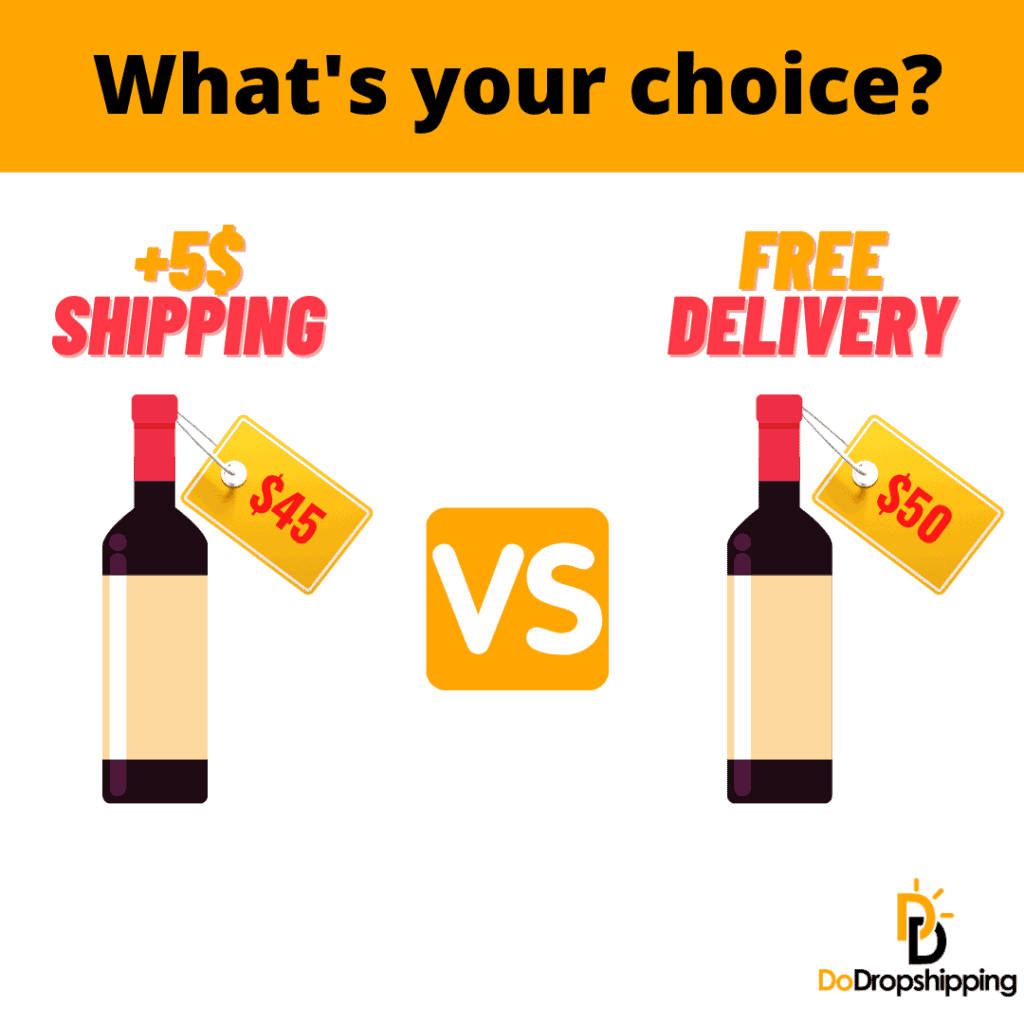
When you're selling large, heavy items, shipping costs vary.
Extra services, delivery reschedules, and minor issues are normal and not edge cases.
Pricing that assumes 'average' conditions will fail over time.
There's a customer-side reason to bury shipping in the price, too.
The documented average cart-abandonment rate is 70.22%, according to the Baymard Institute, and the single biggest reason is extra costs like shipping, tax, and fees being too high (39% of abandoners).
Surprise freight at checkout is exactly the kind of cost that loses the sale.
Expectations don't help you either.
Around 80% of US shoppers expect free shipping on orders above a minimum order threshold, per the NRF, via Digital Commerce 360.
So the goal is a price that covers your real freight and still reads as simple.
Here's how we'd handle the four situations you'll run into.
Scenario 1: Predictable shipping costs
If your supplier offers flat-rate or clearly tiered shipping by region, price using those ranges.
Build the upper end of expected shipping costs into your product price to absorb variability.
Best approach: Fold shipping into the product price and present it as free or flat-rate shipping.
Scenario 2: Variable or service-dependent shipping
If costs vary by liftgate, appointments, or address type, do not price per order.
Instead, average those costs across your orders and price for consistency.
Best approach: Zone-based or flat-rate shipping, and not exact quotes.
Scenario 3: High uncertainty early on
If you're new to the product and lack data, price conservatively.
Your pricing has to account for delays, redeliveries, and longer-than-expected support time.
Best approach: Higher initial margins, then adjust downward once costs stabilize.
Scenario 4: Conversion vs. trust
For high-ticket items, unusually low prices often reduce trust.
Best approach: Credible pricing combined with clear shipping expectations converts better than aggressive discounting.
So what's the bottom line? The goal isn't to be the cheapest or perfectly precise.
It's to price in a way that holds up in real-world shipping and doesn't eat into your margins as you scale.
Website & checkout optimization for large and heavy items
Your goal is to close the gap between what the customer thinks they're buying and how it'll actually arrive, before checkout.
That starts on the product page.
Buyers want to know what they're getting, how it'll be delivered, and what happens if something goes wrong.
Delivery method, estimated timelines, and basic access requirements should be easy to find.
If a treadmill ships with curbside delivery only, say it clearly. If assembly isn't included, don't bury that detail in fine print.
Checkout is where hesitation shows up most often.
Unexpected shipping costs or vague delivery language lead to abandoned carts.
In many cases, folding shipping into the product price and reinforcing it with simple messaging like 'Free scheduled delivery' creates more confidence than itemized fees.
Delivery dates carry real weight here.
About 73% of shoppers say estimated delivery dates influence whether they buy, and 40% won't buy at all if no delivery date is shown, according to Narvar's State of Post-Purchase 2025.
Clear return policies, warranty details, and visible support options reduce buyer anxiety.
Financing or pay-later options can also improve conversions without hurting perceived value.
The goal isn't to explain everything. It's to answer the questions buyers are already asking in their heads, before they feel the need to ask them.
Customer support challenges (And how to prevent fires)
The most common support ticket for large and heavy items is 'Where is my order?'
Because freight tracking updates less often, customers check in even when nothing is wrong. So without a clear process, these requests quickly pile up.
This pressure is well documented.
In a Narvar survey of US shoppers, 86% have experienced at least one delivery issue in the past year, and slow-moving freight is exactly where those issues cluster.
One practical fix is proactive communication.
A clear order confirmation or post-purchase email that explains what happens next, when updates typically appear, and how delivery is coordinated can prevent a large share of inbound tickets.
Delivery-related questions are the next pressure point.
Issues around scheduling, delays, or service level should be handled with standardized responses rather than one-off explanations.
Using a helpdesk tool like Gorgias or Zendesk, or a live chat tool like Tidio with saved replies, helps reduce response time and keeps support manageable as volume grows.
The goal isn't zero support requests. It's predictable, repeatable conversations that don't drain time or margins.
Returns, refunds & damage control
One of the most common mistakes is applying generous return policies designed for small, lightweight items to large, heavy items.
In many cases, returning the item doesn't make financial sense.
Return shipping can cost as much as, or more than, the product itself.
The numbers back this up.
Processing a return costs roughly 66% of the product's price, about $33 on a $50 item, per an Optoro estimate cited by Cahoot.
For bulky goods, that reverse-logistics bill can exceed the item's entire margin.
That's why experienced sellers don't default to returns.
Depending on what went wrong, you're often better off offering a partial refund, filing a claim with the supplier or carrier, or writing the item off altogether.
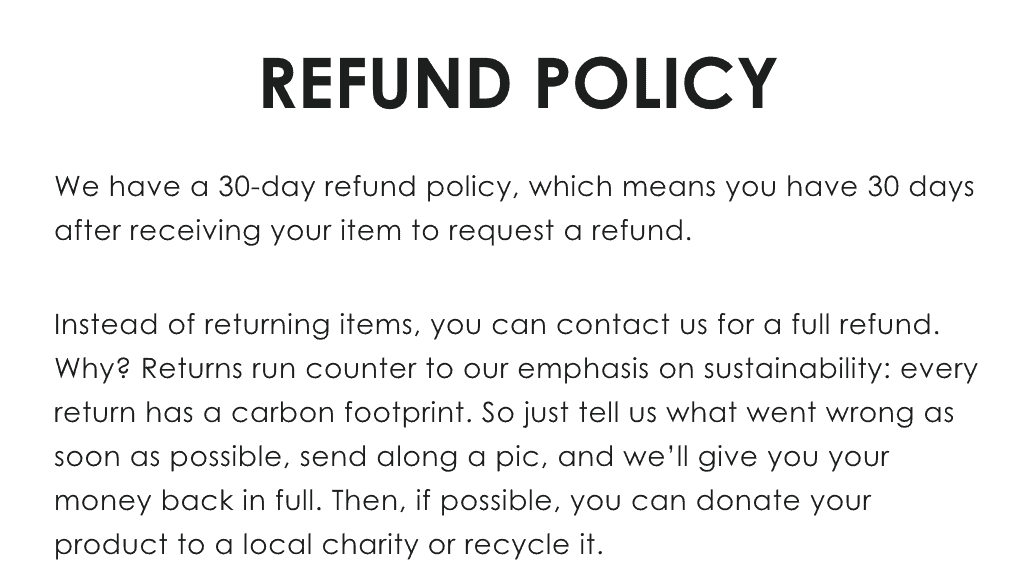
Returns & damage decision: Don't default to taking a bulky item back. If return shipping, inspection, restocking, and resale value do not work in your favor, a partial refund, a supplier or carrier claim, a replacement part, or a write-off can be cheaper than paying freight twice. Use photos, delivery notes, and supplier terms to decide each case instead of applying one blanket return rule.
Damage happens more often with bulky items, and when it does, documentation is your safety net.
You'll want photos, delivery notes, and reports submitted quickly.
Without those, it's hard to recover costs from suppliers or carriers.
Refund timing matters too.
If you refund immediately, you can lock yourself into a loss before you know your options.
But if you go quiet, trust fades quickly.
The balance is simple: acknowledge the issue right away, explain what happens next, and give a realistic timeline for resolution.
Marketing large and heavy products the right way
Marketing large and heavy products takes a different mindset.
These aren't impulse buys, and trying to sell them like trending low-cost items usually backfires.
Most buyers research before they purchase. They compare options, read specifications, and look for signs that the seller knows what they're doing.
So your marketing should help them make a decision, not rush them into one.
Google Ads often works better than paid social for bulky items.
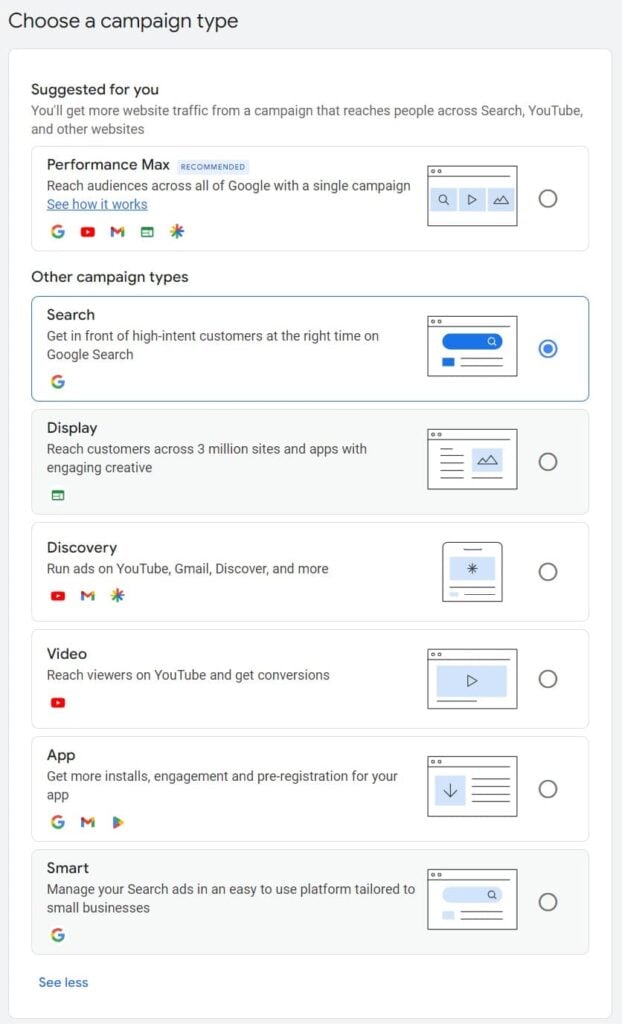
Someone searching for a specific treadmill, workbench, or home gym is already in buying mode.
Instagram ads tend to work better earlier in the process, introducing the product and setting expectations rather than pushing for an immediate sale.
Content plays a larger role here.
Comparison pages, buying guides, and detailed product explanations help customers move closer to a decision.
Short videos showing size, setup, and real-world use can also reduce hesitation and prevent post-purchase disappointment.
Trust signals matter more than urgency.
Clear delivery information, transparent pricing, reviews, and visible support channels do more to improve conversion rates than countdown timers or aggressive discounts.
FAQs about dropshipping large and heavy products
Is dropshipping large and heavy products worth it?
It can be, because higher-order values give you more margin to work with per sale.
The catch is that freight, surcharges, and returns eat into that margin fast.
The sellers who make it work price for real shipping costs and choose suppliers with reliable last-mile delivery.
How much does it cost to ship heavy items?
It depends on size, weight, and delivery method, so quote your exact product before pricing it.
On a parcel, expect dimensional-weight pricing (divisor 139) plus surcharges like FedEx Additional Handling ($29.50 to $40.75) or Oversize ($255 to $330). Once an item passes parcel limits, LTL freight plus a liftgate fee is often cheaper than stacking parcel surcharges.
What is the difference between parcel and LTL freight?
Parcel is standard courier shipping for normal-sized boxes. LTL freight ('less than truckload') puts your item on a pallet that shares a truck with other shipments.
Heavy and oversized items usually move via LTL because parcel carriers charge steep surcharges or refuse them once they exceed size and weight limits.
How do you handle returns on large and heavy products?
Don't default to returning the item, because return freight can cost as much as the product.
Depending on the issue, a partial refund, a claim with a supplier or carrier, or a write-off is often the cheaper option. Document damage with photos and reports quickly so you can recover costs from the supplier or carrier.
Final thoughts
Is dropshipping large and heavy items worth it?
The margins can be healthy, but it's not a shortcut.
This model works best if you're comfortable looking beyond product trends and focusing on systems, suppliers, and long-term decisions.
If you enjoy fast testing, quick pivots, and impulse-driven products, large and heavy items will likely feel limiting.
On the other hand, if you care about higher-order values, less competition, and building something more stable, this model can make a lot of sense!
Want to learn more about dropshipping?
A few we'd point you to:
- Recover 10x More Abandoned Carts With SMS Than Email
- Abandoned Cart Emails for Dropshipping: A Beginner's Guide
- Dropshipping Returns & Refunds: Everything You Need to Know
New to dropshipping? We cover what it actually takes in our guide on how to start dropshipping here.