Still waiting for your first dropshipping sale? Don't start changing everything at once.
Zero sales can come from very different problems. You may need more relevant traffic, or the offer and checkout may need work.
Sometimes the product itself simply isn't showing enough promise to justify more time and money.
Key takeaways
- Find the real problem first: Zero sales can come from the traffic or offer. Checkout friction or weak product fit can be responsible too.
- Check traffic first: If hardly anyone has reached the product page yet, you may not have enough information to judge the offer.
- Follow the funnel: Product views, add-to-carts, and checkout starts can show where people lose interest.
- Fix the offer before forcing a discount: Make the product page clear and trustworthy, then check the price and shipping against your actual costs.
- Test one meaningful change at a time: That gives you a better chance of learning what helped instead of resetting the whole store after every bad day.
- Know when to stop the test: A first sale isn't guaranteed. Decide in advance when you'll keep testing, pause, or move to another product.
Let's work through it in order.

Start your store on Shopify
Free 3-day trial + $1/month for 3 months
- Grows with you from first test product to full brand
- Thousands of apps and hundreds of themes to customize your store
- Beginner-friendly editor with pro features when you're ready
No card to start. Cancel anytime.
1. Make sure enough relevant traffic is reaching your store
If almost nobody has seen your product page, don't start by rebuilding the theme.
You need enough relevant visitors to learn how people respond to the product and offer.
That doesn't mean chasing the biggest traffic number possible. A smaller group of people who actually match the product can tell you more than a large group of random visitors.
For your first test, pick one main traffic source you understand well enough to measure.
That could be paid advertising or creator traffic. Organic social content and search traffic are other options, along with relevant communities where promotion is allowed.
Our dropshipping marketing guide can help you compare the main options.
2. Check whether the traffic actually matches the product
Getting visitors only helps when those people have a real reason to care about what you're selling.
Look at the promise that brought them to your store. That might be an ad or a creator mention, or something they saw in search or social content.
Does that promise fit the product you're asking them to consider?
A lot of traffic from the wrong audience can make a decent offer look worse than it really is.
3. Send visitors to the page they expected
Even relevant traffic can get lost when the click and landing page don't line up.
For example, an ad may focus on solving one specific problem while the landing page opens with generic product features.
Also check whether you're sending people straight to the product or offer they clicked for.
A targeted visitor who lands on the wrong collection or homepage may never reach the thing you wanted to test.
4. Find where shoppers drop out of the purchase funnel
Once traffic is coming in, the next question is simple: How far are people getting?
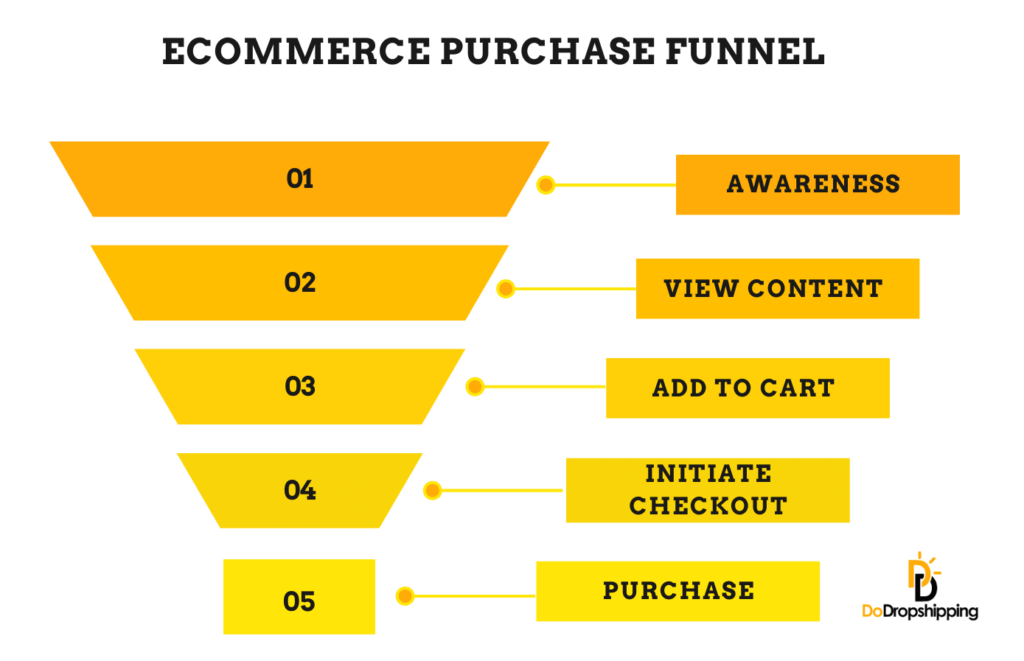
You don't need a perfect benchmark to make this useful.
Start by comparing the stages inside your own store:
| What you're seeing | Where we'd look first |
| Very few product-page visits | - Traffic source - Ad or content targeting - Landing-page destination |
| Product views but few add-to-carts | - Product fit - Offer and price - Product page clarity |
| Add-to-carts but few checkout starts | - Shipping surprise - Cart friction - Trust or return concerns |
| Checkout starts but no purchases | - Payment options - Checkout errors - Shipping or tax surprises |
This won't tell you the answer by itself, but it gives you a much better place to look than "the whole store must be bad."
Our guide on why people aren't buying from an online store goes deeper into the individual funnel problems.
5. Improve the opening of the product page
If people reach the product page but don't engage, start with what they see first.
The opening should quickly tell shoppers what the product is and why it may be useful.
Avoid making shoppers work through a wall of supplier copy before they know why the product might fit them.
Ask yourself whether a new visitor can understand the product within a few seconds without already knowing what you meant.
6. Make the offer easier to understand
A clearer product page still needs a clear offer.
Make it obvious what the customer gets and what the price covers.
When options or bundles are available, make the differences easy to understand before checkout.
A discount can be part of the offer, but don't use one automatically to cover a page that still feels confusing.
7. Add the trust information shoppers need
People are less likely to buy when basic questions about the store are left unanswered.
Make sure shoppers can find realistic shipping information and your return policy. Make your contact page and basic store details easy to find, too.
Product images need to match what your supplier will actually send.
Supplier copy can provide product details, but it usually shouldn't be used word for word on the finished product page.

Our guides to writing dropshipping product descriptions and building trust in your store can help here.
8. Recheck your selling price
Price can affect a first sale, but "lower it until somebody buys" isn't a pricing strategy.
Ask whether the offer feels worth the price from the customer's side.
Compare similar offers so you understand what shoppers can choose instead, but don't assume the lowest price is automatically the strongest.
Sometimes the better move is to improve the offer or explain it more clearly, rather than cut the price again.
9. Check the shipping cost and your numbers
Your selling price still has to work after product cost and shipping.
You also need room for payment fees and marketing costs. Depending on where you operate and sell, you may need to include taxes in the calculation as well.
You may find that supplier costs leave too little room for marketing, even when the customer-facing price looks reasonable.

Use our dropshipping pricing guide to work through the numbers, then check the profit-margin guide for a deeper breakdown.
10. Test the checkout yourself
Sometimes the product isn't the problem.
Go through the buying process yourself, ideally all the way to a test order when your platform allows it.
Check for unexpected shipping charges and payment methods that don't work as expected.
Also look for unnecessary form fields, required account creation, or a coupon box that distracts people when you aren't promoting a code.
A friend or family member can help with this kind of usability check because they may notice something you've stopped seeing.
Just don't treat a supportive friend buying the product as proof of market demand. Use the order to test the customer experience instead.
11. Check the store on mobile
A checkout that works on your laptop can still be awkward on a phone.
Open the product page on mobile and go through the same path a customer would take.
Check whether important buttons are easy to tap and whether popups cover the page.
Make sure the main images and variant selectors are easy to use. Shipping details and checkout fields should be readable without fighting the layout.
12. Test one meaningful change at a time
When a store has no sales, it's tempting to change the ad, product page, price, and theme at the same time.
The problem is that you won't know which change helped if the results improve.
Instead, pick the biggest issue your funnel points to and test that first:
- Try a different creative when the ad isn't generating useful visits.
- Rewrite the product-page opening when people visit but don't engage.
- Change the shipping presentation when shoppers disappear at the cart.
- Fix the checkout when people start it but can't complete the order.
Keep a simple record of your tests
Write down what you changed and when.
You don't need a complicated spreadsheet for the first few tests.
Note the traffic source and the change you made. Add what happened afterward and what you want to try next.
Your first tests may be too small to prove much with confidence, but a simple note helps you avoid relying on memory or repeating the same experiment later.
13. Follow up with shoppers who almost bought
If people add the product to their cart or start checkout, that's a stronger signal than a simple page view.
Make sure your abandoned-cart or abandoned-checkout emails are enabled when your store platform supports them.
Keep the message useful and straightforward. Remind the shopper what they left behind, then give them an easy route back to the cart or checkout.
You don't need to promise a discount every time. First make sure the reminder itself works and that the shopper can complete the order.
14. Decide when to keep testing, pause, or switch products
This is where generic "keep going" advice can get expensive.
Continuing can make sense when each test teaches you something, but repeating the same weak setup can burn through your budget while you wait for the next visitor to change everything.
Before you run another test, write down what would make you continue and what would make you stop.
You might consider:
- How much you can afford to spend on the test
- How much relevant traffic you're willing to send before reviewing the result
- Whether people are adding the product to their cart or starting checkout
- Whether the numbers still make sense after the real traffic cost becomes clearer
- Whether supplier quality or shipping makes the product a poor fit anyway
If you've completed the test you planned and still see very little meaningful interest, it's okay to pause the product and investigate another idea.
That isn't failure. It's making a decision from the evidence you have instead of getting attached to one product.
Our guide to finding dropshipping product ideas can help when you're ready to research another option.
Which first-sale tactics are worth your time in 2026?
A few extra tactics can still help in the right situation, but they shouldn't distract you from the main bottleneck:
| Tactic | Our take |
| Starting a blog | - Useful for longer-term search traffic - Usually too slow to be the first thing we'd fix for a zero-sale store |
| Offering a discount | - Can help when price or urgency is part of the issue - Only use it when the margin still works |
| Posting in communities | - Can bring relevant traffic when self-promotion is allowed - Add something useful instead of dropping links everywhere |
| Running a giveaway | - Can generate attention - Giveaway interest is weaker evidence of purchase intent |
| Asking friends or family to order | - Useful for testing checkout and fulfillment - Not strong evidence that strangers want the product |
| Improving store speed | - Worth checking when pages are noticeably slow - Fix obvious speed problems, then return to the funnel |
Start with the bottleneck you can actually see before adding another tactic.
How long does it take to get your first dropshipping sale?
We can't give you a reliable number of days or weeks.
Timing depends partly on the traffic you generate and how well it matches the offer. The product, price, and buying experience can also change the result.
That's why waiting for a certain number of days isn't a very useful test.
Define what you're testing and how much traffic or budget you're willing to use, then review the evidence at that point.
For a deeper look at timing and profitability, our guide on how fast you can make money with a dropshipping store covers the difference between getting a sale and building something profitable.
Your first-sale checklist
Before spending more money on the next test, run through these questions:
- Am I getting enough relevant traffic to judge anything yet?
- Does the landing page match the promise that brought the visitor here?
- Where are people dropping out of the funnel?
- Is the product page clear and trustworthy?
- Do the price and shipping make sense for the customer and for my costs?
- Have I tested the checkout on desktop and mobile?
- What one meaningful change am I testing next?
- Did I write down what changed and what happened?
- If shoppers reached the cart or checkout, are my follow-up emails working?
- What result would make me continue, pause, or switch products?
You don't need to fix every part of the store tonight.
Start with the biggest uncertainty, test it, and let what you learn decide the next move.
One last thing: a first sale is one useful signal, not proof that every part of the business is solved.
Good luck with your next test!
Want to keep improving your store?
These guides are good next steps: