

If you are in dropshipping in 2026, you have probably noticed that the rules are shifting.
For years, sellers have relied on a simple playbook: sourcing products from overseas suppliers, often in China or Southeast Asia, and shipping them directly to customers.
Thanks to the old 'de minimis' rule, many of these low-value imports were exempt from duties and customs delays, which kept prices low.
Now, with new tariffs and stricter import rules, the big question is: should you switch to local fulfillment or stick with global fulfillment?
Quick Answer: Local or global fulfillment for dropshipping?
Choose local fulfillment for dropshipping if your priority is fast delivery, high customer trust, and low return friction.
Choose global fulfillment if you need lower product costs, broad product variety, and flexible market testing. The right model depends on your niche, margins, and customer expectations.
Use the Local vs. Global Fulfillment Planner below, and we'll help you find a path that fits your store:
Keep reading this guide for a full breakdown of local vs global fulfillment, tariff risk, and hybrid setups, so you can fine-tune the strategy you just picked above.

Test your suppliers on Shopify
Free 3-day trial + $1/month for 3 months
- Grows with you from first test product to full brand
- Import products from supplier & POD apps in a few clicks
- Beginner-friendly editor with pro features when you’re ready
No card to start. Cancel anytime.
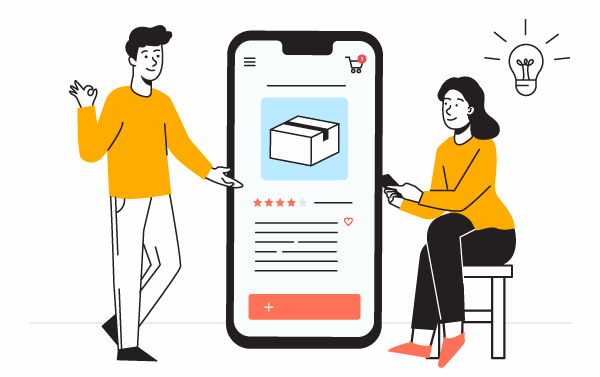
An overview of local vs. global fulfilment
Before we dive deeper, here's a quick overview.
Local fulfillment focuses on speed and trust. Products are stocked closer to your customers, which makes shipping faster, returns smoother, and brand reliability stronger. The catch is higher product costs and fewer supplier options.
Global fulfillment leans on cost and variety. International suppliers give access to cheaper products and a wider product selection. The trade-off is slower delivery, customs delays, and the occasional communication hurdle.
In short, one model excels in speed and customer experience, while the other excels in affordability and scale.
Here's a side-by-side look at the pros and cons:
| Local fulfillment | Global fulfillment | ||
| Pros | Cons | Pros | Cons |
| Faster shipping times | Higher product costs | Lower product costs | Longer delivery times |
| Easier returns and exchanges | Fewer supplier choices | Wide product selection | Customs delays and tariffs |
| Higher trust and reliability | Lower profit margins | Easier to test and scale quickly | More complicated returns |
| Better alignment with customer expectations | Limited product variety | Potential for higher margins | Risk of unhappy customers |
| Easier communication with suppliers | Harder to scale quickly | Access to established dropshipping suppliers | Language differences with suppliers |
Next, let's take a closer look at how each fulfillment model actually works in practice. We'll start with local fulfillment.
How does local fulfillment work in dropshipping?
Local fulfillment in dropshipping is all about proximity.
Instead of crossing borders or oceans, items are shipped from warehouses or third-party logistics providers (3PLs) located within the same country or region as your customers.
The dropshipper's role remains the same; you still don't handle inventory directly. What changes is the customer experience.
Local fulfillment reduces delivery time, avoids customs delays, and increases delivery reliability. This directly improves customer satisfaction and conversion rates.
For example, 76% say that a great delivery pushes them to repurchase, while a missed promise makes them ~45% less likely to come back.
Another key advantage is business stability.
Operating within the same legal, tax, and cultural framework as your suppliers makes compliance simpler and communication smoother.
Local fulfillment also offers protection against currency fluctuations and shifting import policies, which are big risks.
Pros
- Quick delivery windows. Domestic shipping can often match the speed of big retailers.
- Simpler problem-solving. Lost packages or returns are easier to handle when they stay within one country.
- Stronger brand image. Customers are more confident buying from stores that ship locally.
- Operational convenience. You work in the same legal and cultural environment as your suppliers.
- Stable pricing. Less exposure to shifting exchange rates or surprise import fees.
Cons
- Reduced profit margins. Unit costs are generally higher compared to overseas suppliers.
- Limited catalogs. Some trending or niche items may not be stocked by local partners.
- Supplier bottlenecks. Smaller warehouses may struggle to handle sudden spikes in orders.
- Geographic limits. Expanding internationally requires building separate local partnerships in each region.
- Hidden dependence on imports. Many 'local' suppliers still source from China or Vietnam in bulk, simply adding their own margin on top.
Who should use local fulfillment in dropshipping?
Local fulfillment is a strong fit if your business relies on:
- Fast delivery as a selling point.
- High-trust products where customers expect reliability (e.g., health, beauty, or lifestyle goods).
- A single core market (like the US, UK, or EU) rather than global coverage.
- Building a brand that competes on customer experience instead of rock-bottom prices.
In short: Local fulfillment works best when you want to deliver speed and consistency and are willing to trade off some margin to get it. It is best suited for higher-margin products, as you cannot realistically compete with low-cost, trend-driven items where global sellers drive prices to the lowest levels.
How does global fulfillment compare in 2026?

Global fulfillment is the classic dropshipping model most sellers start with.
Instead of sourcing products domestically, you work with suppliers overseas, often in China, Vietnam, or other low-cost manufacturing hubs, and ship orders directly to customers from there.
The biggest reason dropshippers choose this route is affordability.
Global suppliers offer lower unit costs, which enables stores to price competitively or increase margins. However, these savings often come with slower shipping and higher return risks.
On top of that, you get access to a massive range of products, everything from the latest TikTok gadget to niche items you would never find in a US or European warehouse.

For years, this model was particularly strong in the US due to the de minimis rule.
The $800 de minimis threshold allowed low-value imports to enter duty-free. This reduced shipping costs and made global fulfillment the go-to model for US dropshippers.
But as of August 2025, that has changed.
The US has removed de minimis allowances and added new tariffs. Now, shipments that used to clear customs quickly often encounter extra costs and delays.
To make things even trickier, the tariff rules are not clear, which has caused some countries, including Switzerland, Canada, and Japan, to suspend the US-bound shipments altogether.
So global fulfillment is still possible, but it is not as smooth or predictable as it used to be.
If you choose this route, you should be prepared for higher costs, slower delivery times, and increased uncertainty.
Pros
- Lower product costs. Overseas suppliers often produce goods at a fraction of the domestic price.
- Huge product variety. Access to thousands of trending, niche, and hard-to-find items.
- Scalability. Large overseas manufacturers and fulfillment centers can handle spikes in demand.
- Supplier networks. Established platforms (AliExpress, Alibaba, CJ Dropshipping) make finding and working with global partners straightforward.
- Market testing flexibility. Easy to test new product ideas without committing to bulk local inventory.
Cons
- Slower shipping. International delivery often ranges from seven days to a month.
- Tariffs and fees. As of mid-2025, the US has eliminated the $800 duty-free threshold, adding duties to every shipment. Imports from China and Hong Kong are subject to a 54% tariff or $100 per parcel, whichever is higher. (This rate is still subject to change.)
- Customs delays. Shipments can become stuck at borders, resulting in unpredictable timelines.
- Returns are costly. Sending products back overseas is often impractical.
- Language and cultural barriers. Miscommunication with suppliers can cause quality or order issues.
When is global fulfillment the better choice?
Global fulfillment still works, but it's no longer the “easy mode” most dropshippers relied on in the past.
Global fulfillment works best if you:
- Sell low-cost or impulse products where customers are happy to wait for a bargain.
- Run a trend-driven store, chasing viral or seasonal items where variety matters more than brand loyalty. (e.g., gadgets, accessories, novelty items).
- Want to test new products quickly without committing to local bulk inventory.
- Sell primarily outside the US, where tariffs are less severe. The exception to this is if you're selling products in the US with high margins.
- Plan to scale fast and need suppliers who can handle high volumes.
- Operate on a tight budget and need the lowest possible sourcing costs to get started.
In short: Global fulfillment is a good fit if your priority is variety and affordability, and you are prepared to deal with slower shipping, tariffs, and less control over the customer experience.
What factors affect fulfillment performance in dropshipping?
Now that you know the basics of local vs. global fulfillment, let's zoom in on the factors that really matter when you're running a dropshipping business.
But first, here's a quick overview for you:
| Factor | Local Fulfillment | Global Fulfillment |
| Delivery Time | 2-5 days (domestic shipping) | 7-30 days (international shipping) |
| Tariff Risk (US in 2025) | None | High (Read more here) |
| Return Handling | Easy, domestic return addresses | Hard, often refund-only |
| Product Cost | Higher unit prices | Lower prices via overseas suppliers |
| Catalog Range | Limited to local stock | A huge variety is available via AliExpress, CJdropshipping, etc. |
| Branding Impact | High trust, easier LTV | Requires strong expectation setting |
| Best For | Brands focused on trust, fast delivery, and low returns (e.g., skincare, gifts, B2B supplies) | Stores testing low-cost trends or selling to price-sensitive impulse buyers |
Let's go more in-depth now:
1. Shipping speed and customer expectations
Look, consumer expectations have narrowed: Over 40% of US consumers expect delivery within two to three days.
Here's how the two fulfillment methods compare:
- Local fulfillment. Packages can often reach customers in two to five days, making your store feel competitive with major retailers.
- Global fulfillment. Shipping from overseas typically takes one to five weeks, which can lead to refund requests, chargebacks, or negative reviews unless you're transparent upfront.
If you're targeting US or European buyers who expect fast delivery, this choice alone can shape your conversion rate.
This is where things get tricky:
- Local fulfillment. You don't deal with border control or import duties when shipping within the same country.
- Global fulfillment. New US trade rules have removed the $800 duty-free threshold, and imports from China/Hong Kong now face a 54% tariff or $100 flat fee per parcel. That's enough to wipe out your margins if you're not careful.
If Americans are your primary customers, ignoring tariff policies could put your store at risk of losing business overnight.
3. Returns and refunds
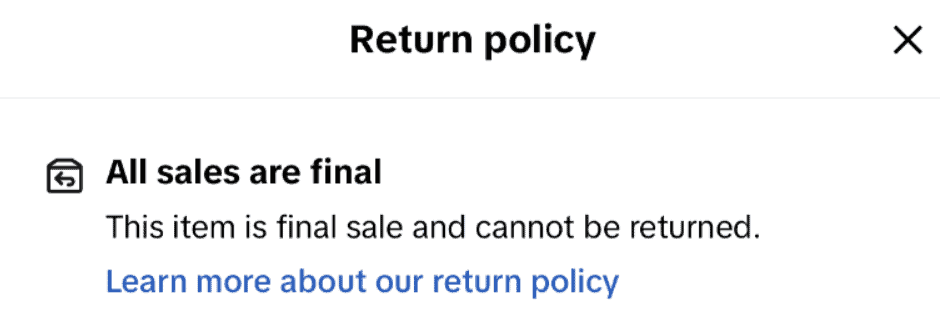
Every dropshipper faces returns. But it's just part of the game.
Your choice of fulfillment model (local or global) directly affects how returns are handled:
- Local fulfillment. Customers can return items domestically, making refunds easier and protecting your brand reputation.
- Global fulfillment. Returns often cost more than the product itself. Most sellers simply refund without requesting the item back, which eats into their profits.
Your refund policy should align with the reality of your chosen fulfillment method.
4. Supplier relationships and communication
Your supplier isn't just a vendor; they're a core part of your operations. If they fail, you fail.
- Local fulfillment. Same language, same time zone, same consumer standards. Fewer chances for errors or misunderstandings.
- Global fulfillment. Working across cultures and languages can create gaps in quality control, order accuracy, and support response times. Even small miscommunications can lead to big customer issues.
Dropshippers who succeed globally typically establish strong, long-term relationships with vetted agents, rather than relying on random suppliers on AliExpress.
5. Branding and customer trust

Your fulfillment model directly affects how customers see your store.
- Local fulfillment. Fast shipping and smooth returns make your brand feel 'real' and trustworthy. Customers are more likely to come back.
- Global fulfillment. Longer delivery times and customs delays can harm your credibility unless you specialize in offering low-cost, unique, or hard-to-find items that people are willing to wait for.
Trust isn't just about product quality; it's about the experience you deliver.
6. Sustainability and carbon footprint (bonus)
This is an increasingly important factor, especially if you're targeting younger or eco-conscious audiences.
- Local fulfillment. Shorter shipping routes mean lower emissions, which you can even highlight in your marketing.
- Global fulfillment. Air and ocean freight leave a significantly larger footprint, and for some customers, that is now a deal-breaker.
If your target market values eco-friendly practices, your fulfillment choice can become an integral part of your brand identity.
How can you avoid tariffs and still use global fulfillment?
In 2026, the most practical way to maintain low global manufacturing costs without being affected by tariffs is to work with suppliers who already stock bulk inventory in the US or EU.
Here's why this works: instead of you trying to manage bulk imports or sign contracts with third-party logistics providers, these suppliers handle the heavy lifting.
They manufacture products overseas (often in China), import them in bulk, clear customs, and then store the goods in local warehouses.
When your customer places an order, the item ships domestically, fast, tariff-free, and without international headaches.
How to find them:
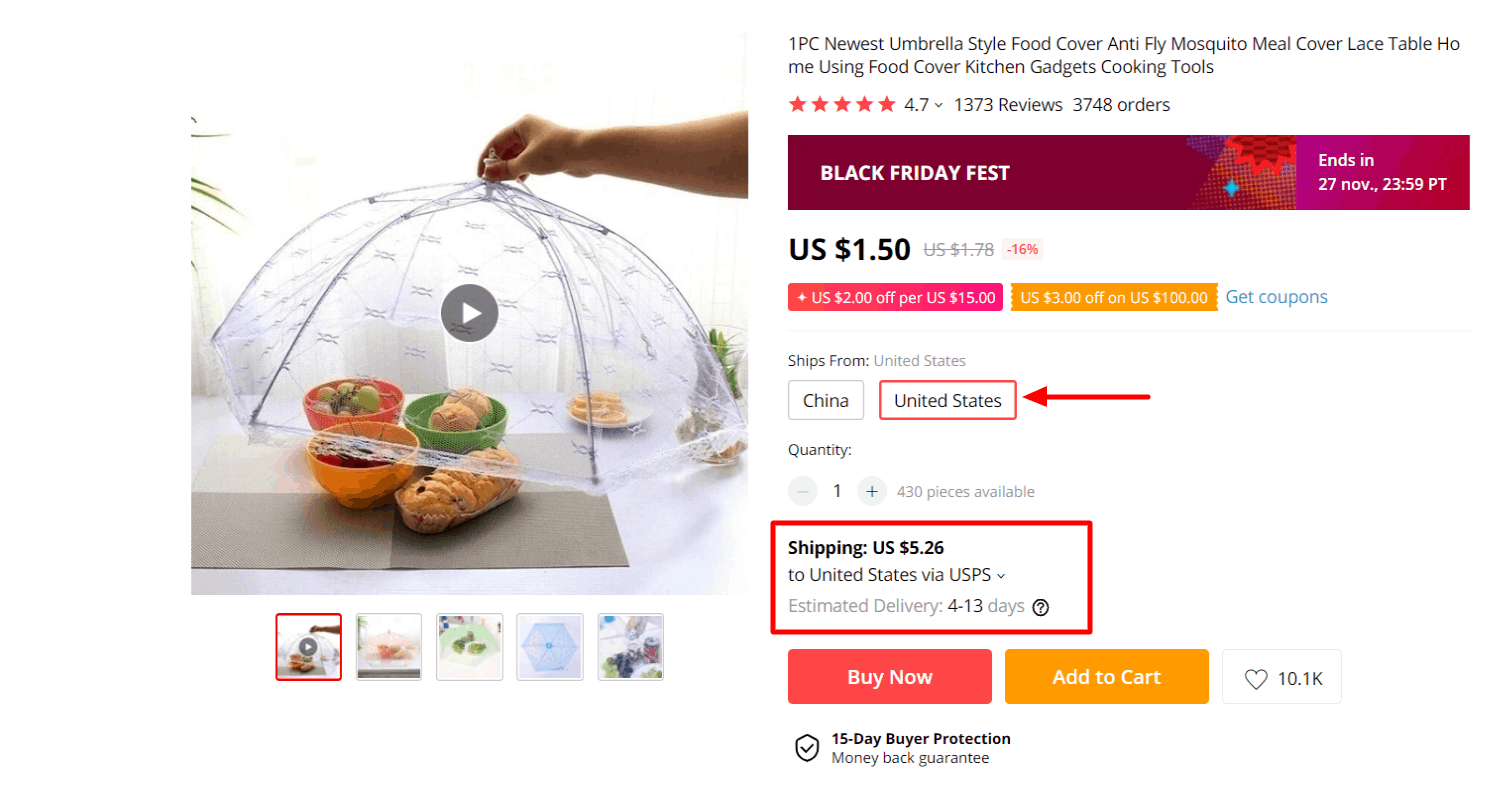
- On AliExpress, you can filter by 'Ship From: United States' (or your country) to see suppliers with local stock.
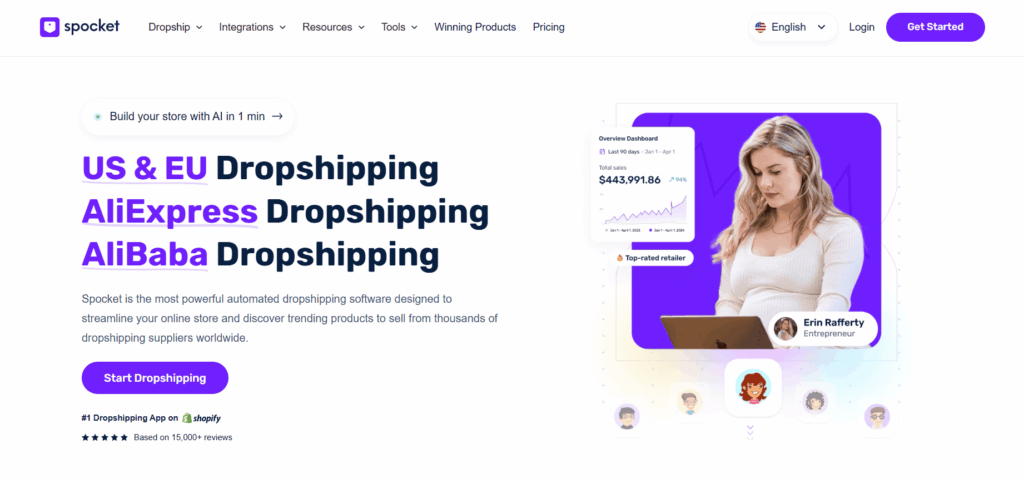
- Platforms like Spocket and Syncee specialize in connecting you to international suppliers who already hold inventory in US or EU warehouses.
Yes, the unit cost is higher than shipping directly from China.
But you're still paying less than fully domestic manufacturing, and you get fast shipping, easy returns, and no surprise duties.
Feel free to check out our articles below for a start:
- The Best Free US Dropshipping Suppliers in 2026
- The Best US Dropshipping Suppliers in 2026 (Fast Shipping)
- How Do You Find US Dropshipping Suppliers? (6 Amazing Tips)
- The Best US Print on Demand Suppliers in 2026 (Fast Shipping)
What are the biggest fulfillment myths in dropshipping?
Many dropshippers get held back by misconceptions about fulfillment.
Let's clear up some of the most common ones so you can make decisions based on facts, not myths.
Misconception 1: Local fulfillment always kills your margins

Yes, unit costs are higher.
But if you sell higher-margin products or brand yourself around fast shipping and reliability, local fulfillment can actually boost lifetime value and repeat purchases.
Loyal, repeat customers are often worth more than squeezing out the lowest possible product cost.
Misconception 2: Global fulfillment is dead after tariffs
It's harder, but not dead. Suppliers with US or EU warehouses still give you global pricing advantages.
The difference is that you can't ignore tariffs; you need smarter supplier choices.
Misconception 3: Customers will never wait for global shipping
Not always true. For impulse buys or low-cost items, many shoppers are willing to wait a few weeks if the price is right.
The key is to set clear expectations regarding shipping times.
Misconception 4: Returns are impossible with global fulfillment
Tricky, yes. Impossible, no. Many sellers simply refund without returns for low-value items.
For higher-value items, some suppliers now offer return centers in the US or EU, which simplifies the process.
Misconception 5: You must pick one model and stick to it
Not true.
This strategy combines the strengths of both local and global fulfillment.
You start by sourcing products globally to test demand at low cost. Once a product proves itself, you switch to local fulfillment to improve delivery times, reduce returns, and boost brand trust.
This approach reduces your risk early on, while enhancing the customer experience as you scale.
Several platforms now support hybrid fulfillment natively, including:
Using both fulfillment methods lets you adapt to each product's lifecycle and market demand.
You're not locked into one model; you gain flexibility and better control over cost, speed, and customer satisfaction.
Misconception 6: Dropshipping only works for B2C

Dropshipping can also serve B2B markets.
Many brands and manufacturers in the US import products from China or Vietnam, but they do not want to sell directly to everyday shoppers.
Instead, they look for steady business from small companies that place occasional orders. This is where dropshippers come in.
Think of schools ordering t-shirts for an event, small IT offices needing stationery, or salons stocking beauty tools.
These businesses do not want to manage sourcing or logistics, and they typically require smaller bulk orders, usually 5 to 10 units at a time. That's too little for a big distributor, but too much for retail.
As a dropshipper, you can fill that gap. You price your products higher than wholesale but lower than retail, and you make your profit on volume.
This approach works best with local fulfillment, as businesses seek fast delivery, predictable pricing, and easy returns. A local shop or office will not wait four weeks for overseas shipping.
How do you choose between local and global fulfillment?
There's no single 'right' model. The best choice depends on your niche, margins, and customer expectations.
Use local fulfillment if:
- Your niche requires fast and reliable delivery (e.g., skincare, gifts, or B2B supplies).
- You're focused on delivering a great customer experience and building brand trust.
- You want to reduce returns and build long-term loyalty.
Use global fulfillment if:
- You're testing low-cost items or chasing product trends.
- You need maximum product variety with minimum upfront cost.
- You're competing on price and targeting impulse buyers.
Browse our free-to-use dropshipping suppliers directory. Filter vetted suppliers by niche, country, and pricing to find the best partners for your online store.
- Discover local, niche, print on demand, and general suppliers in one place.
- Compare free, budget-friendly, and premium plans you can actually sell with.
- Skip endless scrolling through guides and jump straight to suppliers that fit your store.
Updated for 2026 and still growing with new vetted suppliers.
What's the future of fulfillment in dropshipping? (Our prediction)
We don't think tariffs and restrictions will last in their current form. The de minimis rule is likely to be reinstated, but the threshold is likely to differ from $800.
Expect a reduced cap of around $100 or $200, which will still work for most dropshipping products while tightening up loopholes.
So if you're dropshipping with global fulfillment, ride it out. Things will settle.
In the meantime, start building relationships with local suppliers who import in bulk from overseas.
Yes, the products will cost a little more, but you'll avoid tariff headaches and keep your store running smoothly.
If you want to know more about our take on this topic, feel free to read our article: How Dropshipping Tariffs Will Affect Your Store (What Now?).
FAQs about fulfillment in dropshipping
Before we close off this article, let's quickly go over a few key questions people have when researching local vs. global fulfillment for their online store.
Who knows, maybe this will answer one of the questions you had as well!
Is global dropshipping still viable in 2026
Yes, but it requires updated supplier choices due to US tariffs and customs issues.
Can I use both local and global suppliers in one store?
Yes. Many stores use a hybrid model: testing with global fulfillment, scaling with local warehouses.
Can I offer returns with global fulfillment?
Yes, but it's difficult. Most sellers refund low-value items without returns or use third-party return centers.
Turn this guide into an AI checklist
Click your favorite AI tool below to get a short summary and step-by-step checklist based on this article.Prefer ChatGPT? Open this guide in ChatGPT with a pre-filled prompt (most readers start here).
Final thoughts
That wraps up our breakdown of how local and global fulfillment models actually work in real-world dropshipping.
Ultimately, the 'best' model depends on your niche and goals. What matters most is understanding the trade-offs and selecting the path that best suits your business.
Did we miss something important? Please let us know; we'd love to hear your perspective.
And if you have questions about fulfillment strategies, drop them in the comments below.
Good luck with your dropshipping journey in 2026!
Want to learn more about dropshipping?
Ready to move your dropshipping store to the next level? Check out the articles below:
- How Do You Manage Your Orders When Dropshipping?
- 10 Things That POD Gurus Do Not Tell You as a Beginner
- Successful Dropshipping Store Case Studies: 2026 Edition
- Dropshipping vs. Warehousing: Which Is Right for You? 2026
Plus, don't forget to check out our in-depth guide on how to start dropshipping here!


