What if you could sell products your competitors can't copy, and that customers feel genuinely attached to?
That's the promise of personalized dropshipping.
Personalized products let your customer add their own name, photo, or design to an item, while your supplier prints and ships each order for you.
If you've wondered whether you can build a store around custom-made products without holding any stock, you're in the right place.
The short answer? Yes, and it's one of the few dropshipping niches with low direct competition.
In this guide to dropshipping personalized products, we'll cover what it is, why it works, what sells, how to start, and the downsides to plan for.
Key takeaways
- Verdict: Yes, you can dropship personalized products, and there's far less direct competition than in regular dropshipping.
- Best approach: Use a print on demand or custom-product supplier that prints and ships each order for you, so you never hold stock.
- Why it works: Custom items carry emotional value, sell well as gifts, and give you more room on price.
- Watch out: Longer production times, harder returns, more customer contact, and copyright rules if you use someone else's design.
- Next step: Pick a supplier, add your design, then build a product page that shows the personalization clearly.
Let's get started!

Start your store on Shopify
Free 3-day trial + $1/month for 3 months
- Grows with you from first test product to full brand
- Thousands of apps and hundreds of themes to customize your store
- Beginner-friendly editor with pro features when you're ready
No card to start. Cancel anytime.
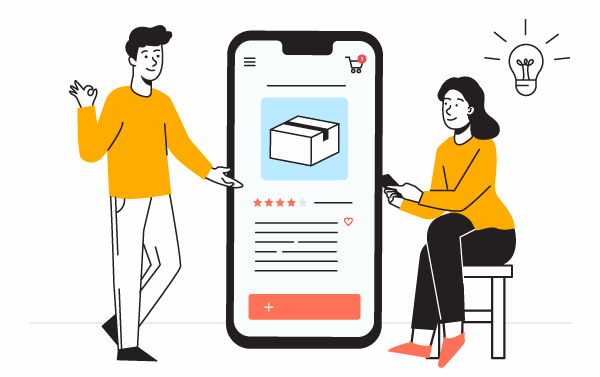
What does dropshipping personalized products mean?
Dropshipping is the retail model of selling products you don't keep in stock.
When you get an order, you buy that product from a supplier, who ships it straight to your customer.
So there's no inventory, no warehouse, and no upfront stock to pay for.

Dropshipping a personalized product works the same way, with one difference.
It's custom-made for that specific customer, often with their name, photo, or chosen design printed on it.
In other words, you can sell your own branded, made-to-order products without ever touching them.

What's the difference between regular and personalized dropshipping?
The main difference is simple.
Regular dropshipping sells the same generic product as everyone else, while personalized dropshipping sells a one-of-a-kind item made for the buyer.
That one change affects your competition, your margins, your shipping times, and how closely you work with each customer.
Here's how the two compare:
| Regular dropshipping | Personalized dropshipping | |
| Product | Generic, mass-produced | Custom-made for each customer |
| Competition | High, many identical stores | Low, your design is unique |
| Shipping time | Expected to be fast | Longer wait is accepted |
| Margins | Squeezed by price wars | More room to price for value |
| Customer contact | Mostly hands-off | More hands-on and personal |
| Returns | Usually possible | Hard, since items are custom |
| Branding | Difficult to stand out | Easier to build a real brand |
What are the benefits of dropshipping personalized products?
Let's look at the main reasons custom products can work so well for a store.
1. There's far less competition
When you sell a one-of-a-kind product, you're not fighting ten other stores selling the exact same item.
Many dropshippers struggle because they source the same products everyone else does, so the market saturates fast.
A personalized product gives your store a reason to exist that's hard to copy.
For more on picking a focused angle, check out our guide on how to start an online niche store.
2. You can charge more for them
With less direct competition, you're not forced to match a rock-bottom price.
Customers expect to pay more for something made just for them.
According to Bain & Company, shoppers will pay around 20% more for a customized product.
And while 25 to 30% want to customize one, fewer than 10% ever have.
That gap between what shoppers want and what they've found is your opening.
Just keep your real profit margin in view after the print cost, shipping, and fees.
3. Long shipping times are easier to accept
Slow shipping is the classic dropshipping headache.
But personalized products are upfront about being made to order, so a wait feels normal.
And people understand that creating a unique item made just for them takes time.

So the key is to state the production and shipping time clearly on the product page and your FAQ page.
4. It's easier to build a brand people remember
A brand is how people feel about your store, not just the products you sell.
Think about Starbucks writing your name on the cup.
It's a small, personal touch, but it's memorable, and people remember the experience as much as the coffee.

Personalized products give your store that same personal feel, plus the regular customer contact that builds loyalty.
That loyalty pays off too.
McKinsey found that personalized content makes 78% of shoppers more likely to buy from a brand again.
It helps you win new customers, too.
Epsilon found that 80% of shoppers are more likely to buy from a brand that offers a personalized experience.
A strong brand can even outgrow dropshipping entirely.
Gymshark started small and grew into one of the largest gym apparel brands in the world.
5. They carry real emotional value
People don't only buy what they need.
They buy things that mean something to them.
A map of the stars on the night someone was born isn't expensive to make, but the meaning behind it adds a lot of value.

So that emotional pull is exactly why custom products stand out.
It's also why shoppers increasingly expect a personal touch, with McKinsey reporting that 71% of consumers expect personalized interactions and 76% get frustrated when they don't find them.
6. They make great gifts
A personalized item is one of the easiest gifts to feel good about giving.
It shows thought, because it's made for one specific person.
That's a big market to sell into.
The personalized gifts market was worth about $29.6 billion in 2024 and is projected to reach roughly $54.1 billion by 2031, according to Cognitive Market Research.
Lean into holidays, birthdays, weddings, and anniversaries, and your products almost sell the occasion for you.
7. You can offer more variants
A common dropshipping problem is being stuck with one product and no easy way to grow it.
Personalized products solve that.
One design can become dozens of options across sizes, colors, and styles, so more people find a version that fits them.
Plus, variants let you chase new occasions fast, like team colors before a big game or pastel tones for a baby shower.
And more relevant options usually means more sales.
What personalized products sell well?
Almost anything with a flat surface or a name field can be personalized.
But some categories sell better than others because they make obvious gifts or carry clear emotional value.
Here are the ones beginners tend to do well with:
- Custom apparel. T-shirts, hoodies, and sweatshirts with names, dates, or art.
- Photo and art prints. Portraits, pet art, and custom maps or star maps.
- Mugs and drinkware. Easy, cheap, and a reliable gift item.
- Jewelry. Name necklaces, coordinate bracelets, and engraved pieces.
- Pet products. Custom portraits, tags, and bandanas for a passionate audience.
- Phone cases and accessories. Low cost, easy to personalize, and high volume.
- Home decor. Engraved signs, cutting boards, and custom doormats.
The wider opportunity is growing fast, since most of these products are made through print on demand.
The global print on demand market was worth around $10.78 billion in 2025 and is projected to grow to about $57.49 billion by 2033, according to Grand View Research.
For more ideas, see our list of the best personalized product examples to sell.
How to get started with dropshipping personalized products
The process is simple, but there are a few choices to make.
Here's what you need to know:
1. Find a supplier for personalized products
Your supplier is the most important choice you'll make, because they create and ship every product.
Here are a few of the best options to start with.
Printful
Best for: Beginners who want to put their own design on apparel and everyday products without holding stock.
Not for: Stores that need every buyer to type their own name or text at checkout.

Printful is the leading print on demand supplier, covering apparel, wall art, and everyday products you can print a design on.
You provide the artwork, and Printful handles the printing and shipping.
It's flexible and beginner-friendly, with one catch.
But it can't fully automate live custom input from each buyer, like a name typed at checkout, on its own.
A common alternative is Printify, and the two have real differences, so it's worth reading our Printful vs Printify comparison.
AliExpress
Best for: Sellers who want one specific product customized and don't mind messaging suppliers to arrange it.
Not for: Anyone who wants personalization to run on autopilot from day one.

AliExpress is the biggest marketplace for finding a supplier for almost any specific product.
Finding the right one can take some digging.
But once you do, many sellers will add or change something on a product for a small fee.
Just factor that extra cost into your profit margin when you set your price.
CustomizingBox
Best for: Gift stores that want ready-made custom mugs, jewelry, and home decor.
Not for: Sellers who mainly want printed apparel like t-shirts and hoodies.

CustomizingBox offers a wide range of personalized products, which makes it a strong choice for custom gifts.
It specializes in items like custom mugs, jewelry, and home decor.
Depending on the product, you can add custom labels, pack-ins, and promo materials, often for an extra fee.
Other options worth knowing are Printify and Gelato, which both work well with Shopify and have suppliers in several countries for faster local shipping.
2. Pick how the product is personalized
But not every printing method suits every product.
Knowing the basics helps you choose a supplier and set realistic quality expectations:
- Direct-to-garment (DTG). Prints detailed, full-color art straight onto apparel.
- Embroidery. Stitches names or logos for a premium feel on hats and hoodies.
- Sublimation. Bakes the design into the material for mugs, phone cases, and all-over prints.
- Engraving or laser. Etches text into wood, metal, or jewelry for keepsakes.
So match the method to your niche, then check that your supplier does it well before you commit.
3. Add your design to the supplier's catalog
Once you've picked a supplier, you upload your design through their site.

And their mockup generator shows how your design will look on the product before you publish it.
Keep your image resolution high enough for the print size.
For example, 200 DPI is fine for an 8x10 inch print, but far too low for a 24x36 inch poster.
4. Build your product page
Next, create the product page where customers place their order.
Plus, your supplier usually gives you mockup images and a starting description, so you don't begin from scratch.

To collect each customer's details, add a personalization field for their name, photo, or text.
Apps like Teeinblue and Customily let buyers preview their custom design live on the page, which lifts trust and reduces mistakes.
Write your description to highlight the feeling, not just the specs.
Help the buyer picture giving or owning that one-of-a-kind item.
Note: Want to improve your product pages even more? Check out ConvertMate, a Shopify app that uses AI to optimize product pages, improve SEO, and track customer behavior.
5. Sync the product to your store
With the page ready, sync the item from your supplier so the two match.

From there, you choose the product, its sizes and colors, and the design that goes on it.
After that, every order on your site is sent to your supplier automatically, with the customer's name and address attached.
Your supplier then fulfills and ships it for you.
6. Market your personalized products
A great product still needs people to see it.
Two channels work especially well for custom products.
Social media is a natural fit, because personalized items are visual and easy to show off.
Facebook and Instagram are the usual starting points thanks to their reach and detailed ad targeting.
For more, here's our guide to marketing for dropshipping.
SEO is the slower but compounding channel.
Rank for the right gift or niche searches, and Google sends you buyers for free over time.
Our guide on SEO for dropshipping stores walks you through it.

How do you price personalized products?
Start from your real cost, then price for the value of a custom item.
First, add up the product cost, any personalization fee, shipping, and payment fees.
That's your floor.
From there, you have more room than a regular store, since no one else sells your exact design.
So don't race to the bottom, because shoppers already expect to pay more for something made for them.
Just leave enough margin for ads, or your sales won't cover the cost of finding customers.
For the full method, see our dropshipping pricing strategy guide.
Personalized product store examples
The best way to learn is to see what working stores do well.
Here are three to learn from.
1. Craft & Oak

Craft & Oak designs detailed custom maps that mark a place that matters to the customer.
A map is an ordinary object, but as personal art it becomes a memory of a trip, a hometown, or a special moment.
The lesson? Let your product hold an emotion, and it becomes worth far more than the materials.
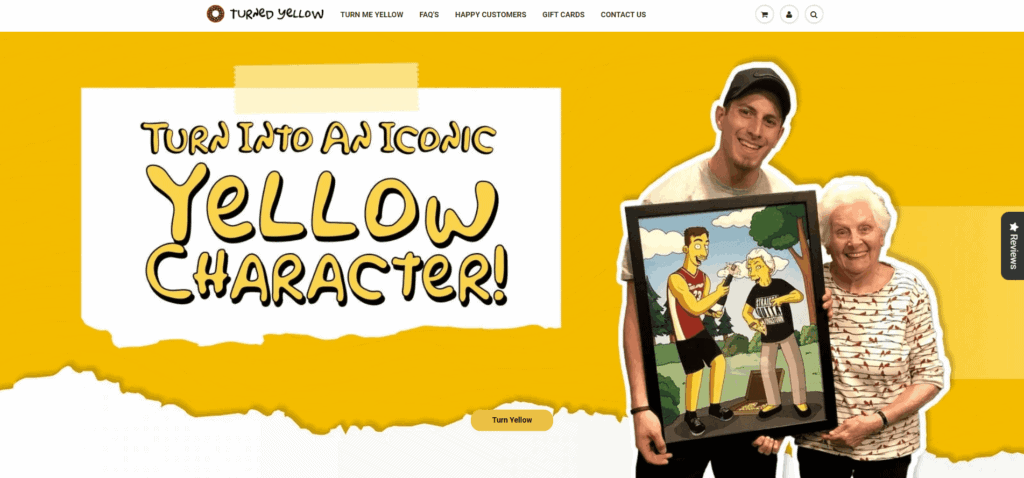
2. Turned Yellow
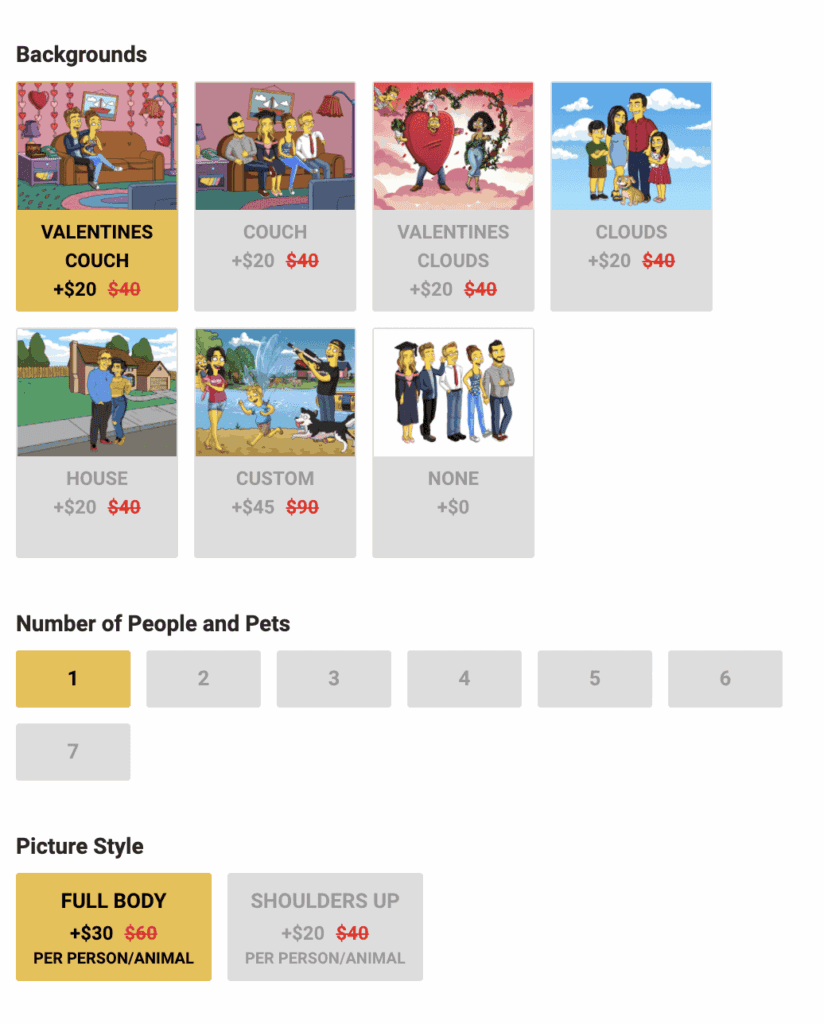
Turned Yellow turns your photo into art in a popular cartoon style.
The lesson? Their order form makes choosing options simple and clear, which fits their brand and removes friction.
An easy, guided ordering flow is worth copying for any custom product.
3. Just Buttons
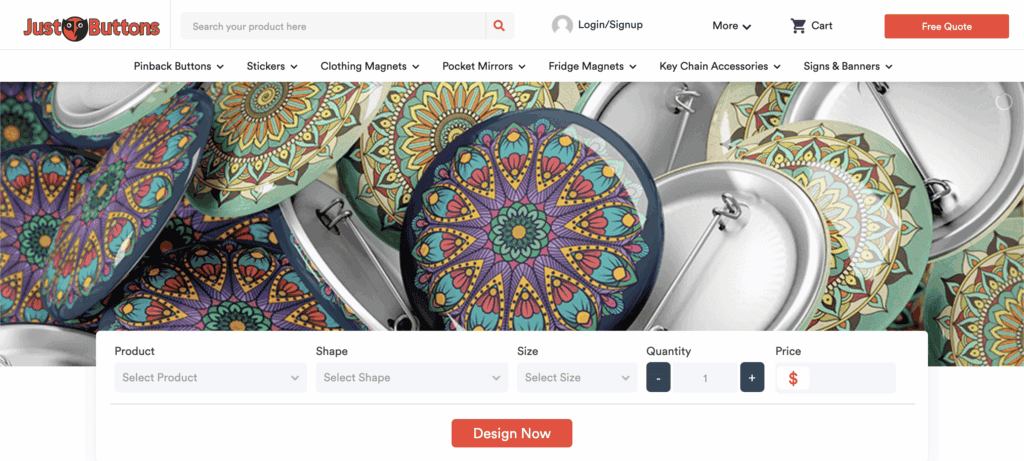
Just Buttons does one thing: custom buttons, and does it well.
The lesson? A tight focus, plus a mission customers care about, can carry a whole brand.
Related article: Want more inspiration? Check out these 15 personalized store examples.
What are the downsides of dropshipping personalized products?
Custom products have real upsides, but they're not effortless.
Here's what to plan for.
Returns are harder
Suppliers usually won't take back a custom item, since they can't resell it.
You can soften this by using returned products for photos or giveaways, and by writing a clear no-return policy for custom orders.
Customer service takes more work
You'll work more closely with customers than a regular store does.
Sometimes a buyer isn't sure what they want, or describes it in a confusing way.
Patience and good questions usually clear it up.
Related article: Want to handle this well? Read our guide on customer service for dropshipping.
It's harder to automate
Someone has to handle the design, the customer's input, and the order.
That makes custom products more hands-on than plain dropshipping, and many sellers outsource parts of it as they grow.
You have to respect copyright
This one matters, so keep it in mind.
Printing someone else's logo, character, or artwork without permission can get your store and listings taken down.
Stick to designs you own, designs your customer provides for personal use, or properly licensed artwork.
Dropshipping personalized products: FAQ
Here are quick answers to the questions beginners ask most.
Is dropshipping personalized products worth it?
For most beginners, I'd say yes.
You trade a bit more hands-on work for less competition, more room on price, and an easier path to a real brand.
It's a better fit if you enjoy design and customer contact than if you want a fully hands-off store.
What are the best suppliers for personalized products?
Printful and Printify are the most popular for print on demand items like apparel, mugs, and wall art.
CustomizingBox is strong for custom gifts, and AliExpress works when you need a specific product a print on demand supplier doesn't carry.
How long does shipping take for personalized products?
Expect production time plus shipping, since each item is made to order.
Production often takes two to seven days, then shipping is added on top, depending on where your supplier is based.
The good news? Customers expect a wait on custom items, as long as you show the timeline clearly on the page.
How do you add personalization to a product?
You add a personalization field to the product page where customers enter a name, photo, or text.
Apps like Teeinblue or Customily can show a live preview, then pass the details to your supplier for printing.
So, should you dropship personalized products?
If you like the idea of selling something meaningful, I think personalized products are one of the best niches to start with.
You get less competition, more room on price, and products people feel attached to.
Just go in knowing the trade-offs: longer production times, harder returns, and more customer contact.
Pick one product type, choose a supplier, and build a single great product page to start.
Want to learn more about personalized dropshipping?
A few we'd point you to: