

If you've ever opened DHgate and thought, “How can this be so cheap?”, you're not alone.
Sneakers for $25, smartwatches for $12, and whole bundles of products are cheaper than a single item on Amazon.
It almost feels like there must be a catch.
Most articles repeat surface-level answers like cheap labor, direct sourcing from China, or cutting out middlemen.
That's not wrong, but it's also not the full story. The real reasons go much deeper into how global manufacturing works, how sellers operate, how shipping is structured, and how the platform itself is designed.
In this guide, we're going beyond the obvious.
You'll learn the real reasons why prices on DHgate are so low, including factors most articles never mention, like inventory dumping and gray-area tax advantages.
Let's break down what's really happening behind those ultra-low prices.
12 Reasons why DHgate is so cheap
Here are the 12 reasons why DHgate is so cheap:
- Direct-from-factory deals (no middleman)
- Low production costs in China
- Excess inventory and clearance sales
- Bulk pricing and small MOQs
- Replica and "dupe" products
- Cheaper materials and "good enough" quality
- Small-scale factories with low overhead
- Low fees for sellers (lower overhead than Amazon)
- Logistics partnerships and cheap shipping
- Tax loopholes
- Lax IP enforcement
- Minimal marketing
1. Direct-from-factory deals (no middlemen)
One of the biggest (and most important) reasons DHgate is so cheap is simple: you are often buying straight from the source.
On many Western platforms, a product usually passes through several layers before it reaches you:
Factory → Exporter → Wholesaler → Distributor → Retailer → Customer
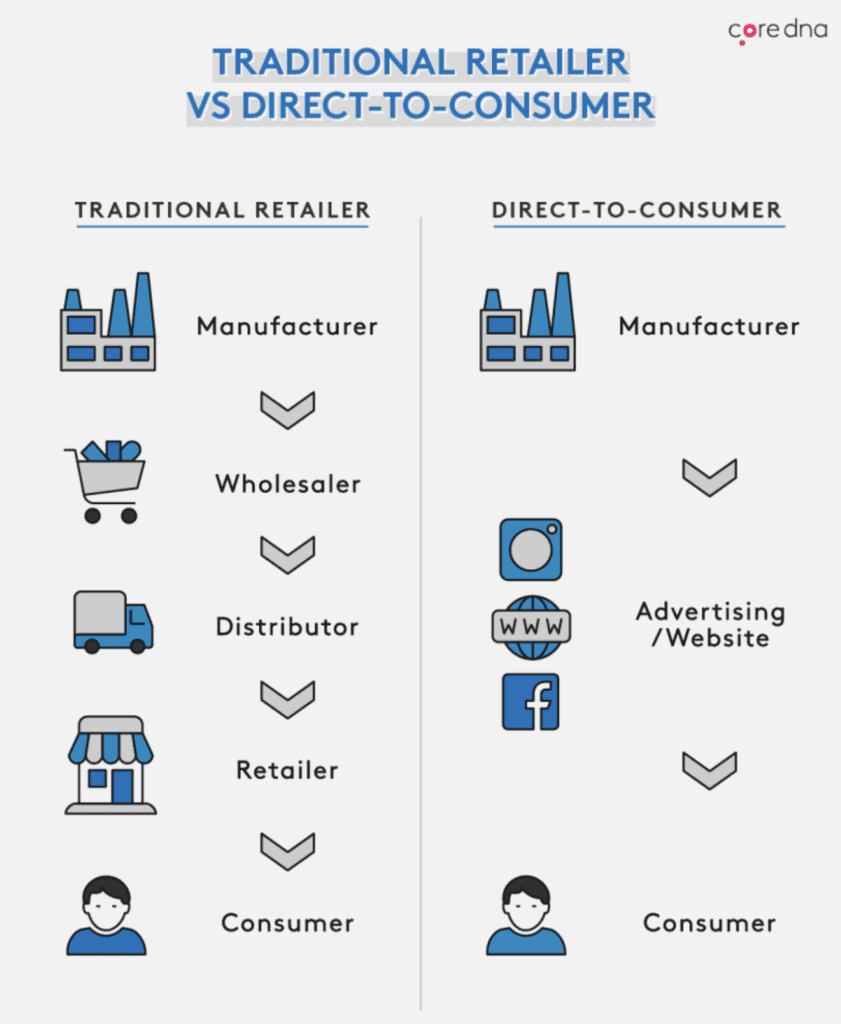
Every step adds a markup. By the time the product reaches Amazon or a local store, the price can be three to ten times higher than the original factory cost.
On DHgate, that chain is much shorter.
Many sellers on DHgate are:
- The actual factory that makes the product
- A direct partner of the factory
- A local trading company that works closely with manufacturers
This means you're often paying close to factory-direct pricing (just a small markup above raw manufacturing costs), unlike in traditional retail, where prices are inflated by every step in the distribution chain.
For example, a phone case that costs $0.80-$1.50 to manufacture might:
- Sell for $10-$15 on Amazon
- Sell for $2-$4 on DHgate
It's not that the product is fake; it's just that fewer parties are taking a cut along the way.
2. Low production costs in China
Here's another reason why prices on DHgate are so low: it's just cheaper to make things in China.
But it's not only because of lower wages (even though that's part of it).
China's manufacturing dominance isn't just about labor; it's about an entire ecosystem.
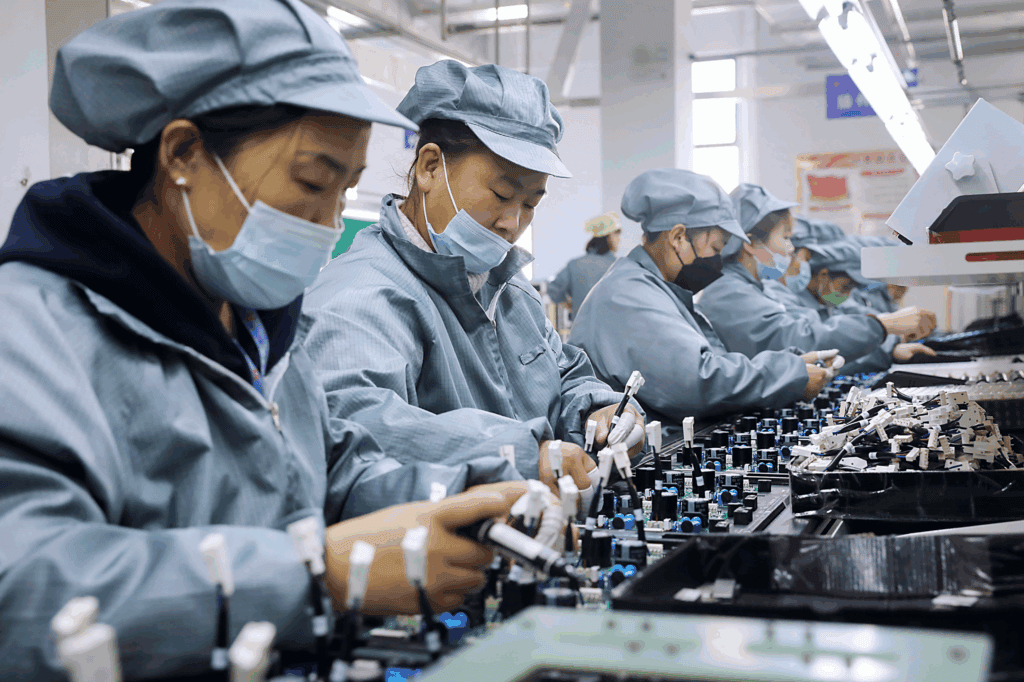
Specialized zones like Shenzhen or Yiwu are optimized for speed, scale, and supply chain coordination, thereby slashing production time and costs.
Here's why:
- Massive scale = lower costs
Chinese factories produce in huge volumes. When you make thousands (or millions) of units at once, the cost per item drops. This is known as “economies of scale,” and China is the master of it. - Supplier clusters
In cities like Shenzhen, Guangzhou, and Yiwu, you'll find entire regions where all the factories and parts suppliers are located close together. For example, one factory might manufacture phone cases, another produce packaging, and another print logos, all within a few miles. This makes production faster and cheaper. - Lower materials and labor costs
Compared to Western countries, China can produce goods using cheaper materials and lower-cost labor, while still maintaining acceptable quality for many buyers. It's not always luxury-level, but it's often “good enough” for the price. - Government support
The Chinese government often gives tax breaks and subsidies to support manufacturing and exports. These benefits reduce factory costs even more, and those savings can get passed down to buyers like you.
So when you see a $12 smartwatch or $3 t-shirt on DHgate, remember: the costs to produce that item in China might be surprisingly low and still profitable for the seller.
3. Excess inventory and clearance sales
Another reason DHgate is so affordable is that many sellers are trying to clear out excess stock.
Factories often make more products than they can sell through regular orders.
Maybe a big buyer canceled at the last minute. Maybe a product didn't sell as expected. Or maybe the design is from last season, and they've already moved on to a new model.
Instead of letting those products sit in a warehouse (which costs money), sellers list them on DHgate at deep discounts, just to get rid of them quickly.
This is known as inventory liquidation. And when it happens, prices drop quickly.
Here's an example:
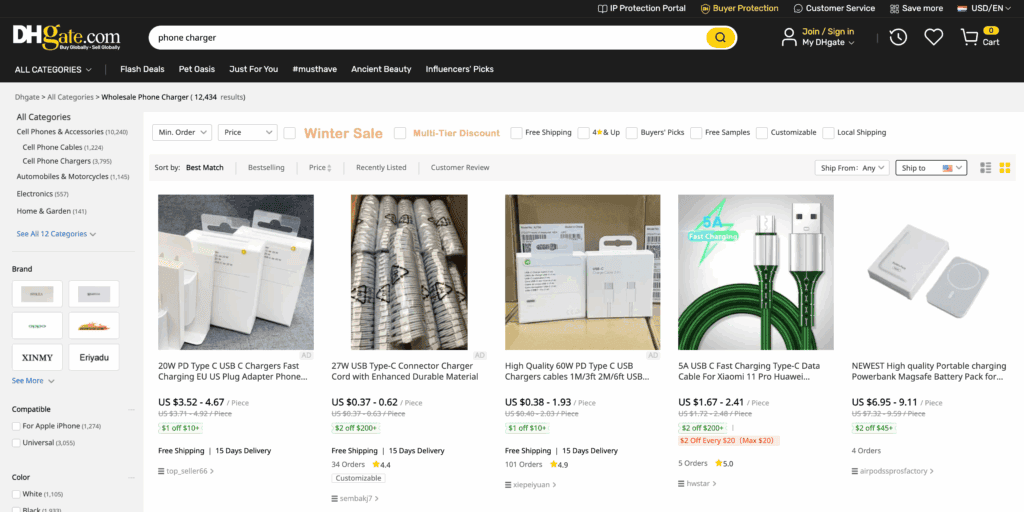
A supplier produces 10,000 phone chargers for a client who only ends up buying 7,000. Rather than storing the remaining 3,000 units (and losing money), the supplier might sell them on DHgate for cheap (sometimes even below cost) just to recover some cash.
This is why you'll often find:
- Older versions of electronics
- Off-season fashion (like winter jackets in spring)
- Accessories in discontinued colors or styles
- Slight overstock or minor packaging defects
And the best part? Many of these items are still brand-new and fully functional.
4. Bulk pricing and small MOQs
Another reason for low prices is that DHgate is built for bulk pricing, even when you're not buying in huge quantities.
On most shopping websites, the price you see is for one item. But DHgate was designed with wholesale buyers in mind, so many sellers offer lower prices when you buy more units, even if it's just 5 or 10 instead of 500.
Here's what that looks like:
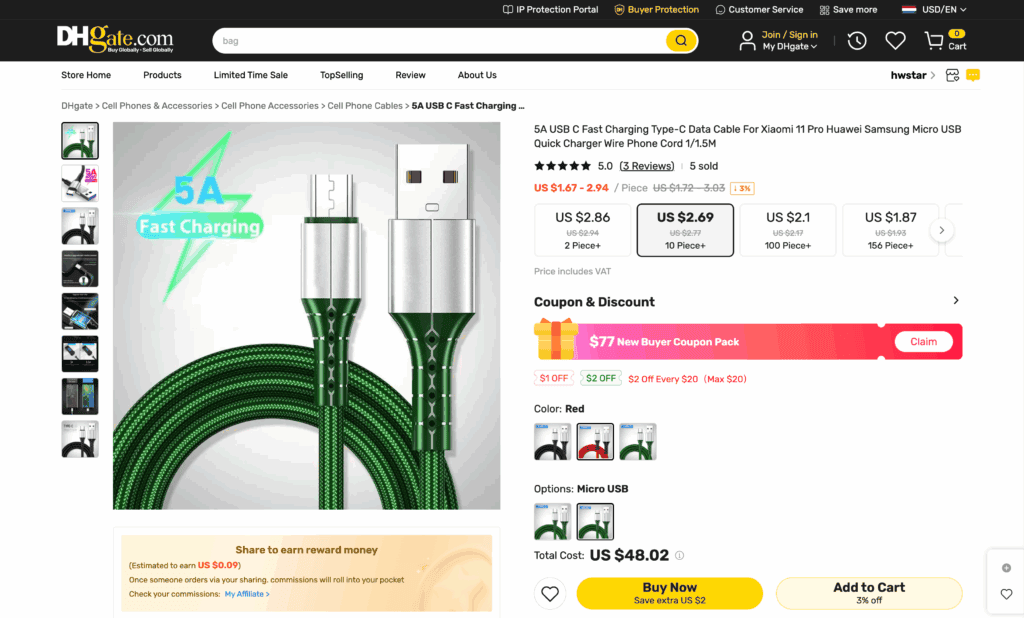
Even though it's still a small order compared to factory standards, DHgate sellers treat it as mini wholesale.
While platforms like Alibaba may require you to order 100 or 500 units to get a discount, DHgate sellers often start at just five or ten units, and sometimes even one, depending on the product.
5. Replica and “dupe” products
DHgate is known for having replicas of popular products.
Now, not all of these are illegal counterfeits (with fake logos and branding).
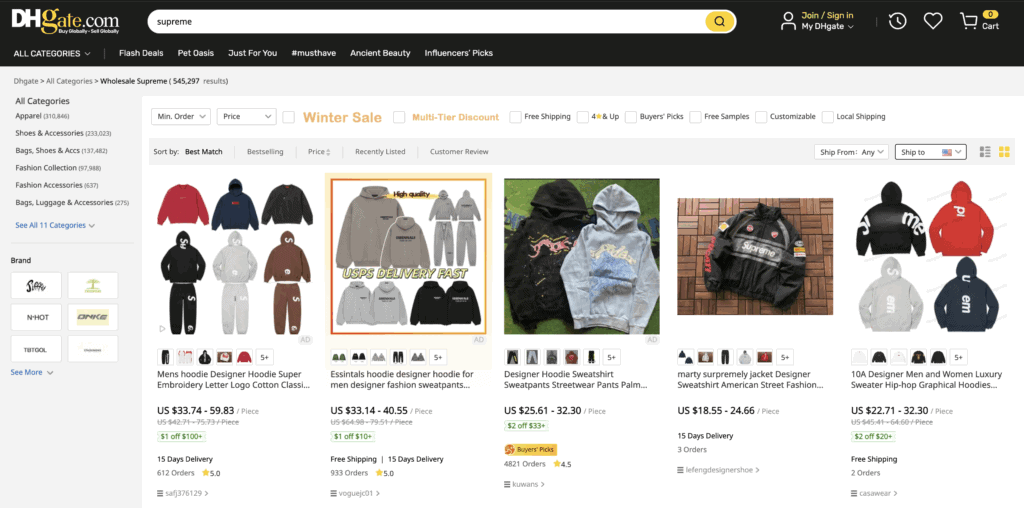
In many cases, they're “dupes”, unbranded products that look and feel very similar to expensive name-brand items but don't use any protected logos or trademarks.
For example:
- A handbag that looks like a $2,000 luxury designer bag… sold for $30
- Sneakers with a similar design to a top brand… but no logo
- A smartwatch that works like a well-known model… but with generic packaging
These items are so cheap because:
- They don't include brand licensing costs
- They're made with cheaper materials
- Sellers skip the expensive R&D and design process
- There's little or no spending on advertising or marketing
Essentially, sellers replicate the style or function of popular products and minimize every possible cost.
Important note: Some sellers list counterfeits (with fake logos), which can lead to legal trouble if you attempt to resell them. If you're in ecommerce, it's safer to stick with products that offer similar value without breaking any laws.
6. Cheaper materials and “good enough” quality
Not everything on DHgate is a luxury item, and that's part of the reason it's so cheap.
Many products are made with lower-cost materials or simpler components to keep prices down.
Here's what that looks like:
- A handbag might use synthetic leather instead of real leather
- A smartwatch might have basic features instead of the latest tech
- A hoodie might be made from lightweight fabric instead of a heavy blend
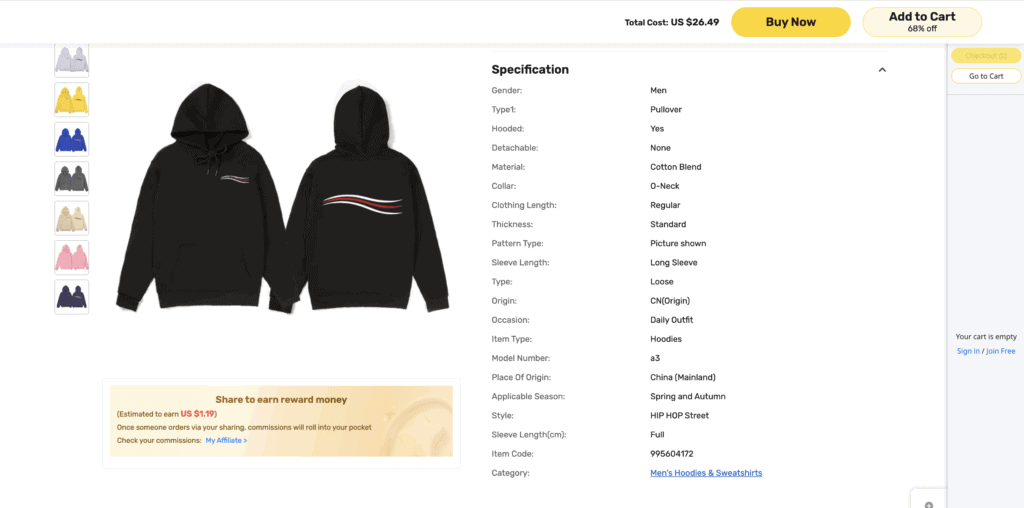
In many cases, the product still looks good and works fine, it's just made to meet a certain price point.
This is referred to as the “good enough” quality level, where the item functions and satisfies most users, even if it lacks all the bells and whistles.
As long as the product does its job, many buyers are happy, especially if they're getting it at 70-90% less than a brand-name version.
7. Small-scale factories with low overhead
Another reason DHgate products are so cheap is that many of the sellers are small factories or family-run businesses.
Because their costs are low, they don't need to charge high prices to stay in business. In fact, many of them are happy making a small profit per item if it means they can move more units and keep the factory running.
Here's a simple example:
A big company might need to sell a phone case for $15 to cover all its overhead (salaries, office space, advertising, etc.)
But a small factory in China might only need to sell that same case for $3-$4 and still make money.
8. Low fees for sellers (lower overhead than Amazon)
Here's something most buyers don't think about, but it makes a big difference in price: DHgate doesn't charge high fees to sellers.
Let's compare:
| Amazon/eBay | DHgate |
| Monthly subscription fees | No monthly store fees |
| Listing fees | No listing fees |
| Final sale commissions (often 10-20%) | Lower commission rates (often just a few percent) |
| Extra fees for advertising or storage (especially with Amazon FBA) |
As you can see, sellers don't have to inflate their prices just to cover platform costs.
And DHgate also offers sellers:
- Flexible store setup with fewer restrictions
- Tools for managing bulk orders and international shipping
- Occasional platform-wide discounts or coupons, which help lower prices even more
9. Logistics partnerships and cheap shipping
Ever wonder how a $3 item from China can come with free shipping?
It seems too good to be true, but this is another big reason why DHgate prices are so low: shipping from China is extremely cheap, especially for small items. And DHgate sellers know how to take full advantage of that.
Here's why shipping costs stay low:
- Government-subsidized shipping. China has postal agreements with many countries (like the US and most of Europe) that make it super cheap to send small packages overseas. That's why you'll often see “free shipping” on DHgate, even for items under $5.
- Bulk shipping rates. DHgate and many of its sellers use special logistics partners and “special line” couriers. These companies group packages and ship in bulk, reducing the cost per package.
- Overseas warehouses. Some sellers use warehouses in the US, Europe, or other regions. They ship in bulk to those warehouses, then deliver orders locally.
- No expensive delivery options. Most shipping on DHgate is economy mail. It's not fast, but it's affordable.
10. Tax loopholes
Here's something that doesn't appear on your receipt but still affects the price: import taxes and regulations.
When you buy from a local store or a platform like Amazon, the price usually includes:
- Sales tax or VAT
- Import duties
- Regulatory compliance costs
But on DHgate? That's not always the case.
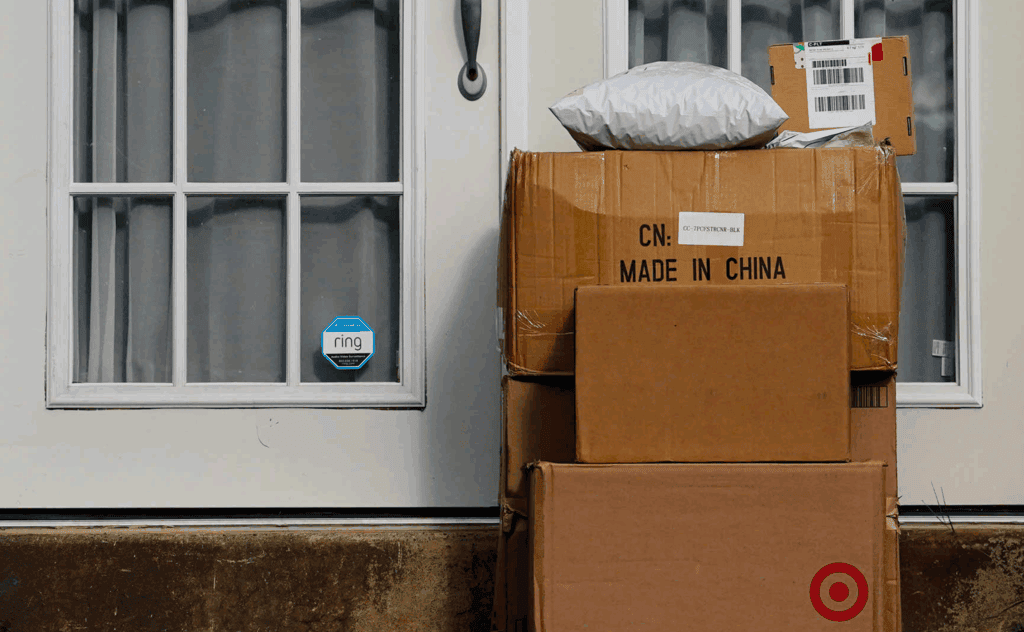
Many sellers on DHgate undervalue the product on the customs declaration to help the package slip through customs without extra charges.
This isn't something you, as the buyer, have to request. In fact, it's so common that if you ask for the real value to be declared, some sellers will be surprised.
Also, many countries have tax-free thresholds, for example:
- In the US, packages under $800 often skip import duties
- In other regions, low-value items may not be taxed at all (or not strictly checked)
Because most DHgate orders are low-value and shipped individually, they often fly under the radar. That means:
- You don't pay extra import taxes
- The seller doesn't pay high compliance costs
- And the product stays cheaper for both sides
There's more: DHgate sellers don't always follow the strict product rules required by platforms like Amazon. For example, items might not have:
- Safety certifications (like CE, FCC, or FDA approval)
- Proper labeling
- Product liability insurance
Skipping these steps saves money. It also reduces their legal risks (but might increase yours), depending on the item and how you plan to use or resell it.
11. Lax IP enforcement
Another reason DHgate is so cheap is that there's much less control over intellectual property (IP) enforcement than on platforms like Amazon or eBay.
Let's break that down.
Most big marketplaces have strict rules about what sellers can and can't list, especially when it comes to brand names, copyrighted designs, and trademarks.
If a seller on Amazon attempts to list a counterfeit Gucci bag or a copy of a Disney toy, that listing will be removed quickly, and the seller may be banned.
But on DHgate? The rules are… let's just say, a bit looser.
You'll often see:
- Products that look almost exactly like name-brand items, but with no logo
- Listings that say “inspired by” or use slightly misspelled brand names
- Unbranded versions of popular designs, gadgets, or toys
- In some cases, even actual counterfeits (though these are hidden more carefully now)
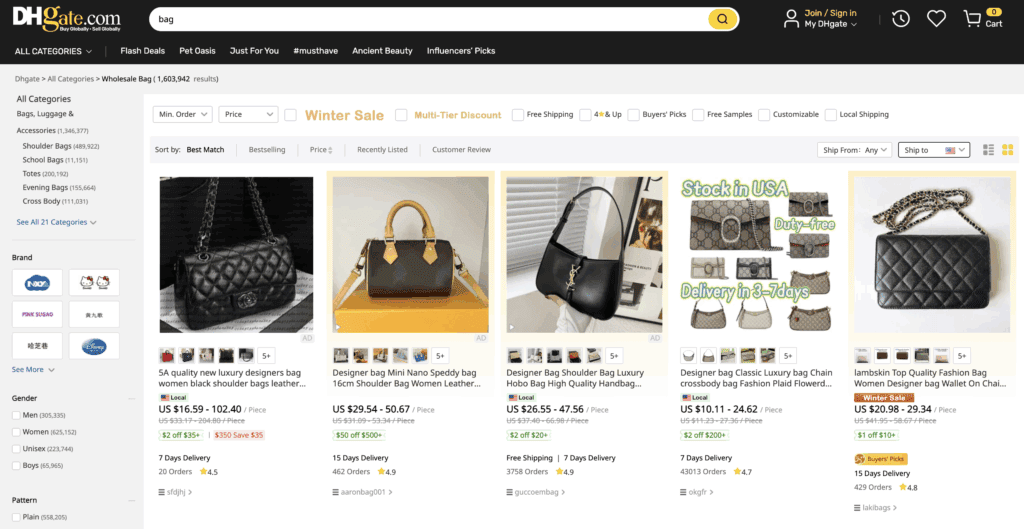
Since sellers avoid licensing fees and legal compliance costs, they can slash prices significantly.
That means they can offer these lookalike products at a tiny fraction of the price.
Related article: How to Check if a Product Is Trademarked or Copyrighted
12. Minimal marketing
Last but definitely not least, DHgate sellers don't spend much (if anything) on marketing, packaging, or fancy branding.
Let's compare.
When you buy from a big brand on Amazon or in a store, the price you pay includes things like:
- TV ads and influencer sponsorships
- Beautiful product packaging
- Custom websites and social media teams
- Retail store staff and rent
- Professional photos and branding
All of that adds cost, and it's built into the final price of the product.
But on DHgate?
Most sellers skip all that.
- Product photos are often simple or reused from suppliers
- Items arrive in basic packaging, not designer boxes
- There's usually no fancy logo or brand name
- Customer service may be minimal
These sellers rely on low prices and high volume to move products. They don't need to “wow” you with a brand experience; they just need to deliver something that looks good and works well enough for the price.
And for many buyers (especially resellers), that's exactly what they're looking for.
If you're running your own store, this gives you a huge opportunity.
You can take these generic, unbranded products, and:
- Add your own logo
- Create better photos and descriptions
- Offer stronger customer support
And suddenly, you've turned a $3 product into something you can sell for $15, or more!
Turn this guide into an AI checklist
Click your favorite AI tool below to get a short summary and step-by-step checklist based on this article.Prefer ChatGPT? Open this guide in ChatGPT with a pre-filled prompt (most readers start here).
Summary
Before we go, we've created a quick summary of this article for you, so you can easily remember it:
- You can find extremely low prices on DHgate because most products are sourced directly from factories.
- You benefit from China's low manufacturing costs, including cheaper labor, materials, and large-scale production.
- Sellers often use DHgate to offload excess inventory or outdated models, resulting in steep discounts.
- You can get better deals when buying in small bulk thanks to flexible minimum order quantities and tiered pricing.
- You'll find many replica or “dupe” products that mimic popular brands without using logos, which drastically lowers costs.
- Many items are made with basic or lower-cost materials that offer “good enough” quality at a fraction of the price.
- A large number of sellers are small-scale factories with very low overhead, so they can offer lower prices and still make a profit.
- DHgate charges sellers lower fees than platforms like Amazon or eBay, helping keep product prices low for you.
- Shipping is cheap or even free because of government-subsidized logistics, bulk shipping partnerships, and low-cost mail services.
- Sellers often undervalue packages or use legal gray areas to avoid taxes and import duties, helping reduce your total cost.
- Intellectual property enforcement is weaker on DHgate, so many products are inspired by famous brands without paying for trademarks.
- Most sellers don't spend money on marketing, branding, or fancy packaging, which helps keep their prices low and focused on value.
Conclusion
As you can see, DHgate's low prices result from a combination of smart strategies at nearly every step of the process.
But here's the key: Cheap doesn't always mean bad, and expensive doesn't always mean better.
If you understand how and why the pricing works, you can make smart decisions, whether you're just looking for a good deal or you're planning to resell products for a profit.
If you understand that system, you can use it to your advantage. Good luck!
Want to learn more about ecommerce?
Ready to move your online store to the next level? Check out the articles below:
- How to Start an Online Store: The Definitive Guide (2026)
- 15 Best DHgate Sellers for the Most Popular Niches (2026)
- 15 AliExpress Alternatives for Dropshipping (Fast Shipping)
Plus, don't forget to check out our in-depth how to start an online store guide here.


