

If you are selling to customers in Australia, working with a local print on demand supplier simply makes things easier.
Shipping is quicker, you don't have to deal with currency conversion fees, and the finished products are usually more consistent.
Best Print on Demand Suppliers in Australia Shortlist
Here’s our shortlist of the top Australian print on demand suppliers in 2026:
- Best for Premium Branding: Printful — Combines reliable local fulfillment, branding features, and broad integrations for brands that want a polished customer experience.
- Best for Low-Cost and Etsy Sellers: Printify — Keeps costs low and gives sellers flexible supplier options, which makes it a strong fit for Etsy shops and budget-focused stores.
- Best for Posters and Paper Goods: Gelato — Prints near the buyer and stands out for posters, art prints, photo books, and other paper goods.
- Best for Shopify Apparel Stores: OGO — Pairs AS Colour apparel with AUD billing and a native Shopify app for Australian clothing brands.
- Best for Fast Local Delivery: The Print Bar — Offers same-day printing on selected items, multiple print methods, and local pickup in Brisbane and Melbourne.
To help you decide, we've ranked the top 10 print on demand suppliers in Australia for 2026, including both global leaders and local providers.
Overview table of the best Australian POD suppliers
Before going in-depth, here's a quick comparison of the top POD suppliers operating in Australia in 2026:
| Supplier | Best For | Pricing | Fulfillment Hubs | Average turnaround | Read review |
| Printful | Premium branding | Free / $24.99/month | Brisbane, Melbourne | 4-10 business days | Printful Review |
| Printify | Low-cost and Etsy sellers | Free / $29/month | Melbourne | 5-10 business days | Printify Review |
| Gelato | Posters and paper goods | Free / Paid Tiers | Distributed AU print partners | 4-9 business days | Gelato Review |
| OGO | Shopify apparel stores | Free | Melbourne | 4-9 business days | OGO Review |
| The Print Bar | Fast local delivery | Free | Brisbane, Melbourne | 2-3 business days | The Print Bar Review |
| Tee Junction | Beginners and influencers | Free | Melbourne | 7-15 business days | Tee Junction Review |
| Dropshirt | Wholesale-focused sellers | Free | Melbourne | 4-9 business days | Dropshirt Review |
| Jondo | Wall art and canvas prints | API-based | Melbourne | 4-9 business days | Jondo Review |
| Printdrop Express | Smart apparel brands | Free | St Peters, NSW | 2-5 business days | Printdrop Express Review |
| Printicks | B2B merch | Free | Kellyville, NSW | 4-7 business days | Printicks Review |
How do you choose a print on demand supplier from Australia?

To make sure you're working with a reliable Australian print on demand partner, here's what to look for.
First, confirm that the supplier actually prints and ships from Australia. Some POD companies present themselves as 'Australian-friendly' but fulfill orders overseas, which can lead to longer delivery times, customs delays, and unhappy customers.
Next comes your ecommerce platform.
Some suppliers integrate easily with popular platforms like Shopify, while others require a more manual setup.
Then think about your products. Not every supplier specializes in the same items. Some focus on apparel, while others are better suited for prints, books, or niche products.
Speed also matters. Production and delivery times can vary even within Australia, so reliable fulfillment makes a big difference.
Finally, look beyond price alone. Healthy margins matter, but consistent quality and dependable service matter just as much.
There is no single best choice. The right supplier is the one that fits your store's goals and growth plans.
Browse our free-to-use dropshipping suppliers directory. Filter vetted suppliers by niche, country, and pricing to find the best partners for your online store.
- Discover local, niche, print on demand, and general suppliers in one place.
- Compare free, budget-friendly, and premium plans you can actually sell with.
- Skip endless scrolling through guides and jump straight to suppliers that fit your store.
Updated for 2026 and still growing with new vetted suppliers.
The 10 best print on demand suppliers from Australia
Here are the 10 best print on demand suppliers from Australia:
1. Printful
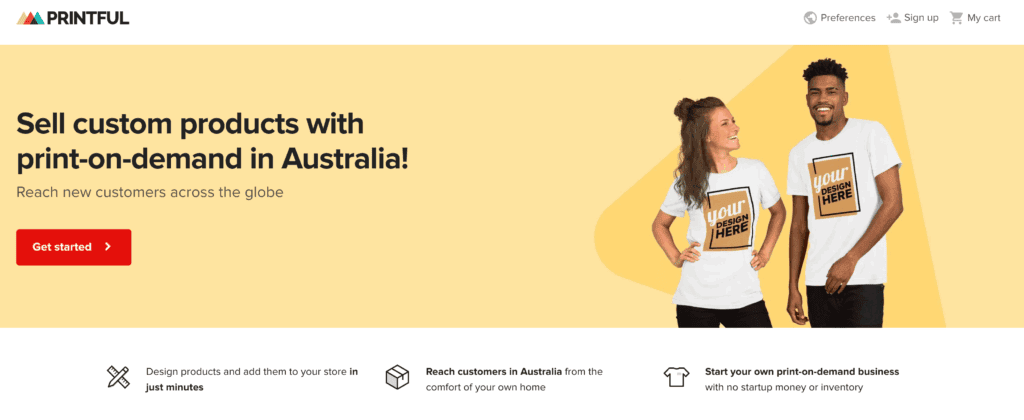
Printful is one of the most established POD providers in the Australian market.
Instead of shipping from the US, they now fulfill orders locally through partners in Brisbane and Melbourne. This setup cuts down delivery times and helps avoid customs fees for Australian customers.
In Brisbane, they handle apparel items like tees and hoodies. On the other hand, non-apparel items such as mugs and posters are fulfilled in Melbourne.
While the local product range is smaller than their global catalog, their tight quality control ensures consistency across regions.
For example, a Bella + Canvas tee printed in Brisbane will look the same as one printed in the US.
Pros
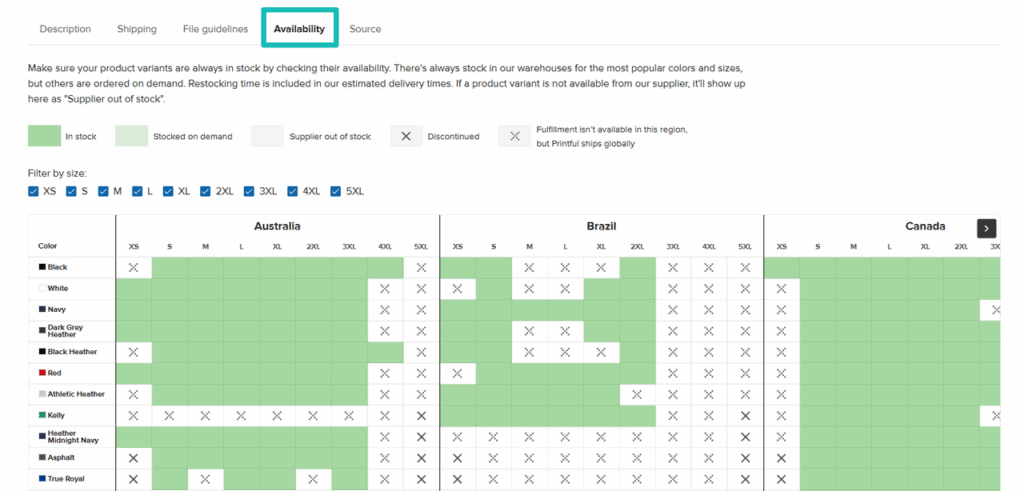
- Reliable quality control. Printful uses standardized print setups across its global network. That means products look the same no matter where they're fulfilled. This is a significant benefit for brands selling internationally.
- Branding features. You can add custom neck labels, branded inserts like stickers, and logoed packaging.
- Multichannel flexibility. One product listing can be fulfilled from different locations. If the Brisbane warehouse runs out of stock, Printful can reroute the order overseas so sales don't stop (delivery takes a bit longer).
Cons
- Higher base prices. Compared to Printify or local suppliers like OGO, Printful costs more per item. This might limit margins for budget-focused stores or price-sensitive niches, such as meme tees.
- Limited local catalog. Although the global site offers over 460 products, the Australian fulfillment centers stock a narrower range. Some niche items, such as all over print leggings or pet accessories, may still ship from overseas.
How do you connect Printful to your store?
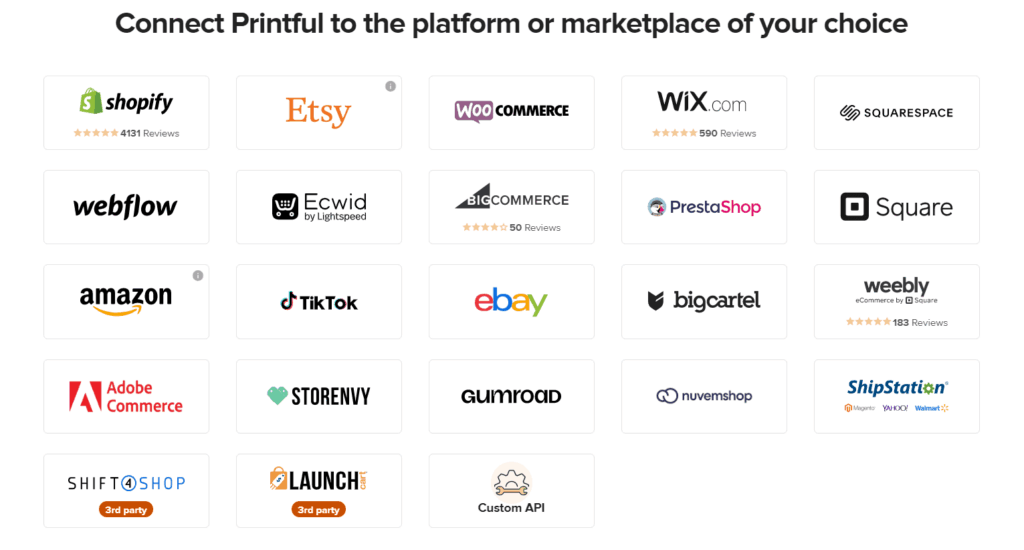
Printful integrates directly with platforms like Shopify, Etsy, WooCommerce, Wix, Squarespace, and TikTok Shop. Setup is quick, and once connected, products, inventory, and orders sync automatically.
For example, Shopify users can install Printful's app, publish products straight to their store, and have orders sent without any manual steps. Live shipping rates and tax settings are also supported.
For custom sites, Printful also offers a REST API, though it requires developer setup.
Pricing

Printful offers two core plans:
- Free Plan. Access to all integrations, the mockup generator, and fulfillment tools. You pay only for products and shipping.
- Printful Growth ($24.99/month). Unlocks branded pack-ins, carrier-based shipping, discounts, and product branding features like inside labels.
High-volume sellers can also apply for Printful Business, which is a custom plan with better pricing and dedicated support.
Shipping is charged per item, with apparel typically delivered in 2-5 business days across metro Australia.
Note: Check out our full Printful review to see if it's the right supplier for your POD store.
2. Printify
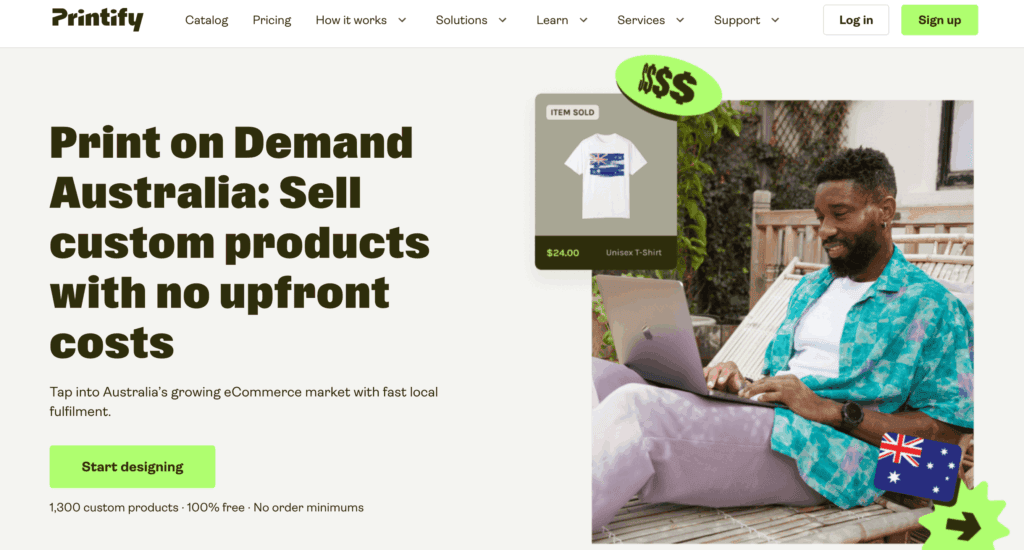
Printify works a little differently from Printful.
It's an aggregator, meaning it connects you with third-party print partners instead of printing products itself. In Australia, that usually means working with suppliers like Stylus in Melbourne.
This setup keeps costs low and gives you flexibility, but it also comes with a few trade-offs.
Printify's Australian coverage is solid, though less extensive than Printful's. Most local orders are produced through Stylus, with production times ranging from 3-5 days and shipping times of 2-6 days.
Pros
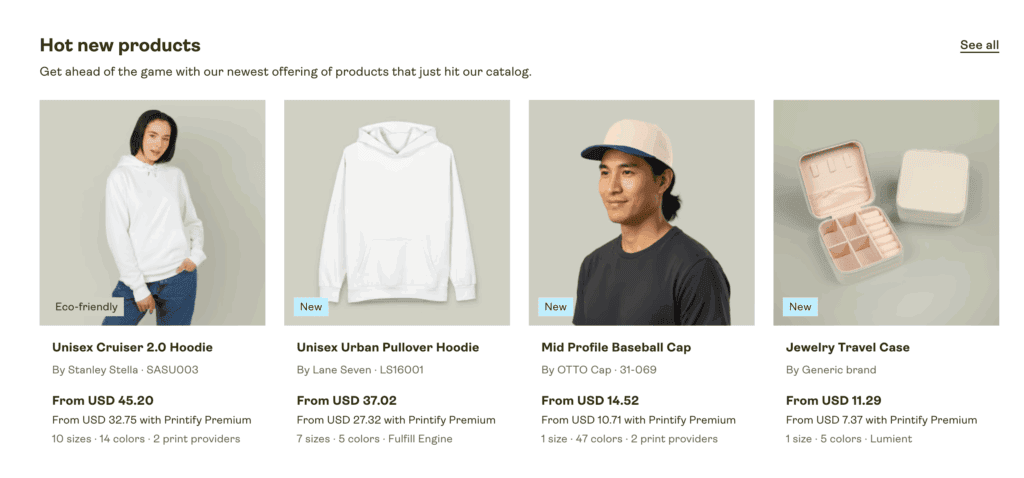
- Lower prices. Printify often outperforms other platforms in terms of cost. Sellers on Etsy or budget-focused Shopify stores benefit the most.
- Flexible supplier choice. You can pick your preferred Australian printer. For example, if Stylus is delayed, you could route to a partner in New Zealand (with longer delivery).
- Large catalog. Over 1,300 products are available, more than most platforms.
Cons
- Inconsistent quality. Print quality varies between suppliers. A tee printed by Stylus might look different than one printed in the US.
- Split shipments. If a buyer orders a shirt and a mug from two different partners, they'll get two parcels, and you'll pay for two shipments, which eats into profit.
How do you connect Printify to your store?

Printify offers native apps for Shopify, Etsy, WooCommerce, BigCommerce, Wix, Squarespace, and PrestaShop. You can create and publish products straight from their dashboard, with automated order syncing and tracking updates.
They also offer a 'Pop-Up Store' feature if you don't have your own website, though it's limited.
Pricing

Printify is free to use. You only pay for fulfilled orders.
If you're selling consistently, the Premium plan ($29/month) can make sense. It offers up to 20% off product costs, which adds up quickly if you're moving 30-50 items per month.
Shipping is charged per product and varies by supplier. Expect delivery in 5-11 days total for most Australian metro orders.
Note: Check out our full Printify review to see if it's the right supplier for your POD store.
3. Gelato
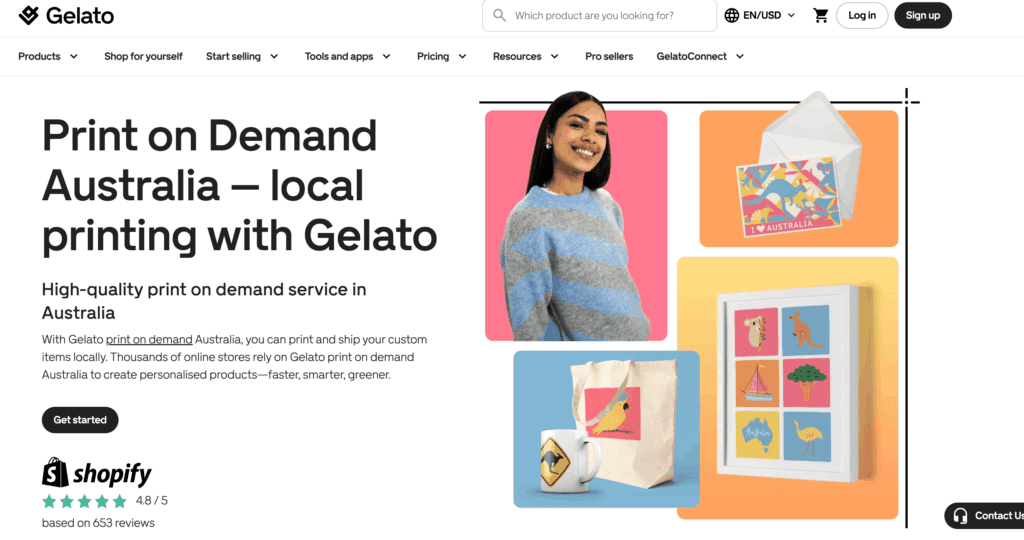
Gelato works much like Printify. Instead of printing everything in one central location, it automatically sends each order to the nearest local print partner.
Where Gelato really stands out is with paper products.
If you're selling wall art, greeting cards, photo books, or posters, their print and paper quality is noticeably better than most POD platforms.
Around 87% of orders are produced locally, which cuts delivery times and shipping emissions.
Pros
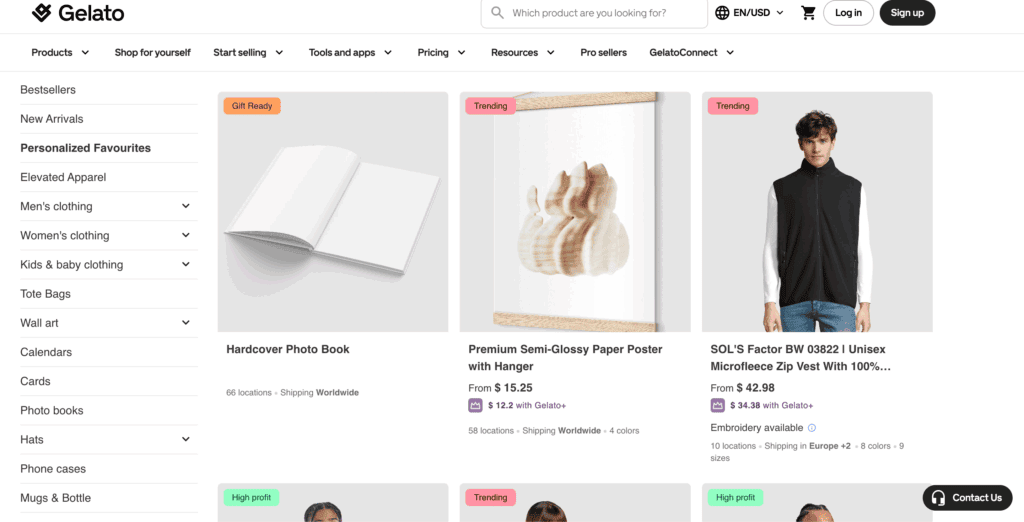
- Smart routing. Orders are printed near the buyer. A customer in Sydney gets local fulfillment without you lifting a finger.
- Paper and print quality. Best-in-class for posters, art prints, and books. Great for artists and photographers.
- Global reach. You can sell worldwide, and Gelato will handle localized production.
Cons
- Limited apparel features. Clothing options and branding tools are improving, but still behind Printful.
- Premium features gated. Lower shipping rates and access to stock image libraries are available with a Gelato+ subscription.
How do you connect Gelato to your store?

Gelato has native integrations with Shopify, Etsy, WooCommerce, BigCommerce, Wix, and Squarespace. You can publish products, sync orders, and automate shipping from inside their dashboard.
Custom setups are supported via a robust API for developers.
Pricing
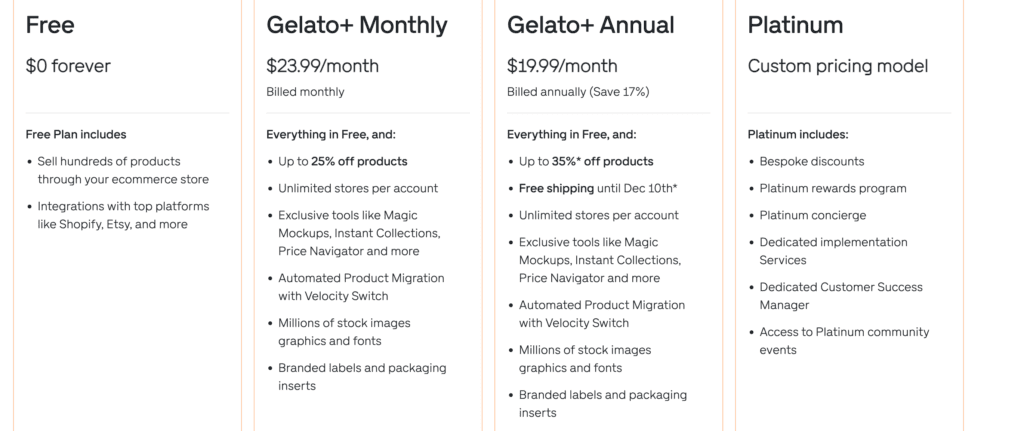
Gelato offers a free plan to get started.
Paid upgrades include:
- Gelato+ Monthly. Adds tools like premium mockups and live shipping rates.
- Gelato+ Annual. Unlocks the same as the Monthly tier but allows up to 35% off instead of 25% off.
Pricing varies by item and destination, but thanks to local fulfillment, Australian orders are typically delivered within 4-9 business days.
Note: Check out our full Gelato review to see if it's the right supplier for your POD store.
4. OGO
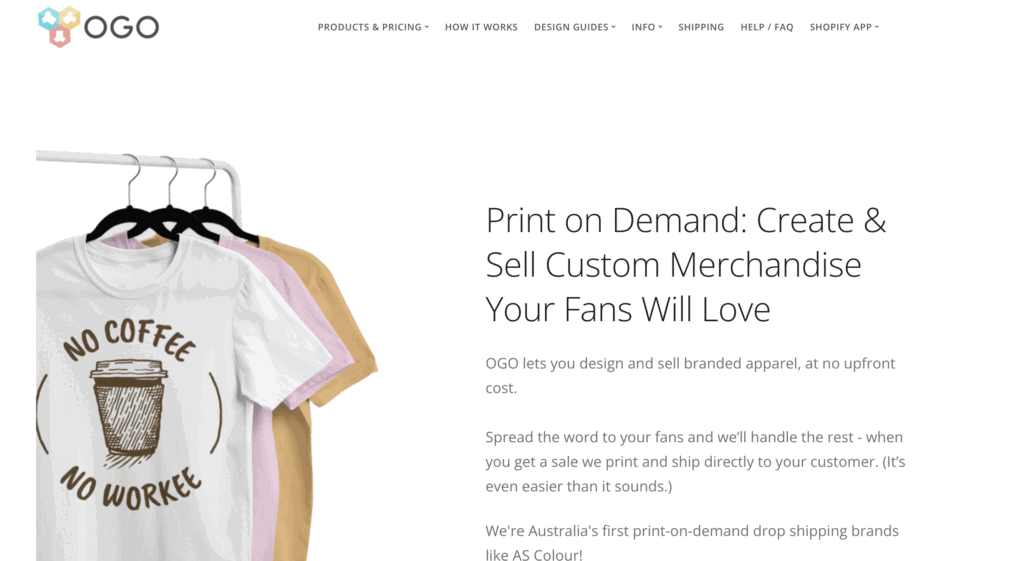
OGO is a Melbourne-based POD supplier specializing in premium apparel. They're especially popular with Australian streetwear and lifestyle brands thanks to their deep stock of AS Colour garments.
OGO doesn't try to do everything. Instead, they've optimized for Shopify and built a native app that automates product setup, inventory syncing, and order processing.
If most of your customers are in Australia and care about quality, branding, and a clean workflow, OGO is a strong choice.
Pros
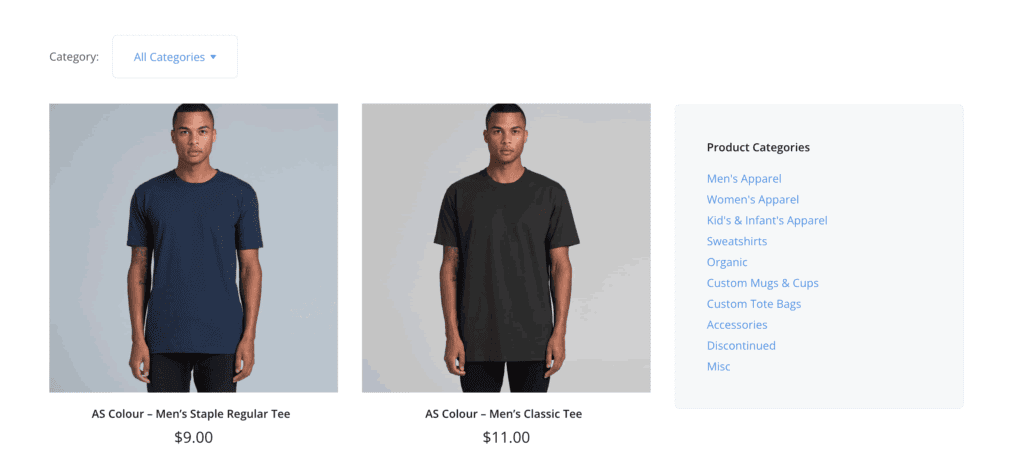
- AS Colour's inventory. This includes thousands of items, including the Staple Tee and Maple Tee, providing your store with retail-grade quality.
- Shopify native. Their app is tightly integrated. Setup takes minutes, and orders flow without friction.
- AUD billing. No foreign currency surprises. You're billed in Australian dollars, which simplifies pricing and cash flow.
Cons
- Platform lock-in. OGO only supports Shopify. Etsy and WooCommerce sellers must either build custom API connections or manually enter orders.
- Single-location risk. All printing occurs in Melbourne. Local disruptions (e.g., weather, strikes) can delay fulfillment.
How do you connect OGO to your store?
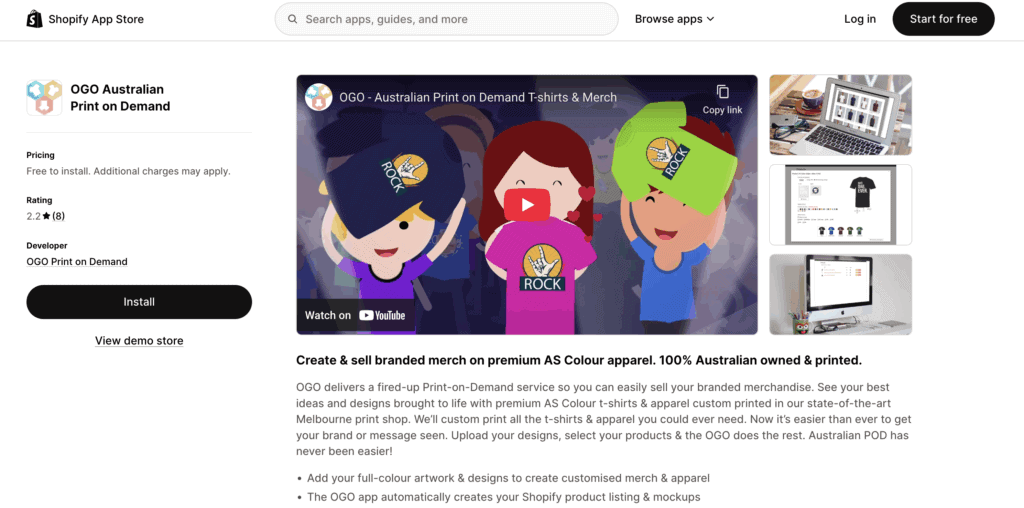
OGO offers a native Shopify app that handles product creation, order syncing, and fulfillment with minimal manual work.
Other platforms like WooCommerce, Wix, or Etsy aren't officially supported, so orders need to be submitted manually or connected via OGO's API.
Pricing
OGO is free to use, with no monthly subscription fees. You only pay for the products and shipping.
Production typically takes 2-4 business days, with delivery to metro areas taking another 2-5 days.
5. The Print Bar
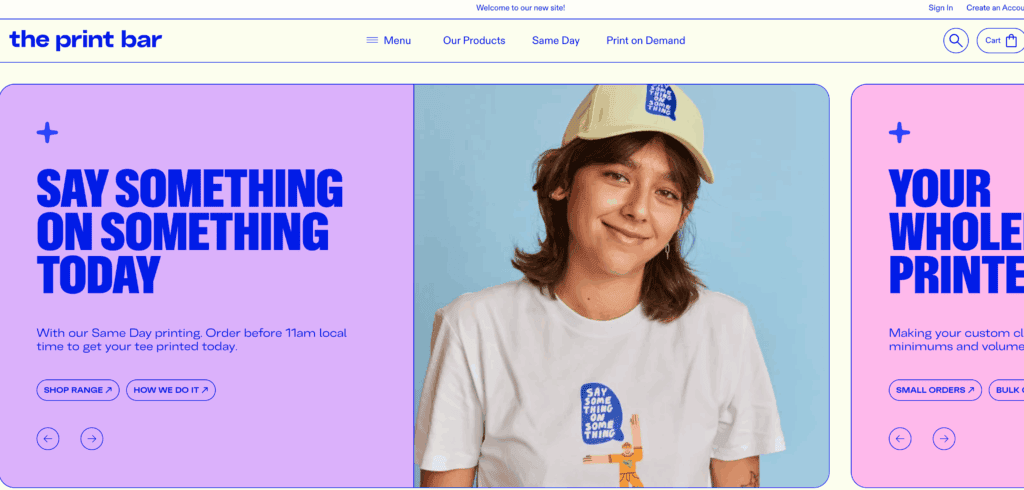
The Print Bar operates out of Brisbane and Melbourne, combining retail, B2B, and dropshipping services under one roof.
They stand out for one big reason: they're the only Australian POD supplier offering same-day printing on selected items when orders are placed before 11 am.
They also offer a wide range of print methods, including DTG, embroidery, screen printing, and DTF. This makes them ideal for businesses needing more than basic cotton tees.
Pros
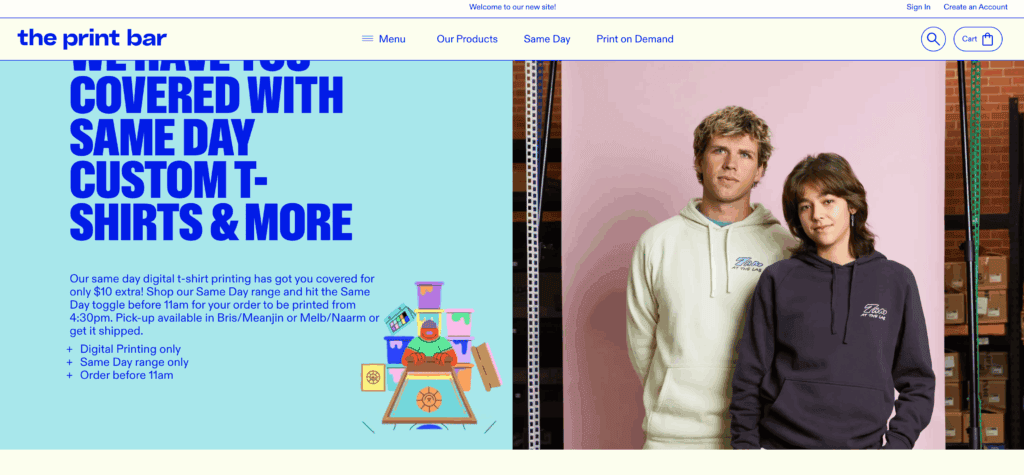
- Same-day dispatch. Orders placed early can ship the same day.
- Multiple print methods. Embroidery and screen printing help brands to scale from POD to bulk production.
- Local pickup available. Customers in Brisbane and Melbourne can collect in person, saving on shipping.
Cons
- Limited integrations. Only Shopify is supported natively. Etsy and WooCommerce users must rely on Printify or submit orders manually.
- Pricing variance. Prices can vary depending on whether you order directly or via Printify.
How do you connect The Print Bar to your store?
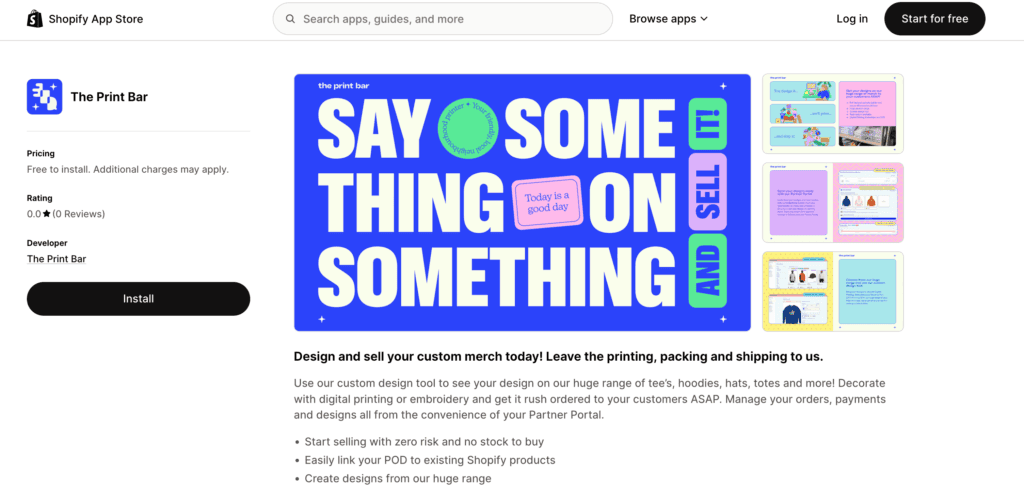
They offer native Shopify integration and act as a print partner within Printify, allowing Etsy and WooCommerce sellers to connect indirectly.
They also provide a basic website builder, though it's less flexible than Shopify.
Pricing
The Print Bar has no monthly fees. You only pay for the product and shipping.
Their same-day products ship within 24 hours, with delivery in 1-2 business days for metro areas. Other items typically ship in 2-4 business days.
6. Tee Junction
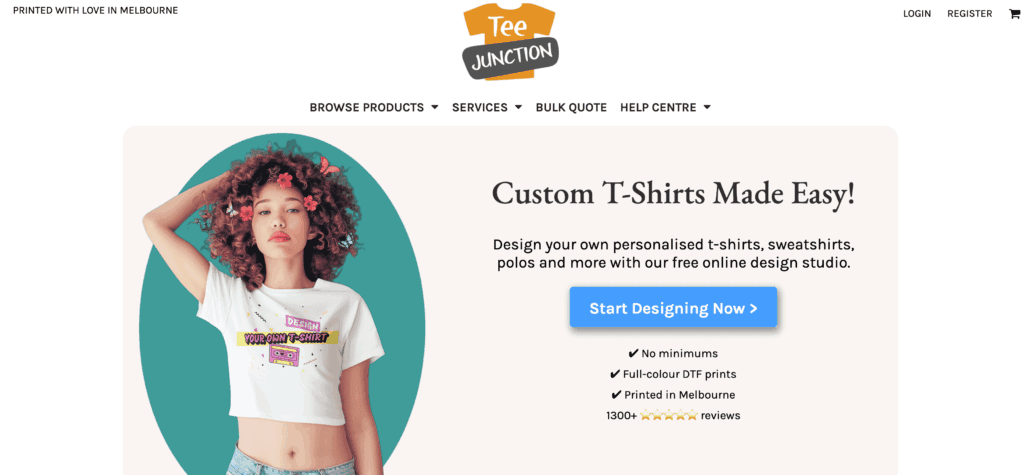
Tee Junction is a Melbourne-based POD supplier known for simplicity and low startup costs.
In addition to standard dropshipping, they offer free hosted affiliate stores, which makes them a good fit for creators who want to sell merch without running a full ecommerce site.
They use the same AS Colour blanks and print setup as OGO, but the focus here is on accessibility rather than advanced integrations or scaling features.
Pros
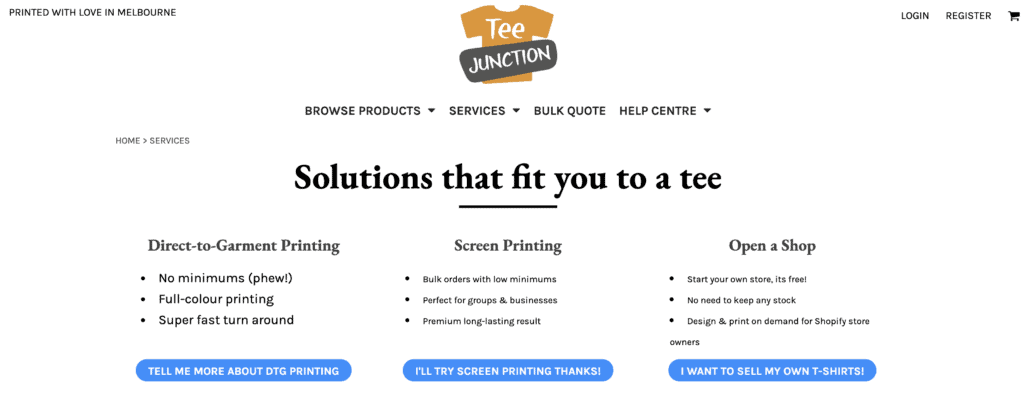
- Zero setup cost. Anyone can launch a free affiliate store without paying for Shopify.
- AS Colour apparel. Including high-quality tees like the Staple and Maple is standard.
- Speed flexibility. Choose from Standard, Express, or Rush production tiers based on your urgency and desired margin.
Cons
- Limited branding. Affiliate stores display Tee Junction branding, so you can't build a fully white-labeled experience.
- Slower fulfillment. Standard orders may take up to 15 business days, which is slower than other local providers.
How do you connect Tee Junction to your store?
If you're using Shopify, you can connect Tee Junction through the same backend tech as OGO. This offers full product synchronization and automated order processing.
Alternatively, you can use Tee Junction's hosted affiliate store. It requires no setup but offers limited customization and branding control.
Pricing
Tee Junction is free to use. You pay only for products and shipping.
They offer tiered production options:
- Standard. Slower but cheaper (up to 7-15 business days)
- Express/Rush. Faster production at a higher cost
This setup lets sellers balance speed and margins based on seasonality or buyer needs.
7. Dropshirt
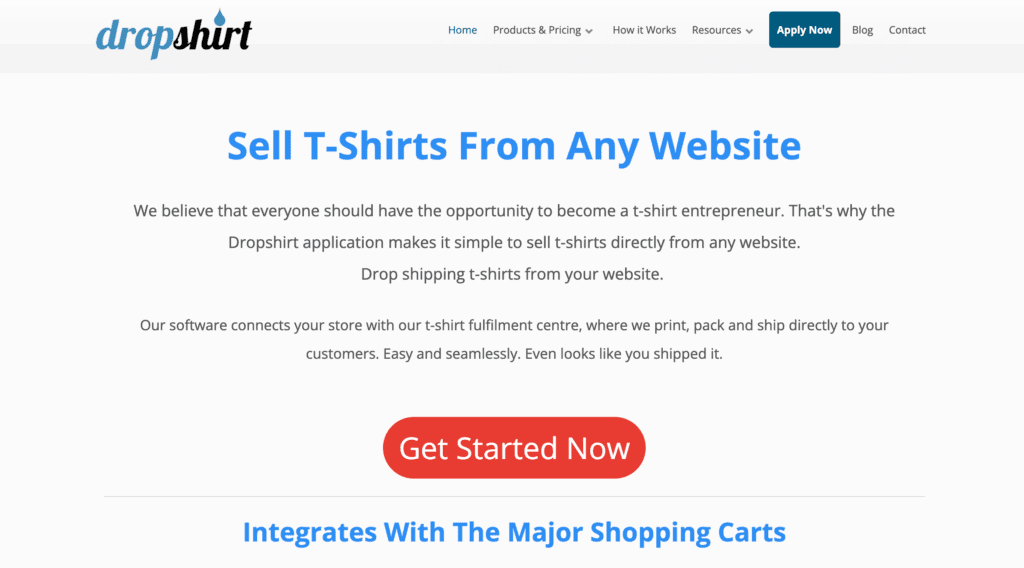
Dropshirt is a Melbourne-based, trade-focused POD supplier.
They don't really market to the public. Instead, they cater to store owners who want wholesale pricing, access to AS Colour apparel, and more manual control.
Unlike platforms such as Printful or Printify, Dropshirt isn't heavily automated.
Instead, you manage orders through a dashboard, making Dropshirt better suited to experienced merchants who want more hands-on control.
Pros
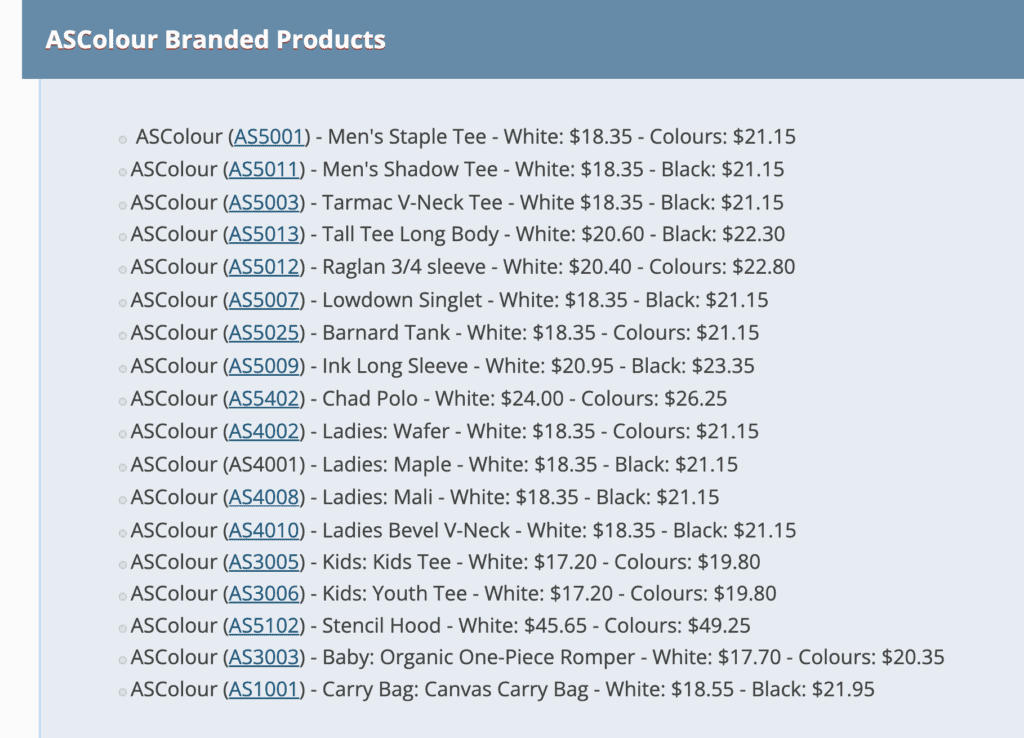
- Lower wholesale pricing. Margins are better than most platforms if you know what you're doing.
- AS Colour apparel. Dropshirt like OGO, focuses on premium blanks preferred by Australian apparel brands.
- Manual oversight. You can review each order before sending it to valuable production for custom orders or quality checks.
Cons
- Limited automation. No Shopify, Etsy, or WooCommerce app. Scaling to high-volume datasets requires more manual work.
- Not beginner-friendly. Their process assumes you understand the basics of fulfillment, order batching, and customer service.
How do you connect Dropshirt to your store?
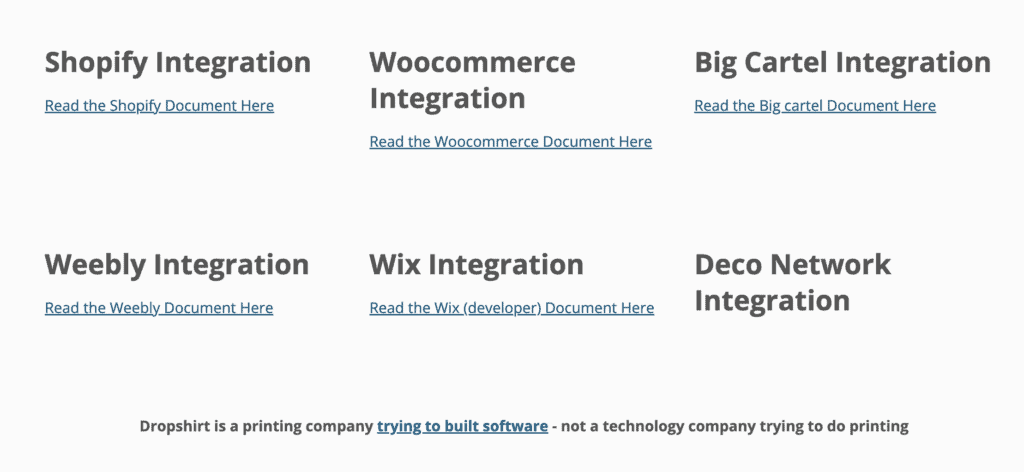
Dropshirt doesn't offer direct integrations with any major ecommerce platforms.
You place orders manually through their dashboard. API access is possible for large-scale merchants, but there's no out-of-the-box app like OGO or Printful.
Pricing
Dropshirt is free to use. There are no monthly fees or setup costs.
You pay only for the items and shipping. If you're selling in volume, it's one of the more profitable options in the Australian POD space.
Typical turnaround is 4-9 business days, including production and delivery to metro areas.
8. Jondo
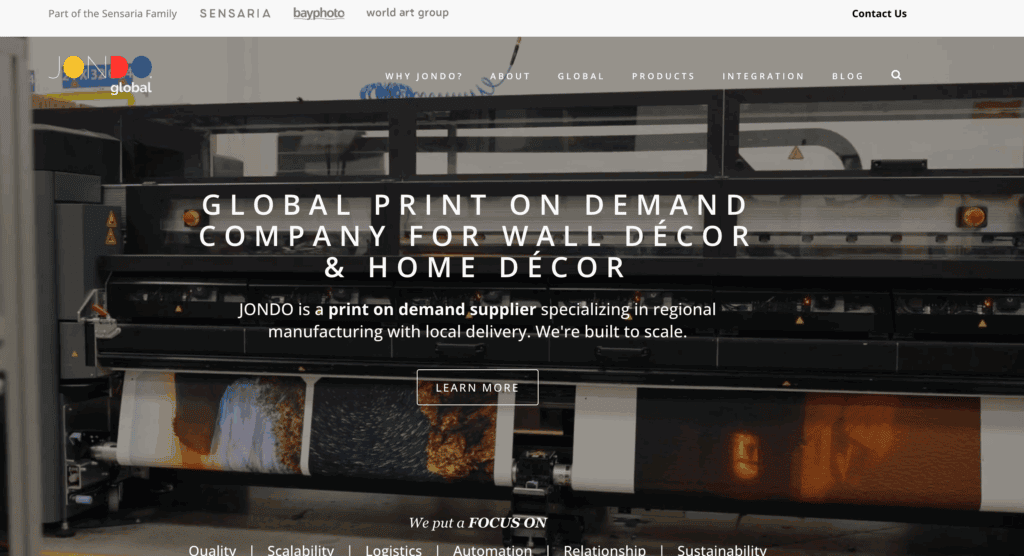
Jondo is a global wall art manufacturer with an 18,000-square-foot production facility in Melbourne.
Unlike most POD platforms on this list, they don't do apparel at all. Their focus is on canvas prints, framed art, acrylics, and other large or fragile products that need more careful handling.
They're built for consistency at scale. Whether a print is produced in Melbourne or California, Jondo uses the same materials, inks, and frame specifications.
That makes them a good fit for artists selling limited editions or brands running galleries across multiple regions.
Pros
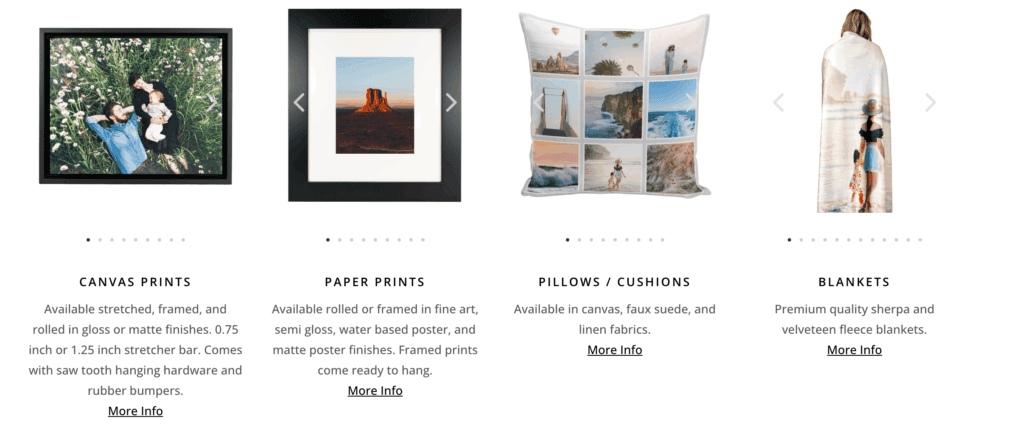
- Specialized in wall art. Unlike POD platforms that treat posters as add-ons, Jondo's core business is large-format printing.
- AI/NFT printing support. They offer physical prints of digital assets with wallet verification, a niche but growing use case.
- Global standardization. Your Melbourne print will match one from their US or UK hubs, which is essential for collectors and repeat buyers.
Cons
- No direct app integrations. You need middleware like Order Desk to link Jondo to platforms like Shopify or Etsy.
- Not suited for apparel. If you're selling tees or hoodies, look elsewhere. This is an art-only operation.
How do you connect Jondo to your store?
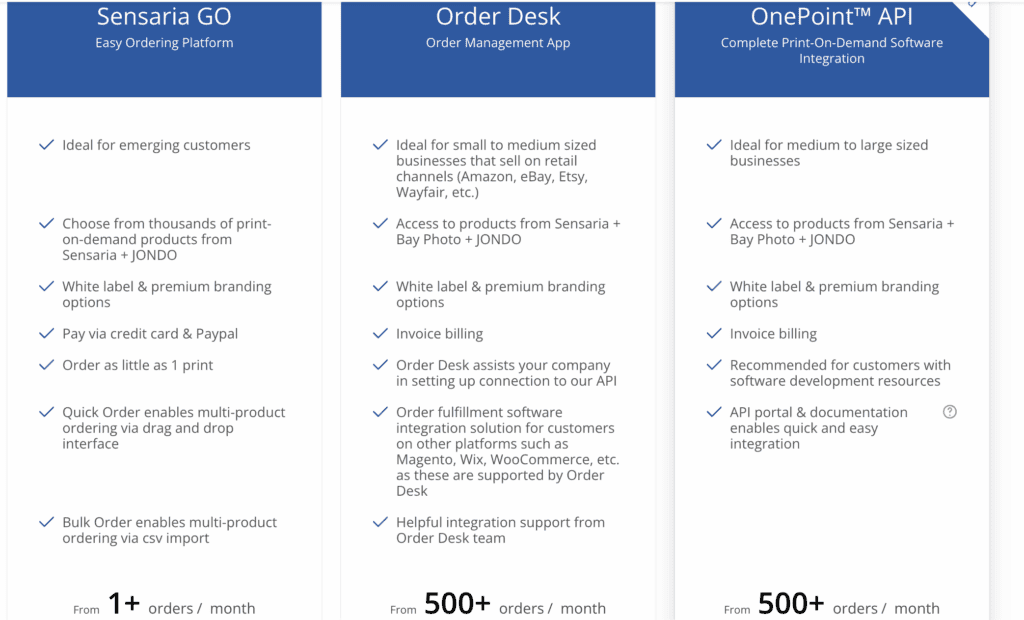
Jondo doesn't have native ecommerce integrations. Instead, most sellers use Order Desk, a third-party tool that links Jondo to Shopify, Etsy, and Amazon.
They also offer an API, but it's better suited for high-volume or custom-built storefronts.
Pricing
There are no monthly fees. You pay per item, with pricing based on size, material, and finish.
For Australian metro areas, total turnaround time typically ranges from 4-9 business days, which is impressive given the size and fragility of the products.
9. Printdrop Express
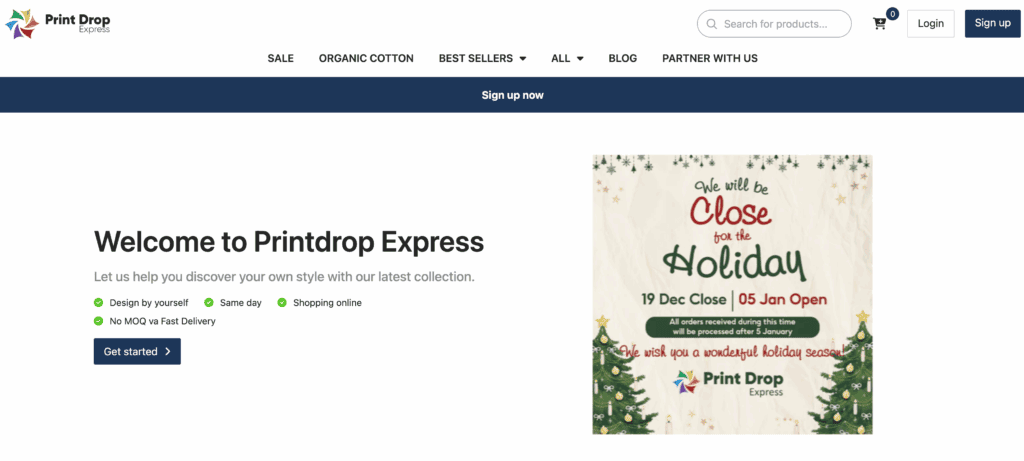
PrintDrop Express is a Sydney-based POD supplier built for scale, speed, and premium branding.
They use a hybrid model, combining local printing with fabric sourced from Vietnam, and all orders are white-labeled and shipped from their St. Peter's facility.
Pros
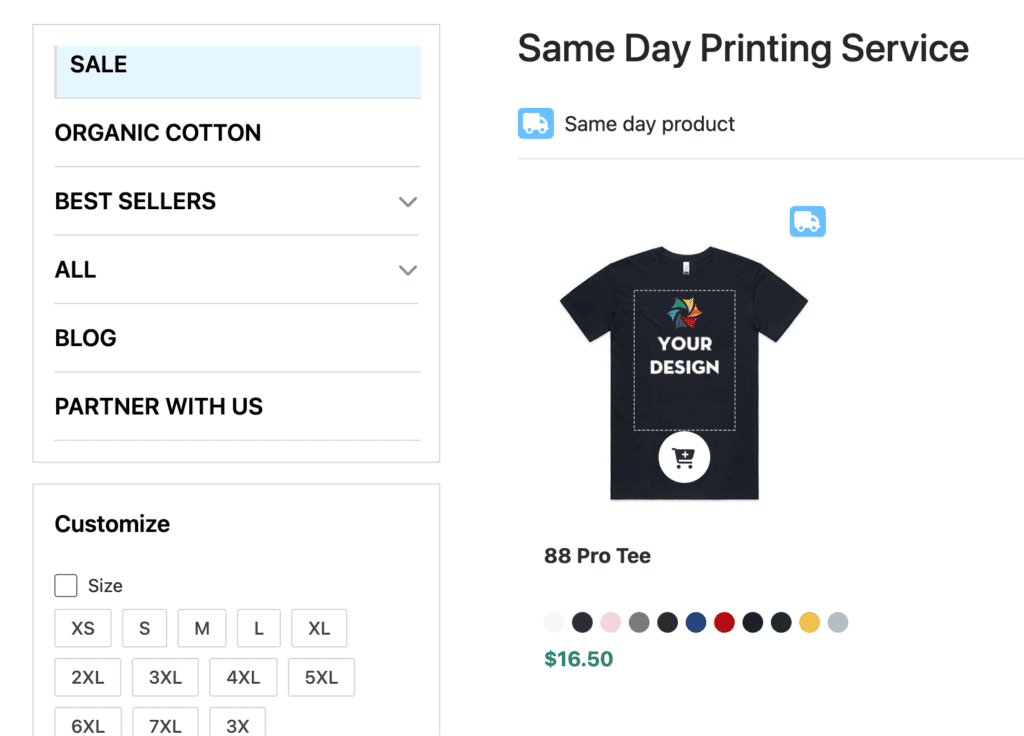
- Premium blank options. Access to Organic, Recycled, Linen, and Workwear ranges. Great for boutique or ethical brands.
- Same-day printing. Fast turnaround on selected items stocked in Sydney. Ideal for urgent local orders.
- No MOQ. Print one item at a time. Perfect for testing designs or running lean.
Cons
- Unclear shipping rates. Flat fees, such as $25.50 AUD, may apply to light items. Hard to forecast margins.
- Limited support hours. Email-only support runs Mon-Sat, 9 am-7 pm. No live chat for quick fixes.
- Developer setup needed. WooCommerce and custom stores require manual API integration. Not beginner-friendly.
How do you connect Printdrop Express to your store?
Shopify stores connect via a private API setup.
WooCommerce and custom storefronts require API keys and developer configuration. Orders sync in real time via webhooks, helping avoid missed or delayed orders once everything is set up.
Pricing
There are no subscription or monthly fees. You only pay for product costs and shipping.
New users get 30% off their first order with the code WELCOME30, so it's easy to test the quality without spending much upfront.
10. Printicks
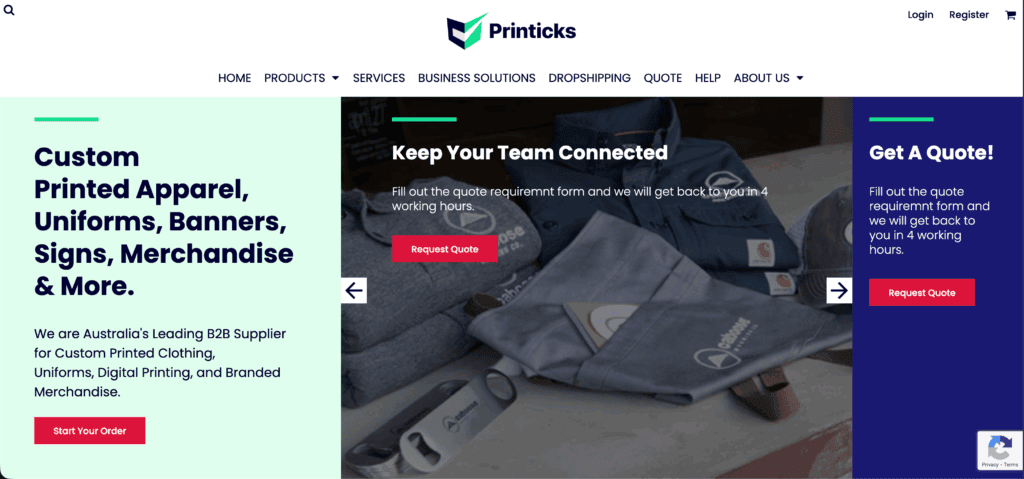
Printicks is a Sydney‑based POD and fulfillment partner that blends local manufacturing with B2B products.
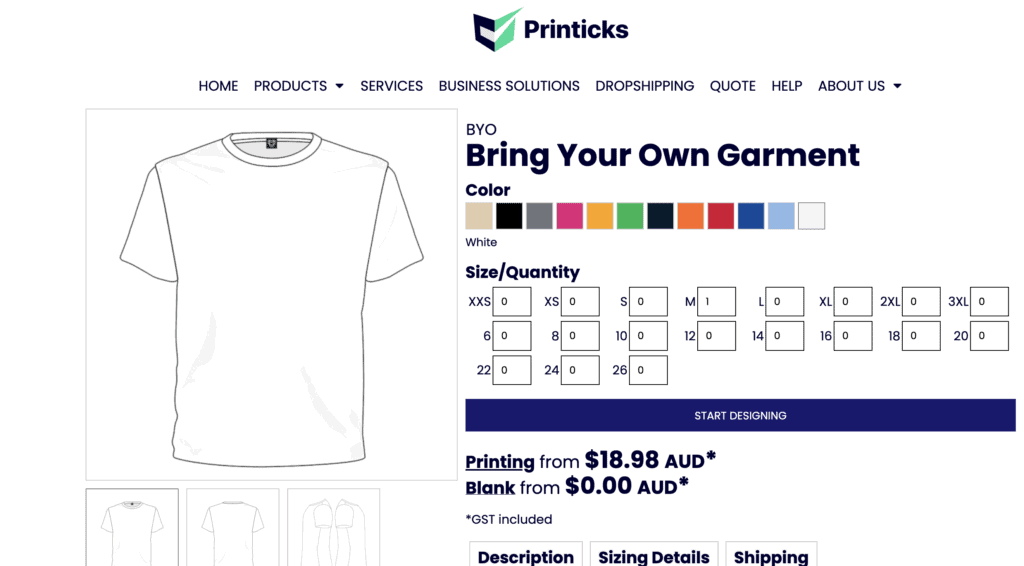
They operate their own production facilities in Castle Hill, NSW, and offer direct printing, 'Bring Your Own Garment,' signage, and corporate merchandise.
Pros
- Local pickup options. Same‑day or express pickup from Castle Hill cuts shipping time and cost.
- No MOQs. Print one item or 500; perfect for campaigns and event merch.
- Wide product range. Apparel, safety wear, signage, and corporate goods in one place.
Cons
- Slow standard turnaround. Regular production can take up to 10 business days, including processing and shipping.
- Manual order workflow. There's no one-click integration with Shopify, Etsy, or WooCommerce. Orders need to be uploaded manually.
- Limited automation. Best for B2B needs, not hands‑off dropshipping.
How do you connect Printicks to your store?
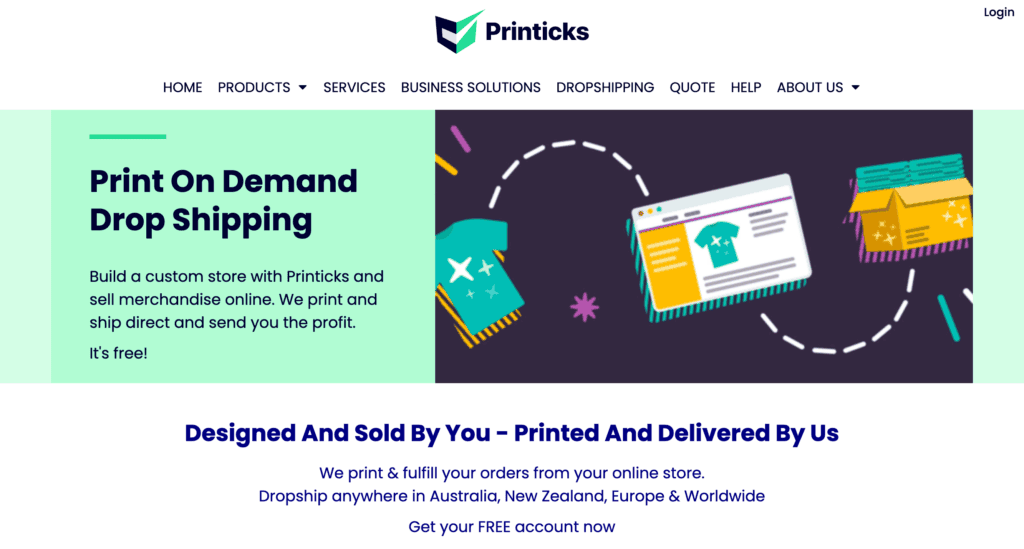
Printicks doesn't offer native integrations with major ecommerce platforms.
Most merchants either:
- submit orders manually, or
- Use Printicks' Free Store option to host a basic storefront on their platform.
More advanced setups using APIs or automated syncing require custom development or third-party tools.
Pricing
Printicks doesn't charge any subscription or monthly platform fees.
You only pay for products and shipping as orders come in, making it an easy, low-risk option for both new and established sellers.
Turn this guide into an AI checklist
Click your favorite AI tool below to get a short summary and step-by-step checklist based on this article.Prefer ChatGPT? Open this guide in ChatGPT with a pre-filled prompt (most readers start here).
Summary
Before we go, we've created a quick summary of this article for you, so you can easily remember it:
- Printful offers consistent quality, strong branding tools, and deep integrations, but comes at a higher cost.
- Printify is the most affordable option with a vast catalog, although quality varies among suppliers.
- Gelato excels at local routing for wall art and paper goods but lacks strong apparel features.
- OGO is great for Shopify users who want AS Colour apparel and AUD pricing, but lacks multichannel support.
- The Print Bar offers same-day dispatch and embroidery options, but only integrates directly with Shopify.
- Jondo, Dropshirt, Tee Junction, and PrintDrop Express serve niche or manual use cases, offering substantial value if you can manage limitations.
Final verdict
Many great POD suppliers exist, but which is the best for Australia in 2026?
Final Verdict: Printful remains the best overall print on demand supplier in Australia. It offers reliable local fulfillment, a wide product selection, branding tools, and top-tier integrations.
For other suppliers worth checking out, here's what they excel in:
- OGO. Best for Shopify apparel stores in Australia
- The Print Bar. Fastest production and delivery
- Printify. Best for testing products with multiple supplier options
- Gelato. Ideal for selling art prints globally
- Jondo. Strong for wall art and photo products
- Tee Junction. Good for beginners with simple tools
- Dropshirt. Better for sellers who prefer manual order handling
Many brands now mix local and global suppliers to balance cost, speed, and reach.
Let us know which one you picked!
Want to learn more about POD?
Ready to move your print on demand store to the next level? Check out the articles below:
- 13 Best Eco-Friendly Print on Demand Suppliers in 2026
- 10 Things That POD Gurus Do Not Tell You as a Beginner
- Embroidered vs. Printed: Which Is Best for Your POD Store?
Plus, don't forget to check out our in-depth how to start a print on demand business guide here!


