

As you're getting sales with your print on demand business, you've probably been notified of a customer's problem. As a result, they may want to return their order.
This can be scary, as your goal should always be to keep your customers happy!
Print on demand suppliers typically don't provide much support for sending returns directly to them; you will then have to handle them on your own.
That's why we'll look at how to handle print on demand returns and why they happen in the first place!

Launch your print on demand store on Shopify
Free 3-day trial + $1/month for 3 months
- Plug in leading POD apps in a few clicks
- Sync designs and mockups straight into your storefront
- Focus on designs while Shopify handles checkout & payments
No card to start. Cancel anytime.
How to handle returns on a print on demand store in 6 ways
Returns are a hassle for any ecommerce business, especially for POD stores, considering one of the benefits is not having inventory.
Here are the six ways of handling returns on a print on demand store in 2026:
- Determine what your customer wants
- Request proof of the error
- Offer a replacement product
- Provide a refund
- Genuinely care about the issue
- Speak to your supplier
Let's start with the first way to deal with returns: determining what your customer wants:
1. Determine what your customer wants
You must be a detective who understands the issue to know the best way to solve the matter. You may also find the source of a problem that causes you to receive additional return requests.
Reasons one to three, as previously mentioned, are understandable reasons to provide a refund, and based on the evidence of the results, you'll gain more customers in the long run.
Reasons four and five can be beyond your control and often frustrating. You may want to talk with the customer to reconsider, but giving a return, in the end, is still viable.
What's the first thing you should do when you hear a complaint about a customer's order? Request proof of the error first.
2. Request proof of the error
The purpose of the proof of error is to ensure that the customer is being honest about their experience.
People may make up a story to obtain a free product, so ask for proof immediately.
What kind of proof? A photo or video of the damage or misprint of the product would work.
Suppliers also need photo or video evidence to provide a refund, so you can use what the customer gives you if necessary.
3. Offer a replacement product
The first and most crucial offer customers like to hear about is a return policy, where you'll replace the product with another one if there's an error.
As stated before, if the supplier makes a mistake, there's a good chance they'll send another product to your customer for free.
If it's a shipping issue, you will still be responsible for the printing and shipping costs of the product. It's a bummer, and often you have to accept that there can be a net loss from some sales.
Product replacement is also cheaper than a refund, even if your supplier doesn't cover the cost. You'll benefit significantly from this choice!
4. Provide a refund
Sometimes, the customer no longer wants the product after purchasing it and wants their money back.
The time you allow for a return to happen is up to you. The average return policy timeframe in ecommerce is approximately 15 to 30 days, and studies have shown that customers expect it to be around that timeframe. (Source)
Your ecommerce platform usually has a way to provide an easy refund. For example, Shopify's button can be found on the orders page.

Where should the customer send a returned print on demand product?
The best place to tell a customer to send a product is the address you're most comfortable with.
This can be your home address or a P.O. box address, depending on how much you value your privacy.
What should you do with a returned product?

At first, a returned product may seem like a burden, but it has many uses!
Take photos of it for social media content or use them in a giveaway contest to increase views of your store. Perhaps someone will purchase it from your store, and you can then send it to them.
There are numerous creative ways to utilize the product!
You don't have to put it in the corner, hoping it'll get purchased in the future.
5. Genuinely care about the issue
Now caring about the problem can sound obvious, but many store owners don't know how to show it in a way the customer would like.
Acknowledging their problem and having sympathy for their frustration or fear can help them feel more at ease.
When the customer isn't in a good state of mind, calming them down in a gentle and uplifting tone can significantly improve their satisfaction.
And if you have a customer service team helping you with this, then make sure to train them well on how to treat your customers.
6. Speak to your supplier
When in doubt about an order, it's always a great idea to talk with your supplier.
Since you are a customer, they will go to great lengths to ensure you're happy.
Even though there might be times there's nothing they can do for you, it's always worth asking anyway.
Why is correctly handling your returns so important?
The primary reason to have a strong return system is that approximately 83% of customers stated they would not shop at a particular retailer after experiencing a poor return process.
Considering many expect a return policy, you're hurting your chances of getting future sales by not having one.
But there are other reasons as well:
Returns encourage loyalty
To build a brand, you need repeat customers. And to achieve that, you need their loyalty.
Loyalty is enormous. You can spend less on marketing, as current customers are already enjoying your designs and are willing to share them with everyone they know!

Returns help to deal with competition
As you may know, trying to persuade your competitor's customers to become your own is challenging, but one way to differentiate yourself is through your return policy.
As stated before, the statistics show that the majority of ecommerce customers want a good return experience to shop there again.
This means there are many stores that either don't do this or do it poorly, which turns people away.
This is your competitive advantage in ensuring every return is a positive experience for the customer.
Now, we know why it's a huge missed opportunity not to have a good return strategy, but why do people want to return your products in the first place? Let's find out!
The 5 most common reasons for return requests
A big reason to have a return policy is to protect your time and energy in the business. It also ensures that every experience with your store is a positive one.
Also, not every product type has the same return rate:

As shown, apparel is the most returned item from ecommerce stores. You're probably wondering why, and we'll go over that now.
1. Mistakenly buying the wrong version
Sizing for apparel can be frustrating because not every supplier goes by the same size guide.
A shirt is a large size from one supplier, but it may be labeled as a medium size elsewhere.
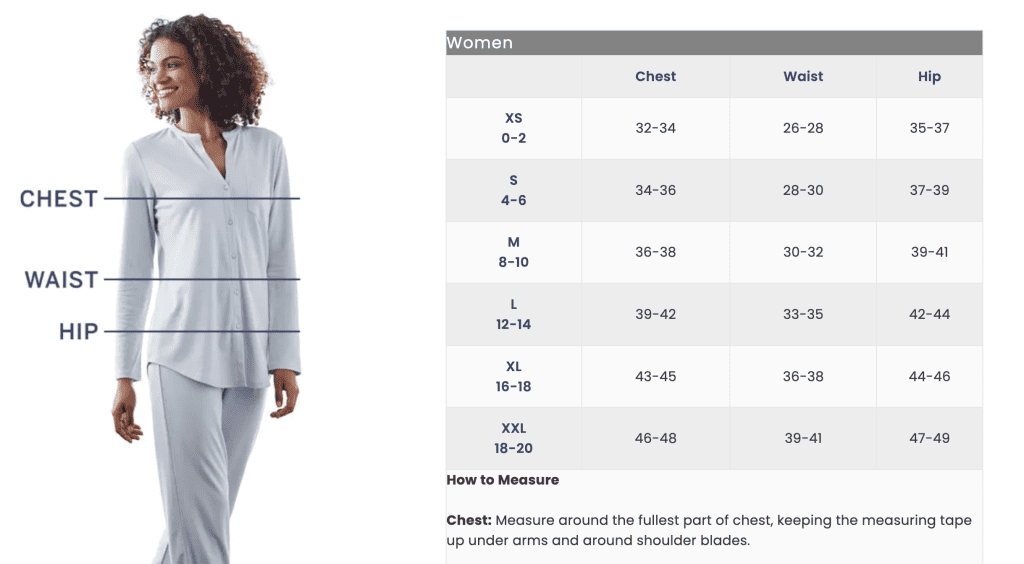
Amazon reported that 34% of their returns were due to the wrong size, color, or fit. This is a common problem with apparel.
Suppliers often provide sizing charts, but it's best to check them out yourself to see how well they fit your size.
With your knowledge, you can help your customers find the right fit more often.
2. Damaged or defective product
Receiving a damaged product is often the primary reason someone wants to return an item: 80.2% of product returns occur because the item is damaged or broken. (Source)
It makes a lot of sense, considering they didn't receive it the way it was intended.
Luckily, many suppliers will refund or send a new product if it gets damaged. Not every supplier has the same refund policy, so be sure to review it before making any assumptions.
3. The product doesn't match your store's description
Another common problem is when the product does not match its appearance or does not perform as described in the product description.
This is a standard error when copying multiple designs with other product types. An example is an art print design, but a canvas design is in the description.
It's essential to constantly double-check that the description accurately represents what the product looks like in real life.
4. Taking too long for the product to arrive

Every print on demand store owner has a story about shipping taking too long to arrive, and the customer worrying if they will ever get their order.
Often, it feels like it's out of your hands, and you're at the mercy of your shipping provider to ensure timely delivery, especially when shipping from another country.
A survey from Convey found that 87% expect brands to make amends when they miss a delivery date. This means that even though you didn't do anything wrong, you're still on the hook, so be aware!
5. Buyer's remorse
Buyer's remorse occurs when someone starts to regret their purchase after some time.
There are multiple reasons this can happen. Maybe they found another design that looks better. Perhaps they made an expensive or impulsive purchase and now realize they don't need it.
A store owner can reduce buyer's remorse through a great customer experience, clear return policies, and education about what they're purchasing.
Now that you tackled the most significant reasons why people could return your product, let's look at how you can use them if you get them, regardless of taking the previously mentioned advice.
How can you be proactive with returns?
Proactive means taking the necessary steps to prevent these errors from occurring in the first place.
Let's look at ways you can do this:
Have a shipping and a return policy
It is a must-have to have a shipping and return policy. They're often found in the main menu, footer, and product description.

You do not want to hide them because they're one of the biggest reasons people decide to purchase something from you.
Why?
For example, 8 out of 10 consumers read through a return policy before making a purchase. So you're most likely losing sales by not having one!
Ensure that any questions your customers may have regarding shipping and refunds are addressed. (For example, you can even explain the shipping costs)
Use better quality products
You're probably wondering how I make sure my products have good quality.
You test products by shipping them to yourself! It's helpful to judge quality amongst other suppliers to determine if the price is worth it.
Also, think of other ways you can test in a real-world scenario.
If it's a product you wouldn't use or know your target market wouldn't, then you can be certain it will disappoint your customers and increase the likelihood of return orders.
In short, sell the quality you know you can be proud of!
Use return costs in the initial product pricing
Many ecommerce stores factor the pricing of their products to include the potential costs that can occur through shipping and returns.
If you're wondering why something is much more expensive than it should be, it's usually a pricing strategy to cover these additional costs.
Therefore, if you're incurring high return costs, consider adding more value to the product's price to help your business become more profitable.
Be clear in the product descriptions
When writing your descriptions, remember to be as accurate as possible and double-check that the colors, sizing, and materials are correct.

When in doubt, order the product yourself and make the necessary decision based on your findings.
Depending on the photo or computer screen, things like color may not be accurately represented, for example.
Turn this guide into an AI checklist
Click your favorite AI tool below to get a short summary and step-by-step checklist based on this article.Prefer ChatGPT? Open this guide in ChatGPT with a pre-filled prompt (most readers start here).
Conclusion
Managing returns can be a difficult and exhausting problem that all print on demand store owners go through, but with these tips, you'll now be more confident in what to do.
Remember, your customers look up to you as a guide, so be as helpful and friendly as possible to them, and they'll be more likely to purchase from you again and again.
Returns will never entirely disappear, but you can minimize them significantly now!
Want to learn more about returns and shipping?
Ready to move your print on demand store to the next level? Check out the articles below:
- How to Create a Dropshipping Shipping Policy? (+ Template)
- How Do You Create a Dropshipping Return Policy? (+Template)
- Dropshipping Returns & Refunds: Everything You Need to Know
Plus, don't forget to check out our in-depth how to start a print on demand business guide here!


